Golf club rodents, dining room roaches and other filth restaurant inspectors found
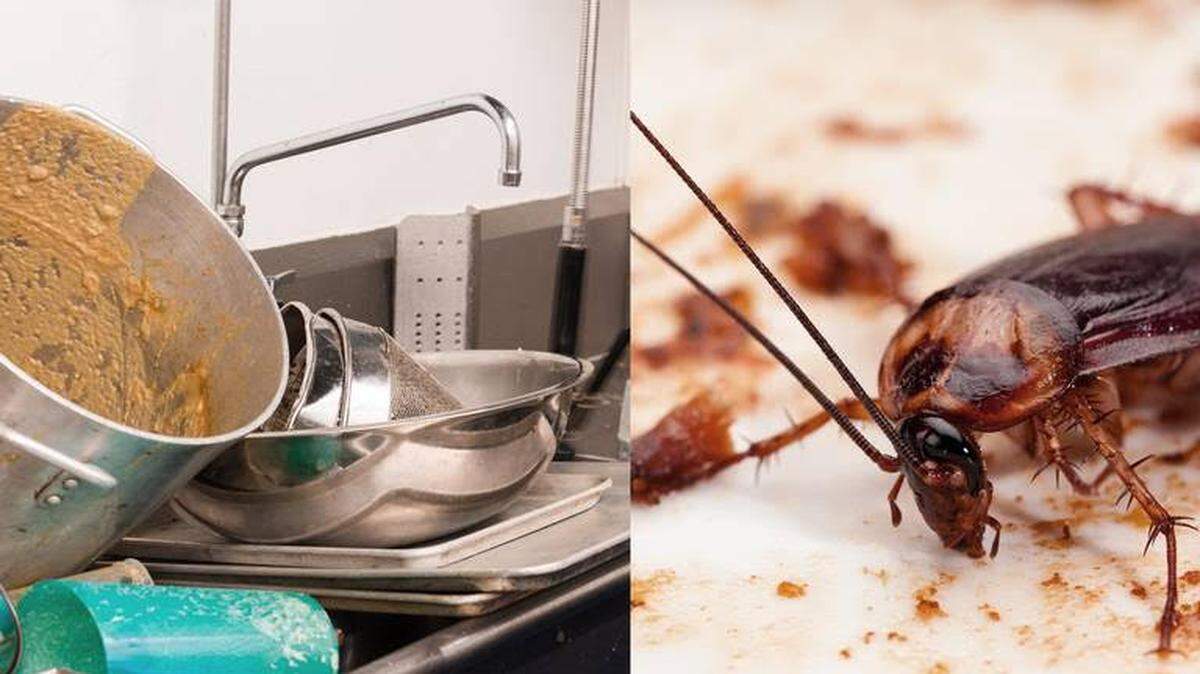
From a barbecue joint kitchen that could use some Lysol to a $6,000-a-year golf club that could use a Truly Nolen visit to its restaurant, here’s this week’s list of South Florida restaurants that failed inspection.
We don’t choose who gets inspected nor do we do the inspecting. Those fall onto the plate of the Florida Department of Business & Professional Regulation. You can file an online complaint with them.
Unless otherwise noted, each restaurant was allowed to reopen the next day following a callback inspection.
In alphabetical order:
BBQ Toni8ht, 1386 S. Federal Hwy., Pompano Beach: Routine inspection, nine total violations, two High Priority violations.
No one who has enjoyed their time in a BBQ place expects it to be pristine. But BBQ Toni8ht managed to set some kind of unoffocial Sick and Shut Down List record for places and things “soiled with food debris,” all of which were in the kitchen.
“Flip top cooler doors and handles soiled with food debris and grease.”
“Vents and ceiling soiled with dust and food debris.”
“Walls soiled with food debris” by the handwash sink.
The reach-in cooler was “soiled with food debris.”
“Floors soiled with food debris and grease” that puts the extra yucky in “raw chicken stored on the floor by the three-compartment sink.”
Maybe the food debris on the wall brought foraging roaches, who left excrement by an electrical outlet near the flip-top cooler. Near that cooler and on the cookline, about 10 roaches roamed the wall and ceiling. Ten roaches were on the wall and ceiling near the handwash sink. Five roaches moved about the floor and walls.
Carmine’s La Trattoria, 2401 PGA Blvd., Palm Beach Gardens: Complaint inspection, 15 total violations, eight High Priority violations.
Carmine’s proves being a popular institution doesn’t come with inspection invulnerability powers.
Then again, it’s hard for the inspector to ignore seven pieces of rodent regularity under a dry storage shelf near a bread station and another four under a kitchen prep table.
With the rodents running and dumping, you want your dishwasher sanitizing the dishes. But the sanitizer measured zero parts per million instead of 100 ppm.
Maybe there was a sanitizing mix-up and the wiping cloth solution got a double hit — it measured 200 ppm when it needed to be at 100.
The outside bar handwash sink didn’t have any soap.
In the unsafe food department, cooked mushrooms that needed to be cooled from 135 degrees to 70 degrees in two hours weren’t going to make it. The inspector hit them with a Stop Sale.
READ MORE: Condenser dripping on exposed meat and ice machine mold found at Miami-Dade supermarket
La Estancia, 801 N. Federal Hwy., Hallandale Beach: Routine inspection, 11 total violations, three High Priority violations.
Among the four dead roaches was one in the kitchen employee handwash sink. Of four live roaches, one toddled about a container of mayonnaise packets. Another one walked on top of a bag of bread crumbs on a kitchen rack.
Handwash sinks with dead roaches outnumbered handwash sinks with paper towels or blow dryers, 1-0.
Standing water covered the area under the dishwashing machine.
Inside the microwave, the inspector saw “an accumulation of grease and food debris.”
Cooked rice measured 50 degrees after an overnight stay in the cooler, nine degrees too warm. Also, the inspector saw “water condensation on lid.” Stop Sale on the rice.
Pita Pockets, 2727 Hollywood Blvd., Hollywood: Routine inspection, seven total violations, one High Priority violation.
The restaurant is spelled “Pita Pokets” if you look up the inspection history on the DBPR website.
Six live roaches and 11 dead roaches.
What’s worse than no way to dry your hands at one sink? No way to wash your hands because there’s no soap at three sinks.
Rhum Shack, 802 Lake Ave., Lake Worth Beach: Routine inspection, four total violations, three High Priority violations.
Rhum Shack returns to the list after a failed inspection in November involving rodent and ice cream scoop problems.
This time: “Approximately 5 live flies on beer cases outside the kitchen and near the bar entrance.”
Commercially processed, reduced oxygen-packaged tuna should be frozen until it’s taken out of the reduced oxygen packing. This was thawing in the reduced oxygen packing and the manager took the tuna out.
“The chef did not wash hands prior to handling food items from the flip top cooler.”
Five rodent droppings were in the kitchen reach-in cooler with tortillas, chips, and uncooked pasta.
That’s a Wrap Sandwich Co., 110 SE Sixth St., Fort Lauderdale: Complaint violations, five total violations, two High Priority violations.
The white-collar types appear to enjoy this sandwich shop on the first floor of a commercial high-rise. Apparently, so do the rodents and roaches, as we told you earlier.
READ MORE: Pooping rodents and running roaches got a Fort Lauderdale place closed by inspection
Winston on the Greens, 6101 Winston Trails Blvd., Unincorporated Palm Beach County: Complaint inspection, nine total violations, five High Priority violations.
We close with the restaurant at Winston Trails Golf Club, where annual membership costs $6,499 for a single person, $9,299 for a married couple and their kids under 21 ($5,999 and $8,899, respectively, for Nov. 1 through April 30 seasonal memberships).
They don’t list rodent rates, but somebody left “25 rodent droppings in the kitchen under the drink station and handwash sink cabinets.”
Within seven days of opening or prepping ready-to-eat food, it’s got to be eaten or sold. Short ribs in the reach-in cooler and walk-in cooler were cooked on Jan. 5. They needed to be gone, served or trashed on Jan. 12. This inspection was Jan. 21. Stop Sale.
With “rusted and not cleanable” dishwashing-area ceiling vents above the cleaned, sanitized dishes, the inspector “discussed with the operator to repair or replace the vents to avoid debris from falling on cleaned and sanitized dishes.”
It costs $6,000 a year, minimum, to belong to this club, but a kitchen reach-in cooler’s handle “broken and held together with putty is used as a handle.”
Commercially processed, reduced oxygen-packaged tuna filets in a cookline flip top cooler and in a walk-in cooler weren’t frozen. As a label indicated, they needed to stay frozen or be removed from the reduced oxygen packing.
The reason this got a “Stop Sale issued due to food not being in a wholesome, sound condition” is the same reason you shouldn’t ignore these warnings on similar fish at home. When it thaws inside that reduced-oxygen packaging, as explained in various places, the fish becomes a fertile breeding court for C. botulinum bacteria or listeria.
“If C. botulinum toxin forms in food, there is no way to recondition the food to make it safe again,” the Florida Department of Agriculture said in 2017. That means, unlike some other foodborne illness bacteria, cooking the food to a certain temperature isn’t a kill step.
A Michigan State University article on this states, “Opening the packaging while thawing the vacuum packaged fish, introduces oxygen and the spores will not produce the vegetative cells that produce the toxin.”