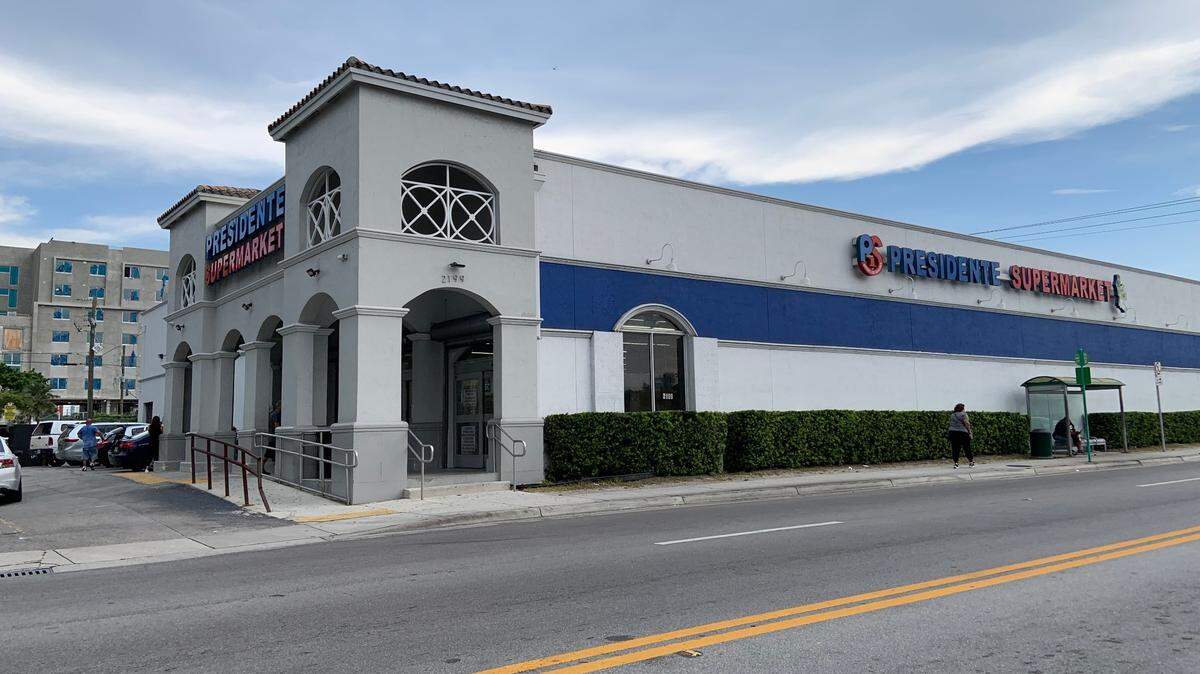
Roaches, mold in different colors and other filth problems at a Miami-Dade Presidente
READ MORE
Presdiente problems with state inspections
Presidente Supermarkets have failed an unusual number of Florida Department of Agriculture inspections since June 2022.
Expand All
A Presidente Supermarket can’t receive new food or store food in its backroom after an inspector saw roaches “of various sizes”; had “mold-like grime” of various colors on ice machines; and equipment with “old, encrusted food” and enough unsafe food to feed a family picnic.
All this and more showed up on Friday’s Florida Department of Agriculture inspection of the Presidente at 240 NE Eighth St. in Homestead, a continuation of the chain’s inspection stumbles this year.
READ MORE: Miami and Fort Lauderdale Presidentes become recent inspection fails Nos. 6 and 7
Unlike Florida Department of Business and Professional Regulation inspections of restaurants, a failed Ag Department inspection of a supermarket, grocer, bakery, convenience store, food distributor or food processor doesn’t automatically shut down the establishment.
But, the inspector can put Stop Use Orders on areas or equipment. Enough of those in the wrong places and the business might decide that opening isn’t the smart move.
Despite five Stop Use Orders, including three on the backroom, this Presidente remains open. Here’s the lowlights of what Inspector Wenndy Ayerdis found when she dropped by this Presidente on Friday.
▪ In the deli area, “Old food residue (was) encrusted on the slicer blade and guard of all three deli slicers.”
▪ In the seafood area, “Old, yellow, dry food residue encrusted on blades of tenderizer stored near the seafood display case.”
▪ The meat processing area featured “green and black mold-like grime encrusted on white cutting board table tops located near the band saw.”
▪ The kitchen area had “Old food residue encrusted on the can opener blade located at the cook’s preparation table.”
▪ Fish weren’t covered in the seafood walk-in cooler just as cheese wasn’t covered in the deli’s reach-in cooler.
▪ Kitchen area food employees didn’t rub their hands for at least 20 seconds under water, but, more importantly, didn’t use soap. Then again, there wasn’t hand soap at the handwashing sink next to the ware washing sink.
▪ There wasn’t a handwashing sink in the kitchen processing area. The store has 30 days to put one — with hot and cold running water — or face a possible Stop Use Order on “this area, allfood related equipment, and open food processing on a stop use order until compliance is achieved.”
▪ No paper towels were at the handwashing sink next to the ware washing sink in the food service area. They couldn’t spare one from the retail shelves?
▪ In the food service, kitchen, deli, bakery, produce, meat, meat processing and seafood areas, “Multiple employees wearing single-use gloves were observed touching their face/mask, leaving and returning to the processing areas to handle food items, handling money at the register” without changing gloves that had become “contaminated.”
▪ “Multiple baked breads, cookies, and other baked treats placed at customer self-service unit by a vendor/manufacturer were found to be missing all ingredient labeling.” They got tossed.
▪ Sanitizing proved to be a sometime-not-often-enough thing, also. Bakery and food service employees “washed various utensils (spoons, knives) at the ware wash sinks” without sanitizing them.
▪ A kitchen employee didn’t sanitize the probe thermometer before shoving it into a pork loin. But, in fairness, the kitchen ware washing sink’s sanitizer measured zero parts per million — as in “none.”
▪ The meat processing area’s ware washing sink didn’t have a “faucet installed to service the rinse and sanitize compartments of the ware wash sink,” earning a Stop Use Order for the ware washing sink.
▪ The steam wand used for more than six hours without being cleaned had “heavy, dried-on milk accumulated” on it. A meat area band saw, slicer, meat grinders and cutting board used to remove fish scales were in use more than four hours without being cleaned.
▪ Pick your color of the “mold-like grime.” The deli area’s ice machine had “yellow, mold-like grime encrusted on the ice making portion and interior housing of the ice machine.” The seafood area had “black, mold-like grime encrusted on the ice making portion, ice flap, and interior housing of the ice machine used to fill the seafood display case.”
To keep food from turning into bacteria love boats, it must be kept heated above 135 degrees or cooled under 41 degrees.
▪ With that in mind, know that pork sandwiches cooked that morning were at 78 degrees; boiled chicken legs, chicken wings and pork rinds cooked the night before and put in the walk-in cooler measured 42.4 to 47 degrees.
▪ Ceasar salad, sliced tomatoes, canned green beans and carrots in the salad display unit measured 70 or 71 degrees. The salad display unit clearly wasn’t working, so it got hit with a Stop Use Order.
▪ At the steam table, fried yuca, boiled yuca, chicken in sauce, plantains, skirt steak, pork chunks, beef chunks with potatoes, pork ribs, pork loin, beef ribs, chicken quarters, mojo and pork rinds all measured from 92 degrees to 133.5 degrees. Milk in a metal container in the deli area came in at 110 degrees. Containers of cooked beans in the kitchen were 120 degrees.
▪ There’s a seven-day limit on using deli food after you open them. A package of El Toro Sweet Ham had been open for 16 days, since Oct. 19. Also, “multiple packages of open deli meat” weren’t marked with a date and nobody knew when they had been opened.
All of the above food: basura.
▪ The deli’s orange juice machine had a cracked plastic cover where the oranges are squeezed and was “held together with tape that is not made to be washed, rinsed, and sanitized.”
▪ Underfoot in the meat processing area, there was “multiple large, deep holes and cracks found in the floor” that the store has 30 calendar days to repair. Because, in those cracks were a “large amount of pooled water and food debris accumulated.”
▪ Inspector Ayerdis found “dust, debris, old food residue, and a dead roach” under the steam table and most equipment in the food processing area. The kitchen apparently was similarly soiled, with “dust, debris, grease deposits, and old food residue accumulated on the walls and floors near the cooking equipment in the kitchen.”
▪ In the backroom, “Live roaches of varying sizes found crawling up the wall around the mop sink area in the backroom.” That got a Stop Use Orders slapped on the backroom area for usage, for receiving merchandise and for storing new merchandise.
This story was originally published November 9, 2022 at 1:02 PM.