Food Travel Destinations: Everything You Need to Know About the Culinary Spots Worth Traveling To
For travelers who plan trips around what’s on the plate, the meal isn’t a side note — it’s the whole itinerary. From the pizzerias of Naples to the street stalls of Ho Chi Minh City, certain cities have built their identities around a single iconic dish, and tasting it where it was born is a different experience than ordering it anywhere else. These food travel destinations reward visitors with recipes so specific they’re sometimes protected by law, invented by accident or guarded as family secrets.
Whether you’re chasing the original pizza Margherita, the secret sauce behind buffalo wings or a bowl of ceviche cured in fresh lime juice, here are seven cities where the meal is the point.
Why Food Travel Destinations Matter for Trip Planning
Food-led travel does more than satisfy an appetite — it offers a direct line into a place’s history, geography and culture. In several of the cities below, the signature dish carries official legal or institutional protections that dictate exactly how it must be prepared, which means the version served at home rarely matches the original. Eating where a recipe was invented is the only way to truly taste it the way its creators intended. For travelers building an itinerary around food travel destinations, these seven cities offer dishes with stories as rich as their flavors.
Naples, Italy: Pizza Margherita
Naples is the original birthplace of pizza, and Neapolitan-style pies are now recreated all around the world. Locals are so protective of the tradition that there’s a legal designation — known as STG — governing exactly how Neapolitan pizza must be made.
The most famous variation has a regal origin story. In 1889, chef Raffaele Esposito invented pizza Margherita to honor Margherita, the Queen of Italy, topping it with tomato, mozzarella and basil to mirror the colors of the Italian flag. To taste the real thing where it began, visit Pizzeria Brandi, the restaurant where Esposito created it.
Philadelphia: The Cheesesteak
Philadelphia’s signature sandwich started, like many great food origin stories, by accident. According to VisitPhilly.com, “In 1930, the cheesesteak was invented when Pat Olivieri, a hot dog vendor and namesake to Pat’s King of Steaks, threw beef on his grill to make a sandwich. A passing cab driver asked for one, too, and soon Olivieri had a following.”
Today, the cheesesteak pilgrimage in South Philly almost always includes both Pat’s King of Steaks and Geno’s Steaks — famous rivals located directly across the street from each other. Other popular spots include Angelo’s Pizzeria, Sonny’s Famous Steaks and Jim’s South St.
Bologna, Italy: Tagliatelle al Ragù
Known to most of the world as pasta with “bolognese” sauce, the dish is called “tagliatelle al ragù” in its hometown. A long-standing legend claims the long strands of tagliatelle were inspired by the hair of Lucrezia Borgia, the illegitimate daughter of Pope Alexander VI, but La Cucina Italiana explains that story has been debunked as having been invented in the 1930s.
What isn’t a legend is the official recipe, registered with the Bologna Chamber of Commerce in 1972 on behalf of l’Accademia Italiana della Cucina. The official recipe specifies that tagliatelle should be about 7mm wide when raw, and the sauce must include minced beef, pancetta, carrots, celery, onion, tomatoes, red wine, milk, broth, olive oil and salt and pepper. A few approved variations allow for additional ingredients.
Buffalo, New York: Chicken Wings
If you’ve ever enjoyed a plate of wings on game day, you have Buffalo to thank. The dish was invented in 1964 at The Anchor Bar, where Dominic Bellissimo was bartending when his friends came in hungry. He asked his mom, Teressa, to throw something together. She had small pieces of chicken on hand — the kind usually tossed into the stock pot — so she deep fried them and added a “special” sauce.
Teressa Bellissimo invented both the concept of eating chicken wings as a snack and what’s now known as “buffalo sauce” in a single moment. The exact recipe for the sauce remains a secret to this day, which means The Anchor Bar is still the only place to try the original.
Marseille, France: Bouillabaisse
Marseille’s famous fishermen’s stew has a name that translates literally to “when it boils, we lower it” — a reference to lowering the broth’s temperature once it reaches a boil so the fish can cook properly. The dish is so specific that a 1980 charter governs its preparation, requiring at least four of the following species: scorpion fish, white scorpion fish, fielas (conger eel), spiderfish or capon. Optional additions include galinette, St. Pierre, sea cicada and monkfish.
Bouillabaisse is typically served in two parts — fish on one plate, broth kept hot on the stove — with the server ladling broth into your bowl as you go. It’s often accompanied by creamy sauces called rouille or aïoli, sometimes with garlic-rubbed croutons. Le Rhul is said to have perfected the dish and authored the charter.
Lima, Peru: Ceviche
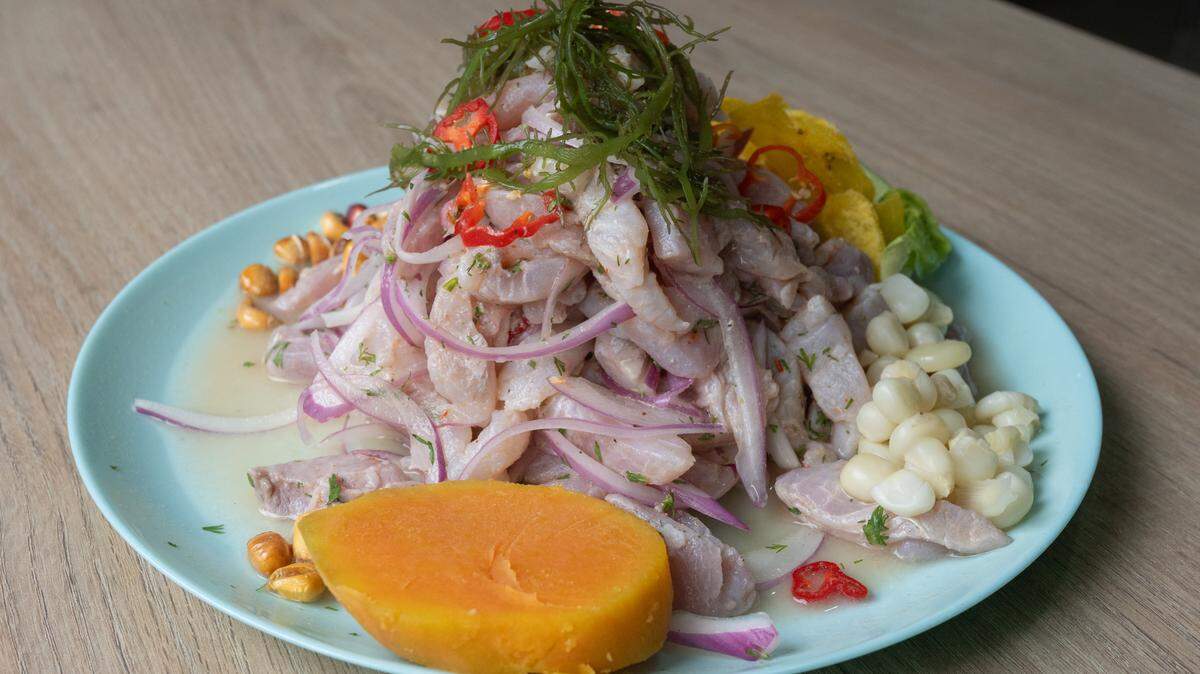
In Peru, ceviche isn’t just a beloved dish — it’s officially recognized as part of the country’s national cultural heritage. Traditionally, a raw white seawater fish like sea bass is cured in freshly squeezed lime juice, then mixed with red onion, aji, cilantro and salt. Common accompaniments include Peruvian corn, slices of cooked sweet potato, plantain chips and corn nuts.
Lima offers ceviche across the full spectrum, from old-school family-run restaurants to inventive fine dining. To experience the range, try a traditional spot like Sonia’s alongside a more experimental destination like La Mar.
Ho Chi Minh City, Vietnam: Bánh Mì
The bánh mì is a delicious example of culinary cross-pollination. When the French colonized Vietnam, they brought the baguette with them. The Vietnamese then created their own lighter, crispier version of the bread and used it as the base for a unique street food sandwich.
Traditional fillings include some type of meat (usually pork-based), pickled vegetables — typically daikon and carrot — and fresh herbs and toppings like cilantro and cucumbers, with spicy peppers added to taste. Ho Chi Minh City’s street-stall culture makes it the ideal place to find an authentic one. Bánh Mì Huynh Hoa is one of the most famous spots, but excellent versions are around every corner.
This article was created by content specialists using various tools, including AI.