These Photogenic Japanese Landmarks Will Take Over Your Entire Social Media Feed
You’ve seen it a thousand times while scrolling — that vermillion gate rising from the water, cherry blossoms framing a stone path, deer casually photobombing tourists. Japan isn’t just a destination. It’s an aesthetic photography-lover’s paradise. And every single one of these landmarks delivers in person even harder than it does on screen.
The Floating Torii Gate That Breaks the Internet
Let’s start with the shot. The Itsukushima Shrine on Miyajima Island is home to that iconic vermillion torii gate that appears to float on the sea at high tide. It’s extremely popular for photos — and honestly, no amount of hype prepares you for seeing it glow against the water in golden hour light.
Here’s the pro move: visit at both tides. High tide gives you the ethereal, hovering-on-water moment that dominates travel feeds. But at low tide, you can actually walk up to see the gate up close, which makes for an entirely different set of shots — dramatic scale photos where you’re standing right beneath it. Two visits, two completely different vibes, twice the content.
Sakura Season on the Philosopher’s Path
If your feed isn’t flooded with cherry blossoms every spring, are you even on the internet? The Philosopher’s Path in Kyoto is a canal-side stone walking path lined with cherry trees, and during peak sakura season in the spring, it’s absolutely unreal. Petals drifting onto the water, soft pink canopies overhead — it’s the kind of dreamy scene that looks AI-generated but is very much real.
The path connects several temples including Ginkaku-ji (Silver Pavilion) and is known as the favorite place of famous philosopher Nishida Kitaro, hence the name. It’s a slow, peaceful walk that practically begs you to put your phone on cinematic mode.
Tokyo Skytree: The Panoramic Flex
Standing at 634 meters tall, Tokyo Skytree is the world’s tallest broadcasting tower, and going up inside offers breathtaking panoramic views of Tokyo. The real flex? On a clear day, you can see Mount Fuji in the distance. Getting Skytree’s cityscape and Fuji in the same visual experience is peak Japan.
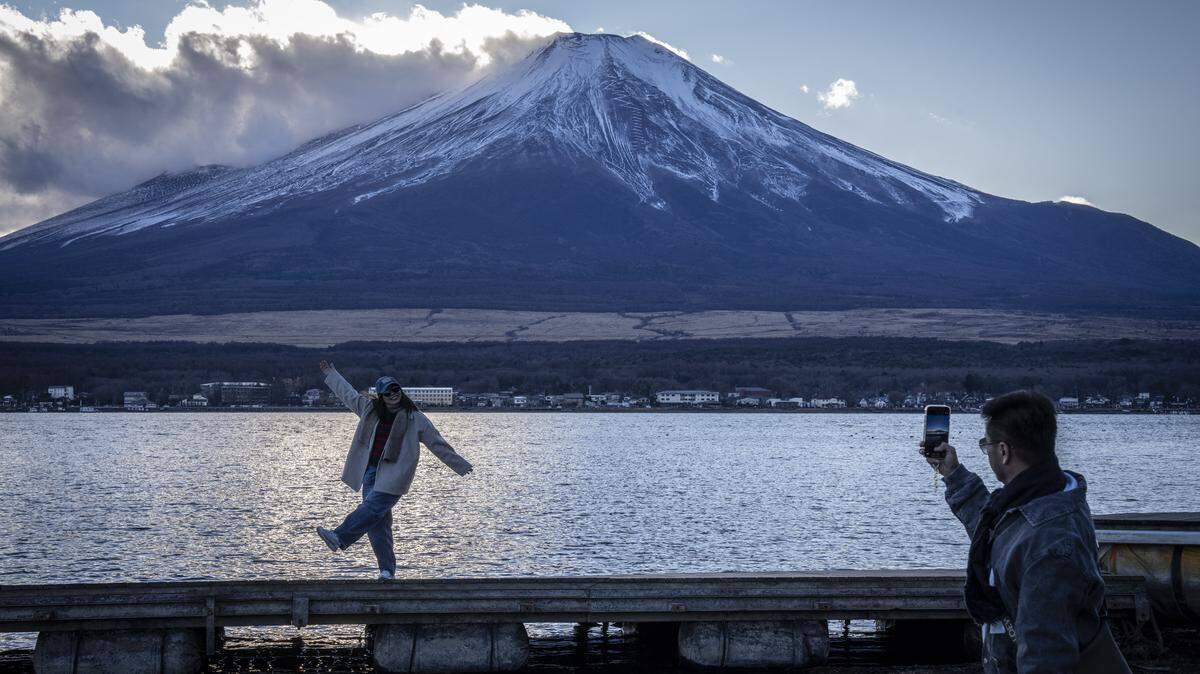
Speaking of Mount Fuji — Japan’s iconic and perfectly symmetrical volcano stands at 3,776 meters as the country’s highest peak. It’s best viewed from Lake Kawaguchiko, so head there for your perfect shot. Fun fact: around 200,000 to 300,000 people climb Mt. Fuji every summer from July through September. But you don’t have to climb it to appreciate its staggering beauty from nearby.
Nara Park: Where the Deer Run the Show
Nara Park is home to over 1,000 freely roaming sacred deer, and they are not shy. These deer will walk right up to you, bow for snacks and absolutely steal every frame. It’s playful, chaotic and wildly shareable. The Todai-ji Temple, also located within the park, houses a massive bronze Buddha statue standing 14.98 meters tall inside the world’s largest wooden structure. It’s a great day trip from Kyoto or Osaka.
Two More That Deserve a Spot on Your Itinerary
Senso-ji Temple is Tokyo’s oldest temple, dating back to the year 645. You enter through the Nakamise shopping street, great for souvenirs and snacks — best visited early morning to avoid crowds.
Then there’s Himeji Castle, nicknamed the “White Heron Castle” for its gleaming white exterior. This UNESCO World Heritage Site showcases early 17th-century Japanese castle architecture, is made up of 83 buildings and is one of the few original unreconstructed castles remaining.
Japan doesn’t just photograph well — it photographs differently every single time you visit. Tides change, seasons shift, light moves. That’s what keeps people coming back again and again.
This article was created by content specialists using various tools, including AI.