TSA adds new biometric gates at U.S. airports to speed up security checks
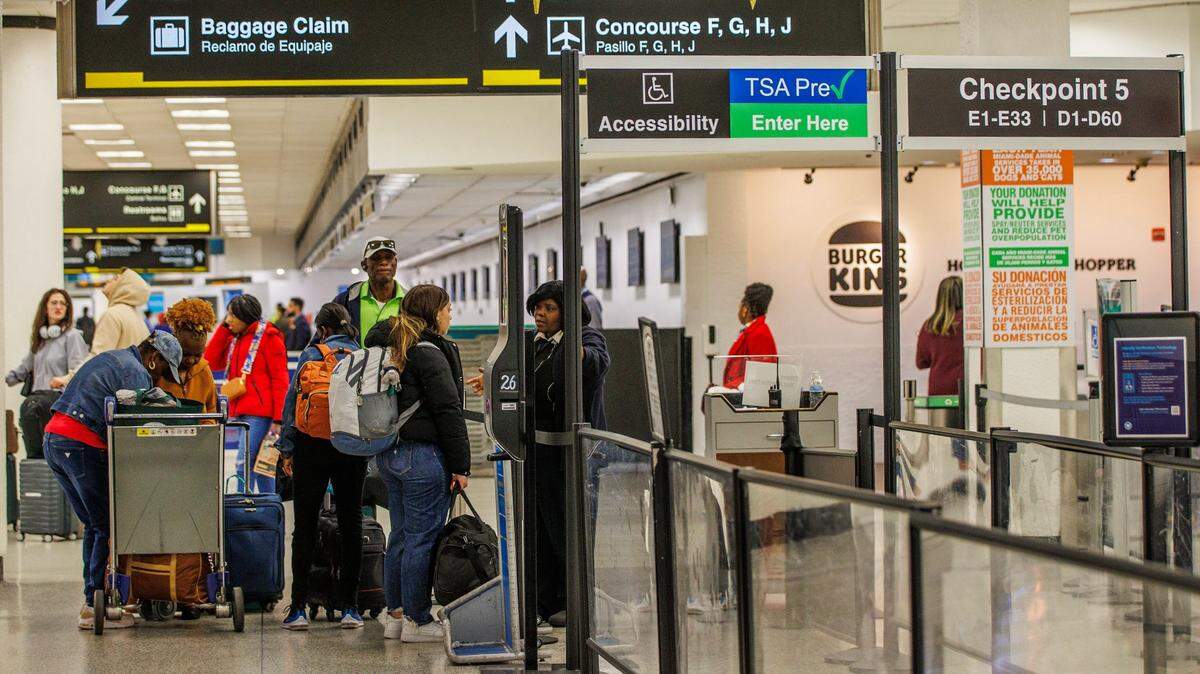
As part of efforts to “deliver on President Trump’s vision” for travel security in the United States, several airports will soon introduce new technology to verify passenger information.
In an announcement Tuesday, the Transportation Security Administration said the change is intended to “enhance traveler experience.”
For now, only a handful of airports will incorporate the technology, which stems from a new TSA public-private partnership, according to the agency.
Electronic gates
TSA checkpoints are beginning to incorporate new electronic gates to help expedite identity verification at select airports.
“The eGates allow TSA to automatically compare traveler biometrics with their identity document and boarding pass without the need for a human operator, enhancing efficiency and security. CLEAR, a private company operating under TSA’s Registered Traveler Program, is piloting these specific eGates in coordination with TSA at no cost to U.S. taxpayers,” the agency said.
MORE: Flying soon? U.S. Customs adds surprise checks while speeding process
The pilot program is being carried out by CLEAR in coordination with the agency. According to TSA, the initiative does not involve cost to U.S. taxpayers.
TSA Acting Deputy Administrator Adam Stahl said: “eGates accomplish several objectives toward achieving Secretary Noem’s goal to enhance TSA security and hospitality.” Kristi Noem is U.S. secretary of Homeland Security.
“This includes creating a seamless, less invasive traveler experience and shorter wait times at TSA security checkpoints. We look forward to rolling out additional eGate systems as we work to implement President Trump’s vision for a new Golden Age of American Travel,” Stahl added.
Which U.S. airports will feature eGates?
The CLEAR eGates made their debut at Hartsfield-Jackson Atlanta International Airport.
According to TSA, the technology is also expected to be installed later in August at Ronald Reagan Washington National Airport and Seattle-Tacoma International Airport.
How they work
According to FOX, the new system in Atlanta is currently available to members enrolled in the CLEAR+ pilot program, who can use dedicated CLEAR lanes at certain TSA checkpoints to bypass traditional processes.
The eGates use biometric software to compare a traveler’s face with their identity document and boarding pass. Once the traveler’s identity and authorization are confirmed, they move directly to the physical screening stage without interacting with TSA staff.
The technology arrives as the U.S. anticipates a surge in international travel, with millions of visitors expected for the 2026 FIFA World Cup.
However, the eGates won’t be available to everyone. CLEAR+ membership costs $209 per year per traveler, although the company also offers discounted family plans.
MORE: Traveler from Cuba stopped at airport after shocking find in bottle
Other changes in the ‘Golden Age’ of travel
Another policy celebrated by the Trump administration as part of the so-called “Golden Age of American Travel” is the end of the TSA shoe-removal requirement for domestic flights, a measure in place for nearly 20 years.
Recently, TSA clarified that passengers may still be asked to remove their shoes if an alarm is triggered during screening.
In July, TSA also highlighted Trump administration policies aimed at eliminating redundant passenger checks for international flights.
That program is in its early stages and currently involves only major U.S. airlines American Airlines and Delta, which partnered with TSA to pilot the new protocol from London’s Heathrow International Airport.
This story was originally published August 20, 2025 at 2:51 PM.