
A private Miami airport terminal for elite travel? See what’s coming to old site
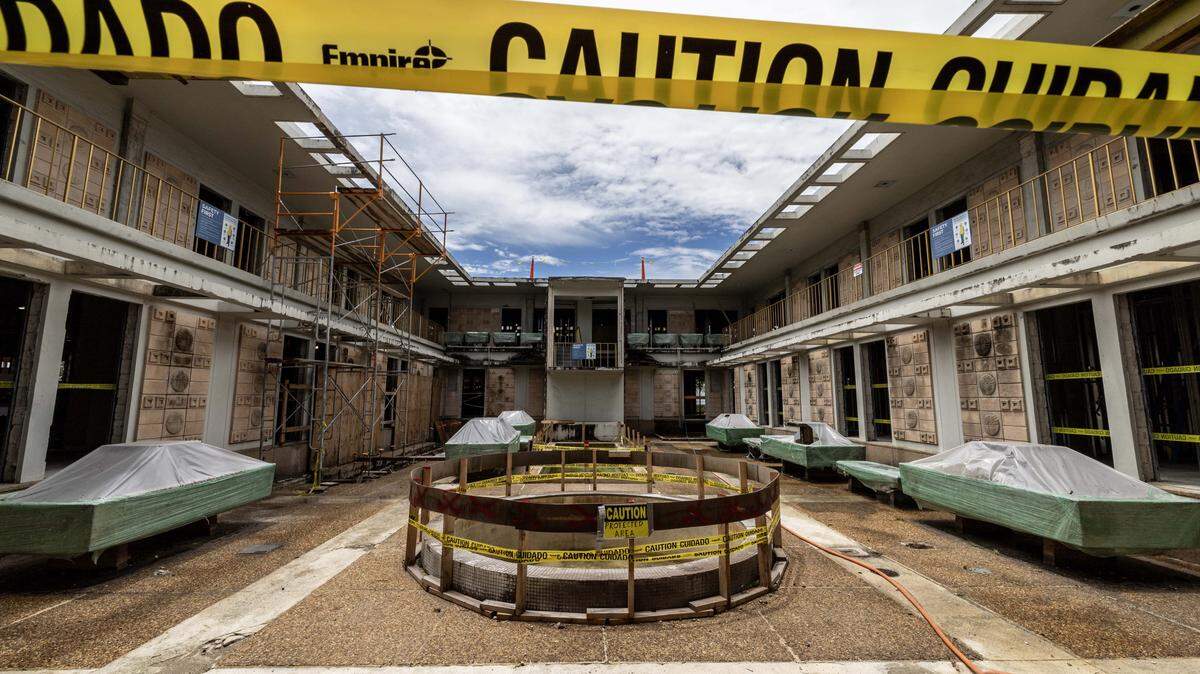
Miami International Airport has added and expanded airline VIP lounges as it looks to appeal to frequent or demanding high-end travelers.
American Airlines is doubling lounge space where free champagne will flow. Delta’s upgraded Sky Club offers Miami staples guava pastelitos and arroz con pollo. Then there’s American Express’ Centurion Lounge, which in July started bringing in James Beard-winning chefs to whip up pomegranate glazed salmon topped with tabbouleh. Massages are offered, too.
Now, MIA is ascending to a higher level. The airport has brought in a company to build a new private terminal on hallowed ground, renovating what was once the historic Pan Am headquarters building.
There are no gates nearby, but there’s no check-in or lines either. Travelers will spend on average about 90 minutes in the terminal gorging on unlimited food and drink. Bags will be whisked away and checked in. And the VIP terminal even has its own TSA and Customs areas.
When your flight is ready to depart, passengers will be brought to their flight in style, escorted individually in a BMW to the air field, across the tarmac and onto the plane.
That’s if you’re willing to spare $895 for one-time use, or as much as $4,850 for all-access yearly membership.
Upon returning, the reverse happens. You are taken back to the terminal and can enjoy a shower while your bags are retrieved by waiting staff.
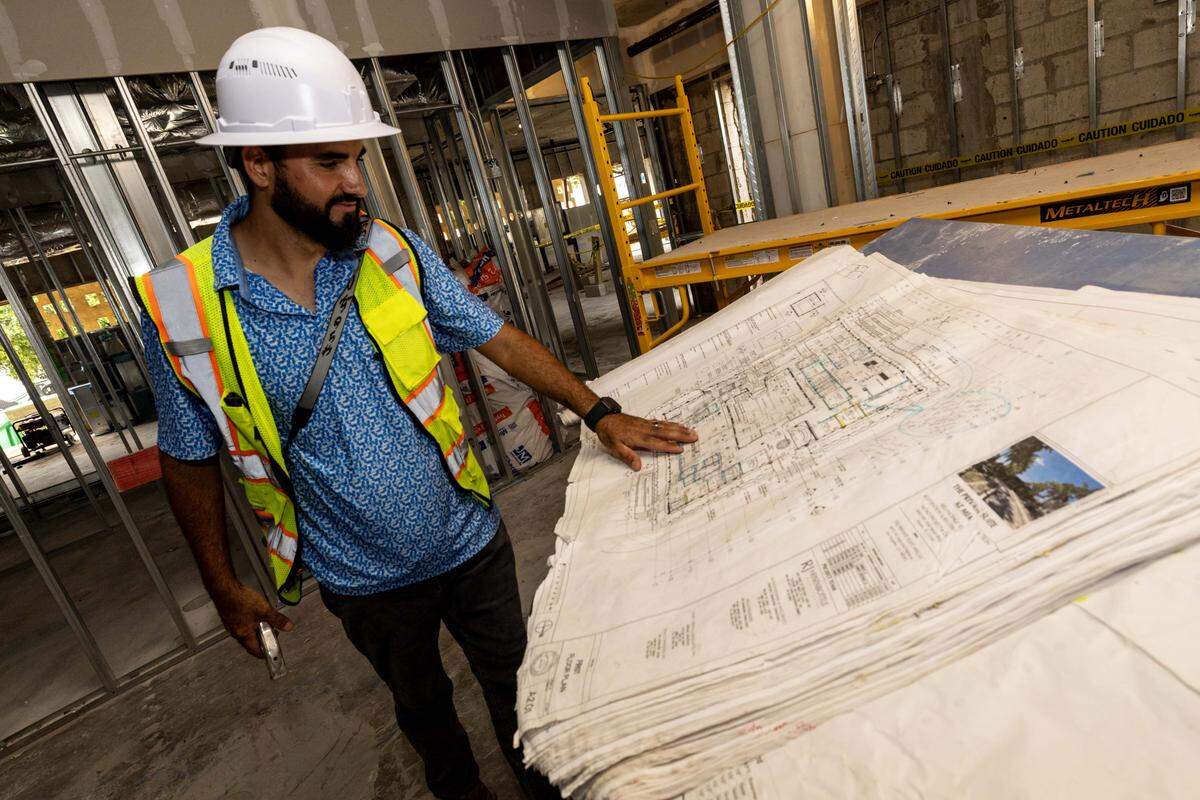
Although the two-story space with lounges, private suites and an elevator will offer plenty of perks, “the biggest amenity is skipping the airport itself,” said Amina Belouizdad Porter, CEO of PS, the company that is building and running the VIP terminal. “We all know they’re kind of stressful places.”
The Los Angeles-based company, previously known as The Private Suite, founded in 2017 and acquired by airport operator Groupe ADP in 2024, expects the terminal to debut by May 2026. It held a groundbreaking ceremony in July.
Porter thinks airport lounges can be part of what’s offered to travelers, and won’t go away. But she said what her company is doing “is designed for a different kind of traveler, someone looking for something more elevated.”
“Lounges focus on departures, whereas we also take care of arrivals,” she said. At PS terminals, “you have a dedicated team handling every detail, whether it’s how you like your coffee or managing your bags.”
Why airport lounges became all the rage — and an outrage
This new luxury project comes at a time when the topic of airport VIP lounges seems to have touched a nerve and may have even sparked the newest class conflict in America — between the wealthy and the super-wealthy.
A writer took to the New York Times opinion pages on Aug. 3 to lament that airport VIP lounges have become too crowded in a piece that went viral. The founder of the travel site One Mile at a Time recently said, “When everybody has lounge access, it’s almost like nobody does.”
Then, an Aug. 15 article in The New Republic ridiculed that sentiment with this headline: “The 10 Percent Is in a Fit of Rage Over Airport Lounges.”
The debate may indeed seem frivolous and one of luxury to many, but come next May, MIA will take it up a notch. Miami will be one of four U.S. airports that offers a PS terminal and test the demand for even more luxury.
The new elite meet the old elite
The new private terminal is at 4900 NW 36th St., the site of the original Pan American Regional Headquarters Building. It’s one of several Pan Am buildings still around.
Pan Am was founded in 1927 as the first international airline in the U.S. In 1928, it opened a terminal and airfield on Northwest 36th Street on the site of the original Miami International Airport.
In recent years, community groups have fought to preserve the airline’s legacy. They’ve faced several setbacks. But the new private terminal is winning their support, with the backing of historians and preservationists who have been fighting to maintain South Florida’s aviation legacy in a region known for tearing down buildings.
The 1963 Pan Am headquarters building, set behind a long reflecting pool, was nicknamed the Taj Mahal because it resembles the U.S. Embassy in New Delhi that was built in 1959.
Preserving the Pan Am legacy
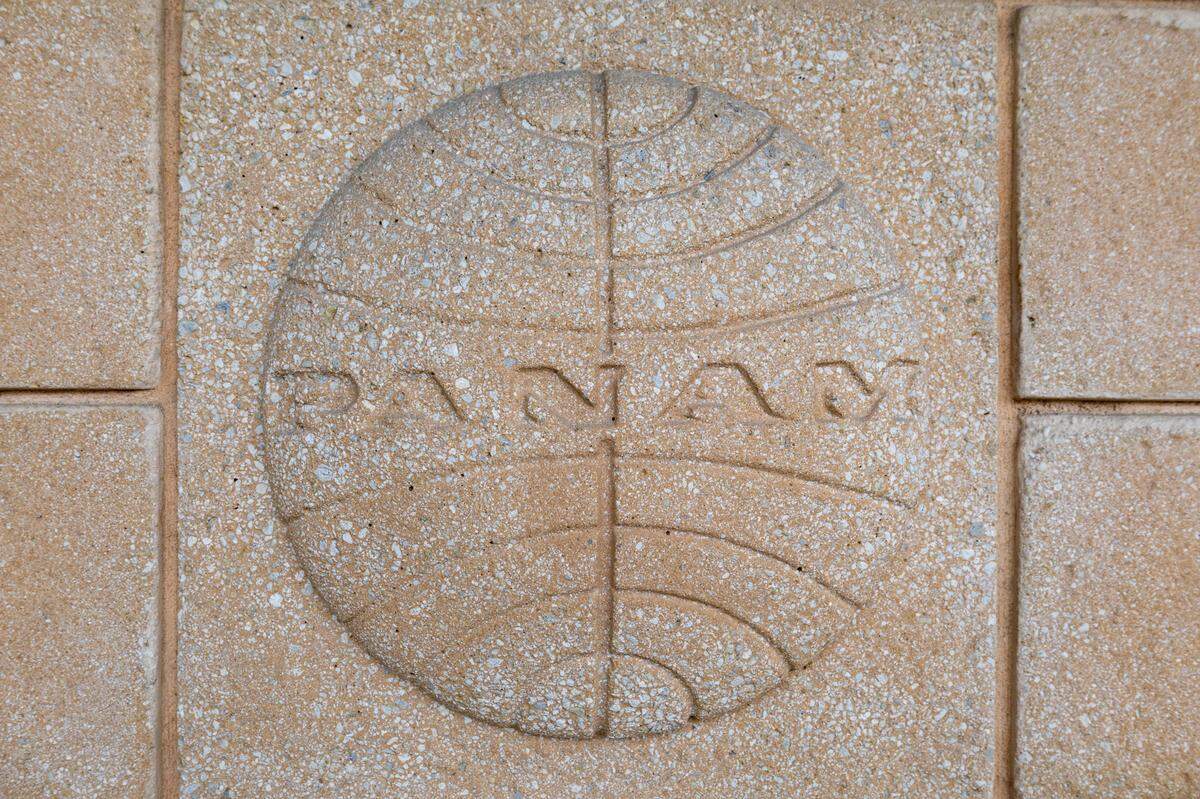
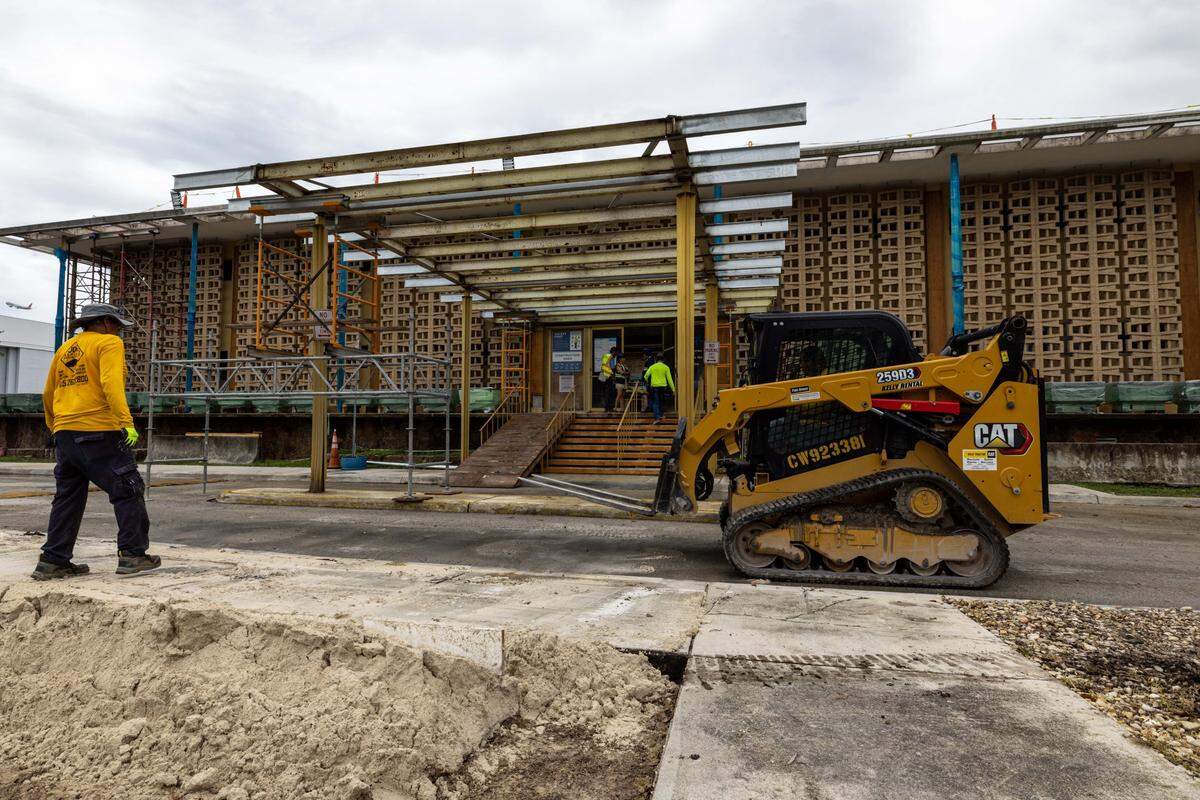
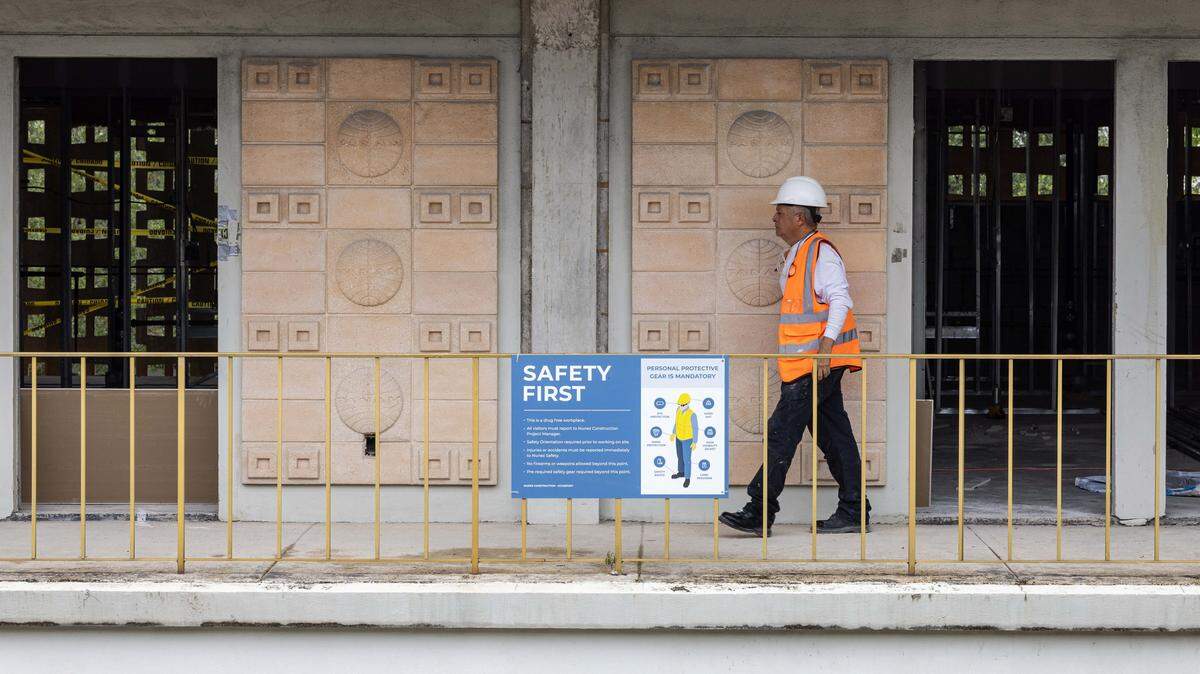
As construction goes on. PS is making effort to maintain what it can. The company is preserving mid-20th Century brutalist architecture with finishes and furniture from that period. Pan Am logos, gold paneling and the original reflecting pools are being restored.
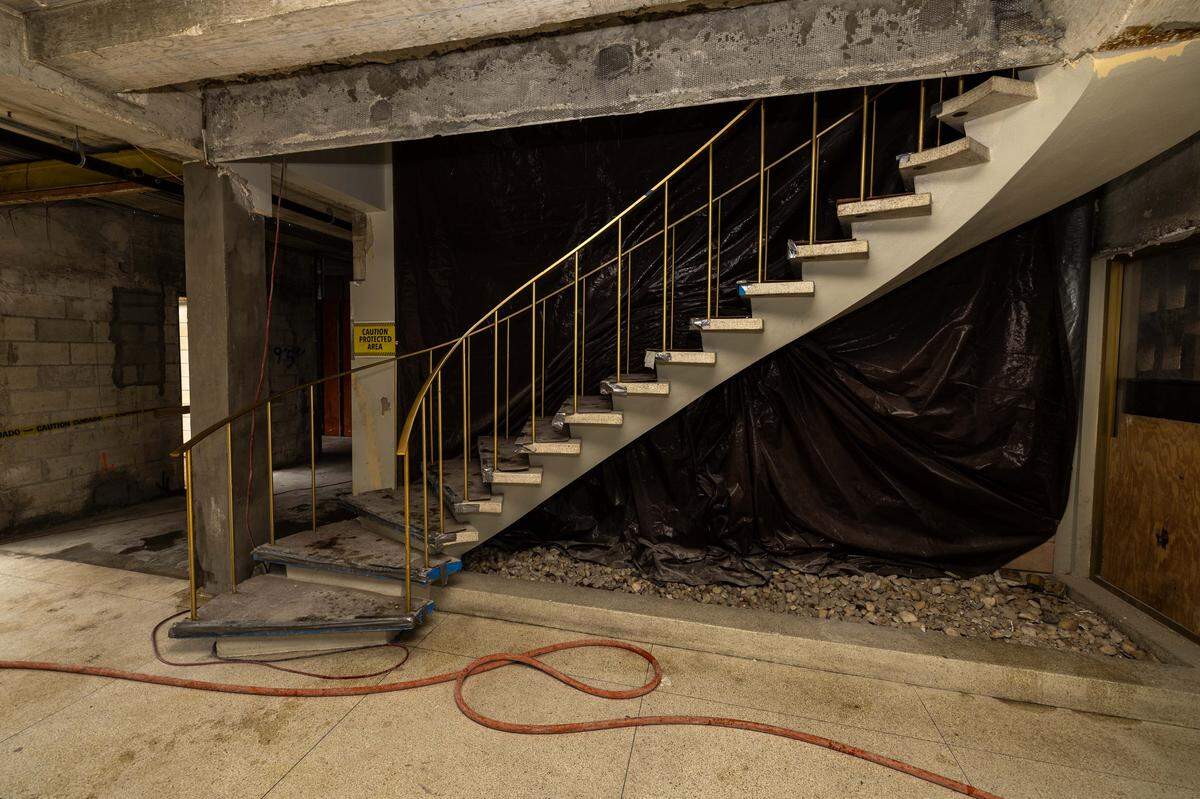
The company is also restoring the original winding staircase just inside the front entrance with gold rails on the side.
MORE: How Pan Am’s biggest fans are keeping the airline’s spirit alive. ‘Miami was everything’
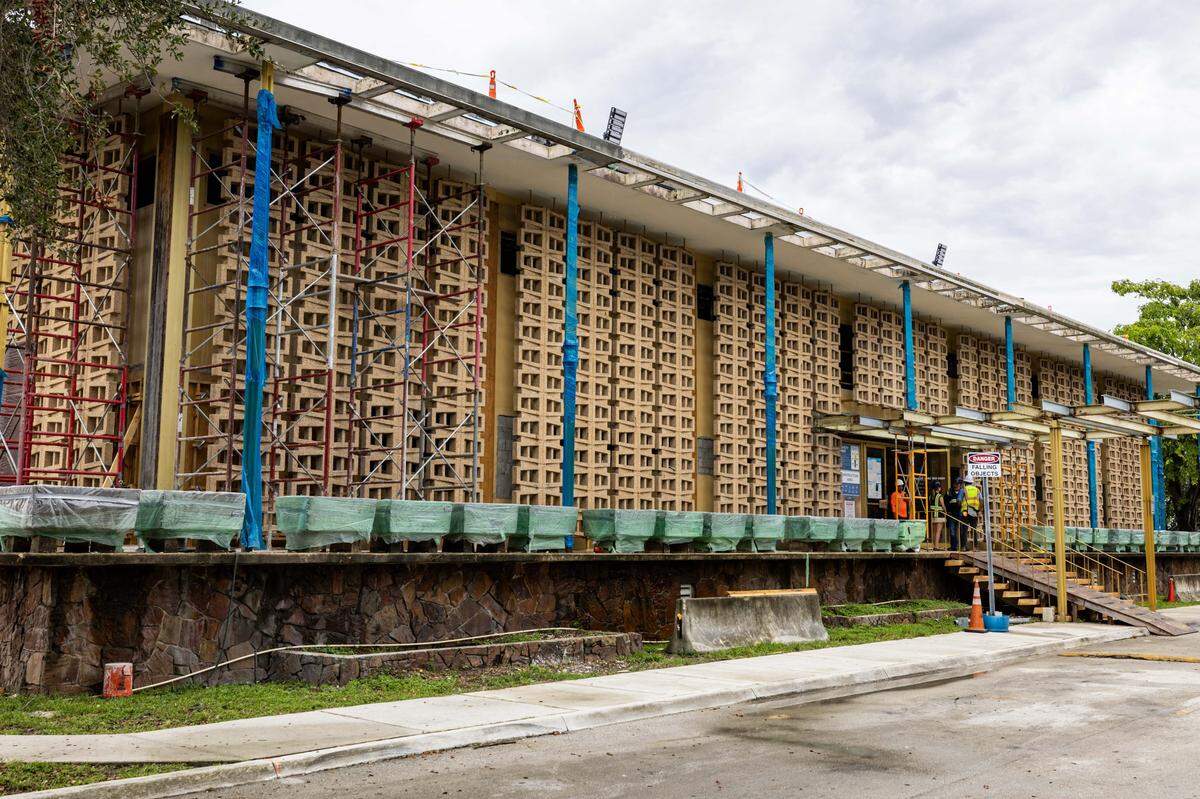
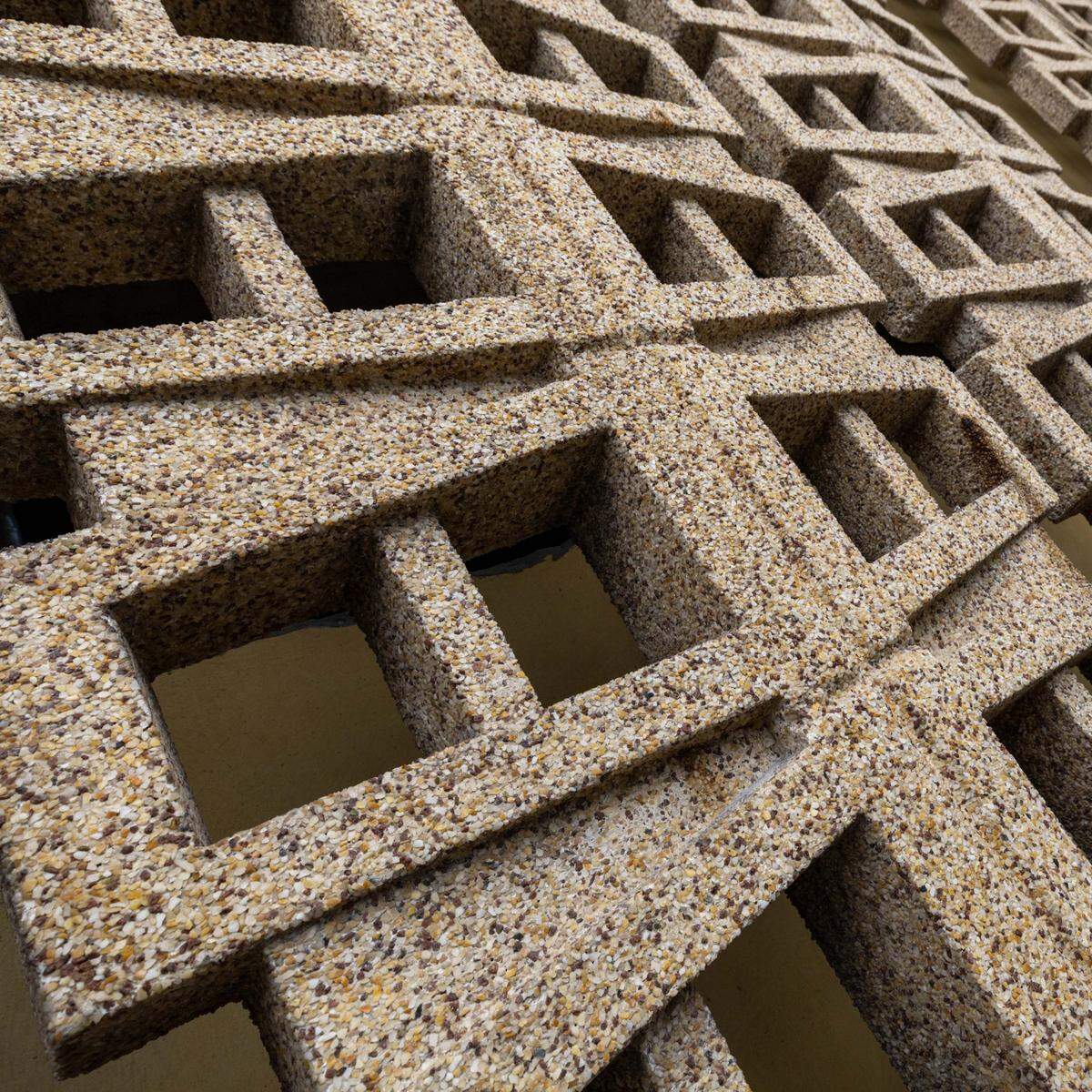
Also being maintained is the overhanging flat roof supported by thin gold metallic columns. All four sides of the building are covered by a pattern of interlocking trapezoidal pieces that serve as a sunscreen, cooling the interior. These are all features developed by the building’s original creators, the Miami firm of Steward-Skinner and Associates, prominent architects of the time also responsible for the design of the Miami Seaquarium and MIA’s first jet-age terminal.
“We are really saving and restoring everything that was part of the Pan Am experience,” the project’s lead architect, R.J. Heisenbottle, told the Miami Herald in 2023.
“They were the best in the sky, let’s face it, for many, many years. All the ornamentation that represents Pan Am is being restored and kept, and it’s going to look pretty damn spectacular,” the Coral Gables-based founder and president of R.J. Heisenbottle Architects said then.
The plans and the construction underway have come as welcome news to community leaders who have long been trying to preserve the history of Pan Am. Several of them are former flight attendants or pilots for the carrier. Others had family working there. They include Deborah Stander, president of Hangar 5 Foundation Inc., a group looking to preserve the airline’s legacy, including Pan Am Hangar 5, built in 1929, the oldest building at MIA and last surviving one from Pan Am’s start in Miami.
“I’m thrilled,” Stander said of the terminal plans, which she has followed.
“They’re being very respectful to Pan Am history,” said the daughter of a long-time executive at the carrier. “It’s a nice second life for it.”
Pan Am originally launched in Key West in 1927 but moved to Miami the following year after purchasing 116 acres from the Seminole Fruit Co.
Paul George, resident historian at the HistoryMiami museum in downtown Miami, said the county historical preservation board is typically most concerned with not altering the facade of important buildings.
“I’ve been supportive” of the project, he said. He called it a good example of adaptive reuse, saying people will be using the new terminal. “What’s driving it in many ways is the market.”
The business opportunity almost didn’t happen. Before 2014, the building was abandoned and MIA wanted to tear it down.
The central courtyard was growing algae and there was overgrown vegetation, Sarah Cody, historic preservation chief for Miami-Dade County, recounted in an interview with the Miami Herald. Trees were growing on walls and weeds were abundant.
Cody served as a preservation planner in 2014 and authored the report to recommend the building for historic protection.
“The airport had vacated the building many years prior,” said Cody. “It wasn’t maintained.”
Yet, in a curious development and perhaps a sign of the power of the one-time aviation giant, “all the original building elements were maintained” and “the Pan Am logos were beautiful,” she recalled.
Cody’s report described the building as “an excellent example of mid-century Miami Modern (MiMo) architecture.”
And it held historical importance.
“It survives as a physical reminder of the significant role Pan American Airways played in the development of the Miami International Airport; of Pan Am’s prominent role in early aviation history, and of Pan Am’s role in aviation training following World War II,” the report said.
In 2014, the Miami-Dade County historic preservation board approved the building for designation. But the County Commission then voted to nullify the preservation board’s move, Stander recalled. Miami-Dade County Mayor Carlos Giménez vetoed that opposition vote, and the building was designated historic.
Inclusion on the historical preservation list means it’s now much harder to destroy the building.
“It’s not impossible to get it demolished but it’s challenging,” Cody said.
That’s because the county has to approve the company’s permits to make significant changes to the exterior.
If PS eventually wants to add a third floor to the building, for instance, the company will need approval by the county preservation board. Any physical repairs or alterations to the exterior of the building, central courtyard and reflecting pool must follow county code, which requires review and approval by the Office of Historic Preservation or the County Historic Preservation Board, said Cody.
On Oct. 18, 2023, the county’s historic preservation board approved the initial project.
The company started eyeing Miami before the pandemic. Porter, the PS chief, said the city was one of 10 in the U.S. ”that make a lot of sense for the PS business model and for the PS client.”
What does Miami offer?
“It houses a lot of ultra high-net worth individuals and luxury travelers that make the base of our clientele,” she said.
In 2021, the county opened competitive bidding for the project. Documents identified the target demographic as “frequent affluent travelers who value status” and will pay to avoid the congestion facing “conventional passengers” at MIA.
In 2023, the Miami-Dade County Commission approved the project.
According to documents from the vote, PS agreed to a 20-year contract with the county. The county-run Miami airport will receive a minimum of $600,000 annually in rent from the company, or 7.5% of gross revenues, whichever is higher.
Airport CEO Ralph Cutié estimated that over the life of the contract, $16 million in revenue would be generated for MIA without cost to the county.
PS has committed to spending at least $12 million to renovate the building.
Allure of Miami International Airport
MIA is at a pivotal moment. The airport has set records for number of passengers through the end of 2024. Although in 2025, MIA saw its first decline in the first half of the year since 2017, excluding the pandemic year of 2020. The airport is undergoing a $9 billion modernization program.
VIP lounges are expanding, too. And MIA leaders continue to try to position the airport as a global hub with multiple ways to draw wealthy travelers.
When complete, MIA will be just the fourth airport in the U.S. with a PS private terminal. Los Angeles International Airport, which was first, and Atlanta each have one. The third is being built at Dallas Fort Worth International Airport and will open in April 2026.
MIA’s growth pressures come at a time when community leaders seek to preserve the legacy of Pan Am. and are running into challenges.
In June 2024, the county historical preservation board voted 3-2 against adding Hangar 5 to the protected list, in a move that surprised Stander and others. County preservation chief Cody even voted against it. While she noted in a preliminary report that Hangar 5 met legal criteria for historical designation, she endorsed not doing so because MIA needed the building for other uses and it’s not publicly accessible.
The building where PS is developing its private terminal remains the only one among the original Pan Am buildings protected by the county.
But Stander and other preservationists are pursuing other avenues and got a boost last month.
Hoping for national recognition
On Aug. 14 in Tallahassee, the National Register Regional Review Board, the regional arm of the National Register of Historic Places that keeps the official list of the country’s historic places worthy of preservation, voted unanimously to support a proposal to create an entire Pan American Airways Historic District at MIA that encompasses five still existing buildings built by and for Pan Am when it operated at MIA from 1928-1991. It would include Hangar 5. Stander and colleagues have been leading the effort and were previously urged by Florida state officials to try it.
The application is now being sent to the National Park Service in Washington, D.C. , which oversees the National Register. They have 45 days to act. They can designate the place as Local, State, National, or all three.
But Stander, Cody and the historian Paul George caution that the state’s recommendation and a National Register listing are honorary. That would not affect the work to open the new members-only terminal. Nor does it prevent the other Pan Am buildings from being torn down. The regulation of historic districts is done at the local level.
Still, Stander says a National Register listing would be helpful and could provide momentum. It would make the district eligible for grants from historical preservation groups.
‘“Miami has an incredible aviation history but we have no showcase for it,” she said.
“It’s very significant,” George said of the Aug. 14 vote and the possibility to make it into the National Register.
The historian who sits on the county preservation committee and backed the Pan Am headquarters inclusion in 2014 and Hangar 5 last year, said with national recognition, tour groups from all over the country could start showing up, as could movie shoots.
“It could create momentum for maintaining and preserving” the buildings, George said.
Perhaps, launching PS terminal next year can help too, especially if it does well.
Amina Belouizdad Porter, the PS chief, said they didn’t initially seek out the Pan Am building. But she knew and appreciated the history and significance of the building and airline, and hoped to build on that.
“Pan Am was the most luxury international airline at the time,” she said. “It really elevated commercial air travel at the time.”
And they didn’t miss a detail. The building PS is renovating also served as Pan Am’s Flight Attendant Training School, which grew due to surging demand after World War II. Classes were offered on serving in-fight refreshments and putting on make-up. The winding staircase near the front entrance was “used to help the students practice proper posture,” the 2014 report by the county said, “as they were made to walk down the stairs with books carefully balanced atop their heads.”
George thinks the new terminal could exceed expectations. Maybe even lure restaurants and other businesses nearby.
“All kinds of things could happen there.”
This story was originally published September 6, 2025 at 5:00 AM.