
How $9 billion will change Miami’s airport, and what travelers are getting for the money
A moving walkway isn’t much use when it’s not moving.
That’s certainly the case at Miami International Airport, where a stretch of walkway on the third level is stopped in its tracks while undergoing repairs that will stretch into next year. An adjacent span got going again just before the Thanksgiving travel rush.
An airport’s biggest mission after safety is to keep travelers moving through the terminal as they head to and from their flights. And this walkway is crucial because it’s in a long hallway connecting passengers in Concourse D, home to American Airlines, to parking garages, a rental car center and to Concourses E and F.
“There’s a whole lot of walking,” Michael Brice, 46, of Miami, said in an interview at the airport on Dec. 11. “Their inability to keep the moving walkways running is a hassle.”
At least one year will have elapsed by the time that segment of the walkway is completely fixed.
As airline passengers crowd into MIA in December and January for holiday travel, they’ll see not everything is working. But they’ll also see repairs underway, with more to come.
Travelers may think it’s easy to fix a broken walkway or escalator, but the airport’s chief says nothing is simple in the sprawling place that he oversees.
“We have escalators that are comprised of over 12,000 moving parts,” Ralph Cutié, director and CEO of Miami International Airport, said in an interview with the Miami Herald before the Thanksgiving travel crush. “All these parts have to be manufactured,” and they’re often individually designed and engineered for a specific location, he said.
“You can’t buy these things off the shelf and just insert them.”
Fliers at MIA may only see a walkway or escalator, but each segment has a specific, carefully tracked serial number. The span back in service after about nine months is called Unit 69275. The one out of service: Unit 69276.
Broken escalators and moving walkways are a major source of complaints from airport passengers, and their repairs are part of a wider renovation effort at Miami International Airport. They also show the challenges for MIA in making improvements to accommodate record-breaking growth in the number of travelers and flights.
What the MIA traveler will see in the future
Miami International is in the early days of delivering on two massive new improvement plans, covering big and small.
A $7.4 billion investment will redesign the Central Terminal, including concourses E and F, expand South Terminal, and renovate Concourse D.
A separate $1.7 billion plan will replace all 126 passenger bridges, remodel all 447 restrooms and upgrade elevators, escalators and walkways.
The airport director says the bill for the $9 billion in improvements is being paid by airport-generated revenue —tenant rent, airline fees — and that no tax dollars are involved, although the Miami-Dade County Commission still has to approve projects.
The 150 projects in the works will take 15 years to complete.
What’s coming?
The plans include the reconfiguration of boarding areas to have more space and concession areas. The terminals will have more natural light and less congestion, with roomier areas for travelers to walk through.
TSA lines will be added for quicker security checks, and more parking will help ease the holiday crunch. MIA is also adding a Westin hotel and expanding its cargo centers.
“We are addressing every single passenger pain point,” Cutié said. “Five to 15 years from now,” the airport “is going to be totally transformed.”
The reason for the improvements should be apparent to any traveler passing through Miami: The airport is growing and often struggles to keep up.
How MIA is changing
Miami International is on track to hit 57 million passengers this year, Cutié said. That would be a 9% increase from 2023 and a new record for the third consecutive year. By 2040, MIA forecasts 77 million passengers, 35% more than today.
The airport is home to nearly 1,000 flights each day and is the ninth busiest in the nation, as well as second in international passengers.
In the past 12 months, the airport has added or expanded flights to Cancun and Rome. Qatar Airways and Finnair fly to and from Miami. The MIA-Helsinki flights aren’t just for young Fins looking to escape their winter. Miami-based Royal Caribbean Group’s main shipbuilder is in Finland.
But with growth has come growing pains.
Foreboding yellow barricades signaling broken stuff have dotted the airport much of the year.
Skytrain, which serves passengers and crews at 60 gates in Concourse D, closed in September 2023 due to cracks in concrete supports for the train. Three of four stations have since reopened and the fourth is scheduled to open by next summer.
MIA’s ranking on J.D. Power’s 2024 North American Airport Satisfaction Study was slightly below average and tied for 10th with Boston’s Logan Airport out of 20 airports in the mega airport group. A year earlier in its annual survey, the global consumer insight and advisory firm had MIA tied for fourth with Dallas-Fort Worth International Airport.
“It’s been sliding down the list because of one main factor: too many people,” Michael Taylor, practice lead for travel intelligence at J.D. Power, said in an interview with the Miami Herald.
“You don’t know where to go” when arriving or departing at the airport, said Yuri Solov, 28 from Lithuania. “It’s always confusing. It takes a while.”
Yet there are signs of hope. Solov and a traveling companion, Irma Rubio, 26, praised airport workers.
“There are lots of people willing to help,” Rubio said.
Parking, bridges bathrooms: Boosting basics at airport
The airport is trying to keep up with the demands of both growth and crumbling infrastructure.
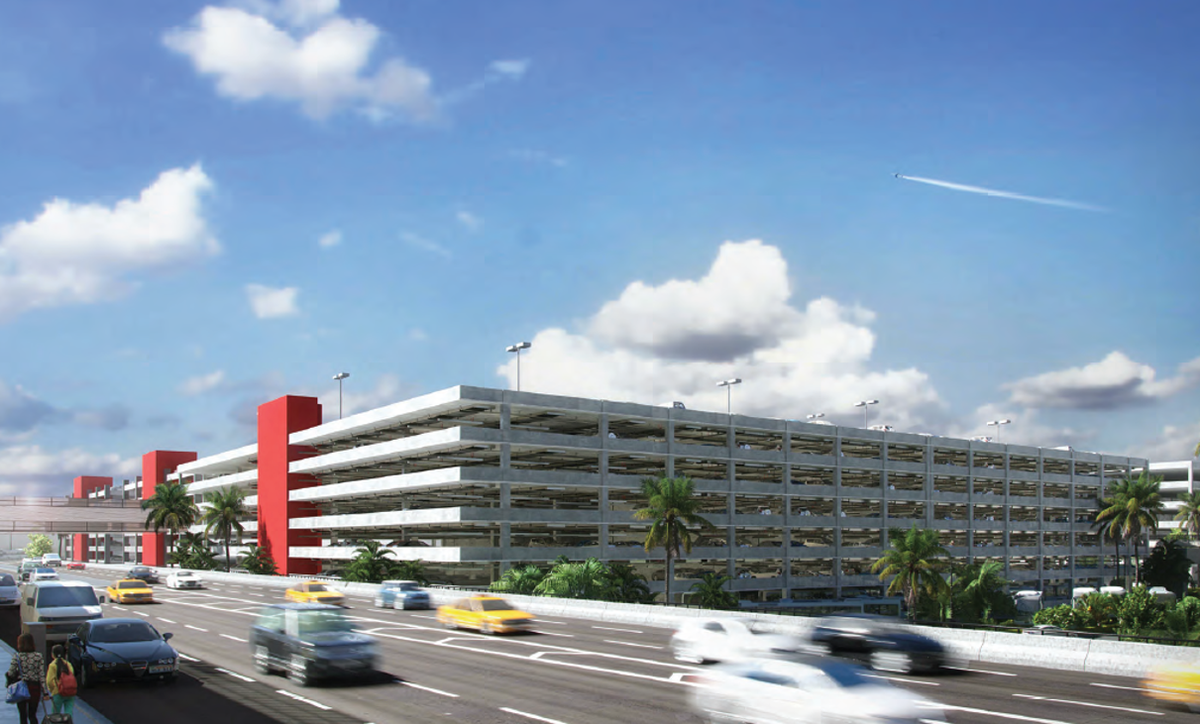
MIA broke ground in February on a seven-story, 2,240-space addition to the Flamingo parking garage. It’s on track for completion by the end of next year.
A new Concourse K, part of the South Terminal expansion, will add six new gates for narrow aircraft. The concourse will also have space for airline lounges and more concessions.
In perhaps the most ambitious move, all 450,000 square feet of existing terminal roof will be replaced, draining and lighting systems will be improved, and solar panels will go up on the roof. This will be done in phases, starting in winter 2025 and finishing by winter 2029.
“The roof is extremely old, so a lot of our leak complaints originate here,” Cutié said. They have done piecemeal work in the past but decided that wasn’t enough.
A leak that got attention earlier this year, when green liquid dripped from an airport ceiling and pooled on the floor, didn’t come from a roof leak, but rather from a broken pipe.
A separate $1.7 billion improvement plan also is underway, already replacing 32 of MIA’s 126 passenger bridges that serve 126 gates. Of those, 30 are traditional steel bridges but they experimented with two glass bridges at two gates — D14, which serves American Airlines, and H17, used for Delta.
Cutié said they got lots of good feedback from passengers who used them, so the airport decided the rest of the bridges would be glass. They are easier to maintain and passengers get a nice view of the airfield and feel less claustrophobic. The airport is about to seek approval from the County Commission for the next 10. The entire project is expected to be completed in 2028.
Replacing all 447 restrooms at MIA has already started, too.
So far, 48 bathrooms have been fully renovated and ready for the public. The new ones have paper towels instead of hand dryers. About 158 restrooms are in design or permitting, and so 241 are still the older ones.
Restrooms are “our number one complaint,” said Cutié, who expects them to all be remodeled by 2030.
MIA’s overall plan is a good one, said Taylor of J.D. Power, with a budget that’s appropriate.
“Mega airports need to spend at least $1 billion” for any meaningful renovation, he said.
And the 10- to 15-year time frame is “middle of the road” in length, he said. But he would like to see more focus on improving access to the airport or getting travelers into the terminals faster.
None of the improvements will come easy. MIA runs 24/7 and can’t afford to shut down for anything. Cutié expressed envy for the Dallas-Fort Worth airport, which has acres of empty land. MIA has no such luxury, so the airport is handling renovations while doing business as usual.
That’s evident in the airport’s approach to upgrading elevators, escalators and moving walkways.
MIA has a total of 616 of those conveyance units, slightly more than half of what’s in all Miami-Dade County facilities combined, Cutié said.
While Cutié says that 90% of them are in service, he realizes few images are more powerful than out-of-service moving walkways or elevators. The public often gets angry about that. And it’s the second biggest source of complaints at MIA, after restrooms.
South and North Terminal expansions have been prioritized over conveyances, he said in an internal presentation he gave on June 7 and shared. That, combined with high turnover of contractors and a global supply chain slow-down that started during the pandemic, have led MIA to modernize or replace only 30 conveyance units since 2016.
Logistics are complex. Installation requires mobilizing cranes and lifting heavy equipment. Parts that are obsolete with long manufacturing times are often needed. And since the Surfside tragedy, the number of permits needed and the processing time have increased.
MIA plans to modernize every one of the 616 units, aiming to do 30 each year while doing repair on other units when needed. So far, about 34 units have been modernized. That includes two elevators in the Flamingo Garage, which resumed working in October. Each had been out of service since December 2022.
The timeline from initial ordering to the final inspection by Miami-Dade County is 80 to 90 weeks for a moving walkway, 75 weeks for an escalator and 68 weeks for an elevator.
Then there are the units that need repairs.
Earlier this year, 41 conveyance units were listed as out of service on an MIA spreadsheet. Six of those returned to service in October, including the two units on the third level of Concourse D. Another 13 are scheduled to be up and running again by March 31, 2025. Of course, more units are expected to go out of service and be added to the list.
“What keeps me up is not being able to do it fast enough,” Cutié said. “And because our infrastructure in some areas is so aged, ... we have to constantly keep that up and running and maintained as we modernize.”
Highlights of Miami airport improvements
▪ Flamingo Garage extension
Details: 2,240 parking spaces, 34 for oversized vehicles and 34 disabled spaces. There are 50 electric vehicle charging stations and there will be LED lighting throughout. Each level of the seven-floor structure will have two pedestrian connections and elevators.
Estimated cost: $137 million
Started: Groundbreaking was in February 2024
Completion: By end of 2025; currently on schedule
Need: “Around the holidays, our parking garages fill up pretty good. This garage is desperately needed,” said Ralph Cutié, CEO and president of MIA
Note: Once complete, the garage will be wrapped in stainless steel. This will be a “game-changer in aesthetics” says Cutié, and easier to maintain.
▪ South Terminal and apron extension (New Concourse K)
Details: Adding six gates for narrow aircraft types, all domestic initially with three eventually becoming capable of international flights; adding post-security concessions space; will include space for airline lounges.
Estimated cost: $746.4 million
Started: Groundbreaking will be in fall 2025; now in bidding phase with company selection mid-2025.
Completion: Spring 2029
Need: To expand South Terminal and also concession space
▪ Central Terminal redevelopment, Phase I
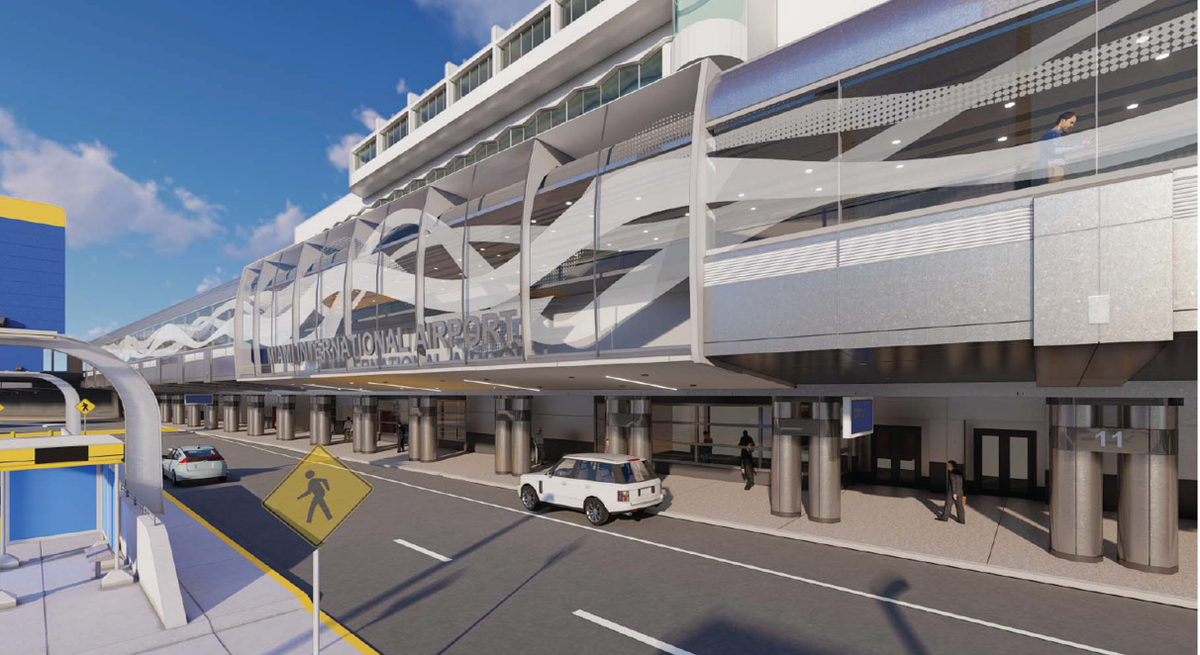
Details: Four-level renovation and expansion; post-security corridor between Concourse E and F; add post-security concession area. “This will totally redo Central Terminal,” said Cutié, with modernized interiors, more retail and more food and beverage.
Estimated cost: $373 million
Start date: Groundbreaking spring 2028; Miami-Dade County Commission awarded contract. Design should start by end of 2024 with design finish in a couple years
Completion: Construction in fall 2030 or 2031
▪ Central terminal redevelopment, Phase II
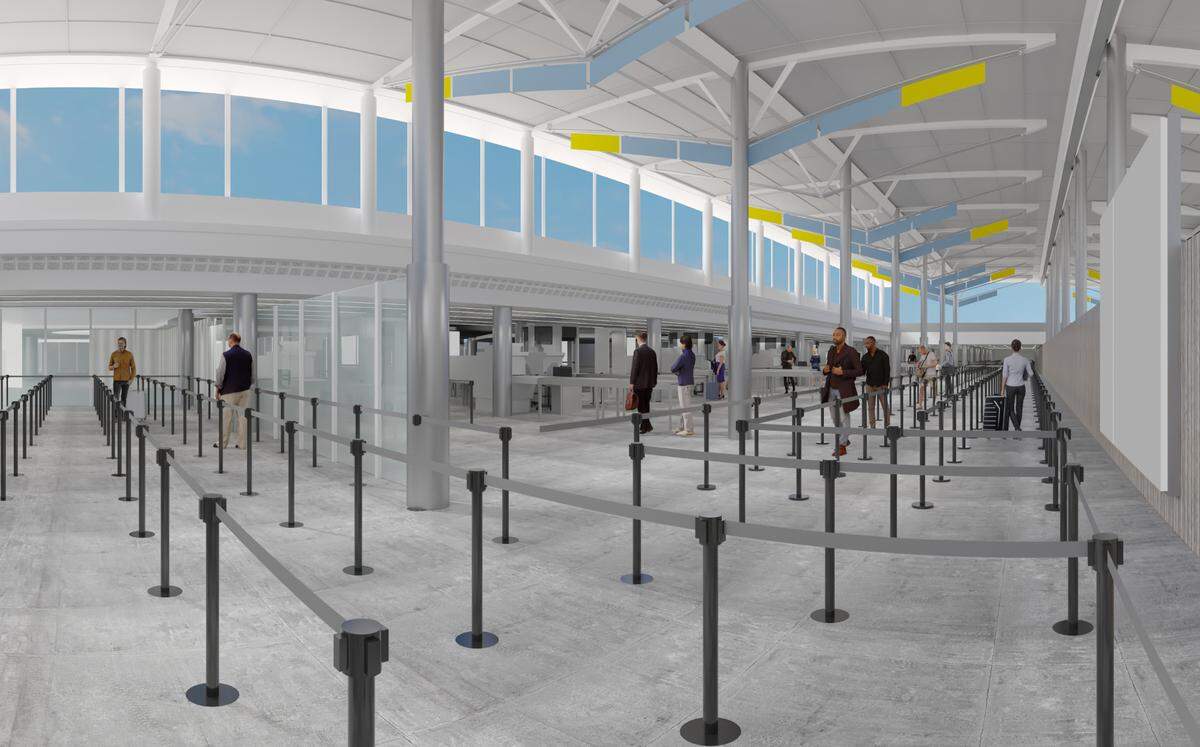
Details: Expansion of the line area; raising existing ceiling and roof to bring in more natural light; new vertical circulation core with elevators and escalators for passenger circulation; new consolidated TSA checkpoints that get you to Terminals E and F; renovation of second-level departure curbside facade blending appearance from North to South; more concessions
Estimated cost: $375 million
Start date: Groundbreaking in spring 2028
Completion estimated: Fall 2033
Need: This is MIA’s oldest terminal: “If you consolidate TSA checkpoints and include modern technology, you’ll increase passenger flow through the checkpoints, which makes it more efficient getting passengers through,” Cutié said. The changes are “going to transform the inside and the outside of central terminal.”
▪ Concourse D West expansion
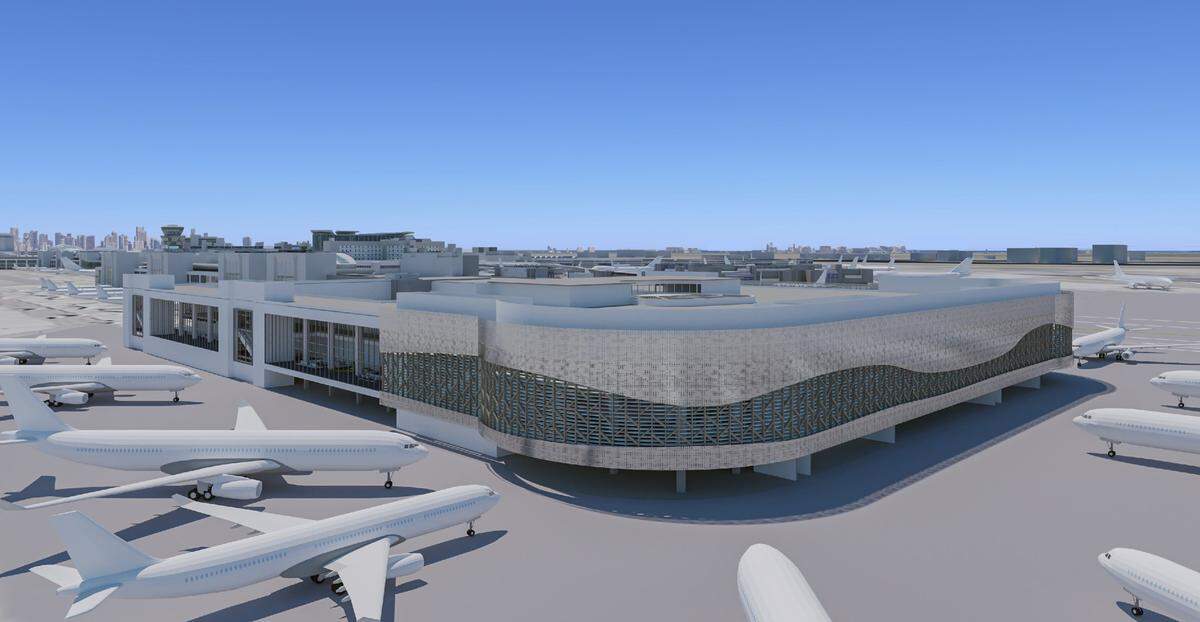
Details: 17 ground-boarding hardstand gates will be reconfigured to 19 contact gates each with boarding bridge. Currently used for smaller regional jets mostly flying to Tallahassee; changes will allow bigger regional aircraft like Embraer 145 and Embraer 175 series to use gates; 16 of 19 gates will continue to serve narrow-body aircraft like Boeing 737 or Airbus A320; three level expansion of regional commuter area at Gate D60; new boarding areas, concessions and expanded baggage system; more natural lightning; mainly for American Airlines
Estimated cost: $843.5 million (pending approval)
Start date: Groundbreaking: TBD; currently working with AA on scoping and budget
Completion estimated: TBD
Need: Currently, all flights here go to Tallahassee and “it’s a very constrained area,” Cutié said. Passengers have to go outside to board flights. That will no longer be true. “This will transform one of the older, more rundown parts of North Terminal.”
▪ Terminal roof replacement
Details: Replacement of 450,000 square feet of existing terminal roof; improvement of drainage and lighting systems; installation of solar panels on roof; MIA’s oldest terminal; will be done in phases
Estimated cost: $120 million
Start date: Groundbreaking in winter 2025
Estimated completion: Winter 2029
Need: ”The roof is extremely old, so a lot of our leak complaints originate here,” Cutié said. Patchwork done in the past, but overhaul needed.
This story was originally published December 13, 2024 at 5:00 AM.