COVID helped Florida pet shelters hit a record — but cats are a challenge
The COVID-19 pandemic has been a lifesaver for shelter animals.
During the past year, Florida’s animal shelters have collectively saved nearly 9 out of every 10 animals taken in, setting a “lifesaving record” for the state, according to a new study by the University of Florida.
The rescues have come in various forms: through adoption, reuniting owners with pets, transferring to another shelter or rescue group where there is more room, or neutering and returning community cats to their original neighborhood.
Florida has a long history of pet overpopulation and high euthanasia rates in shelters compared to the rest of the country, caused in part by the warm climate, high poverty rates, large rural communities and “veterinary care deserts,” according to the study.
Florida public and private shelters in 2020 admitted 312,157 cats and dogs, a dramatic decrease that was influenced by the pandemic pausing many shelter services, said Dr. Julie Levy, a Fran Marino professor at UF’s Shelter Medicine program and the study’s lead researcher.
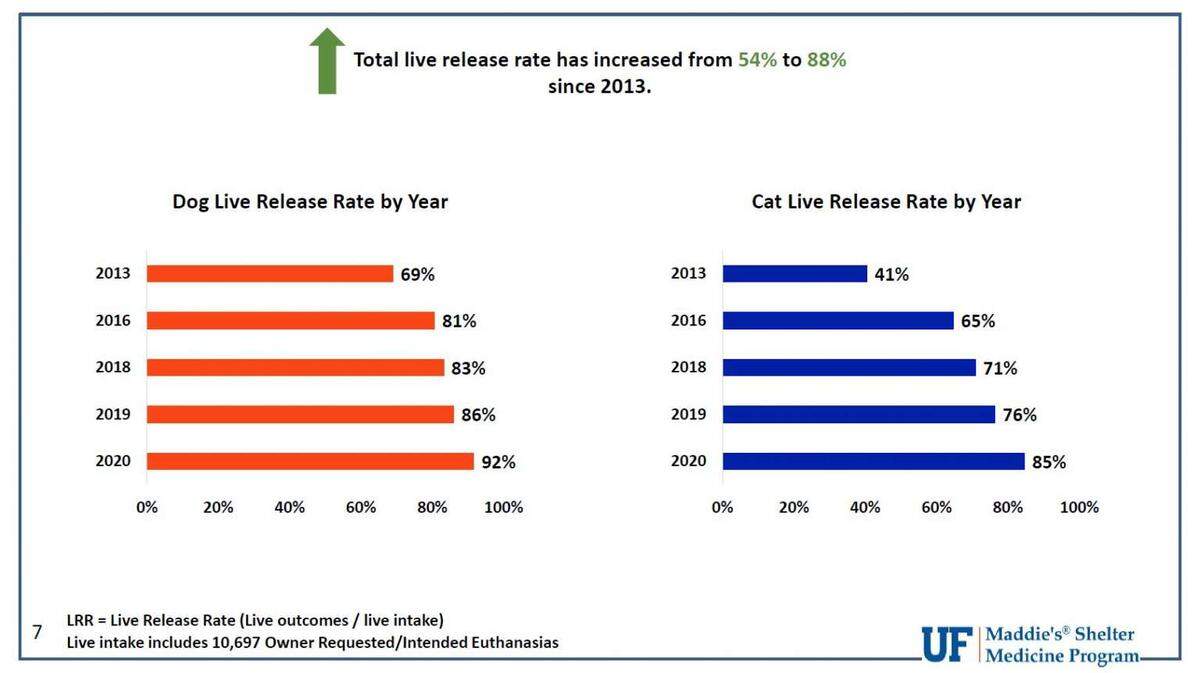
Of the animals admitted, 273,958, or 88%, left the shelter alive, according to the study. That’s a jump from 81% in 2019 and 54% since Maddie’s Shelter Medicine Program at UF’s College of Veterinary Medicine first began collecting shelter data in 2013. That’s when the state Legislature passed a transparency statute requiring shelters to provide data about their animal intake and outcomes on request.
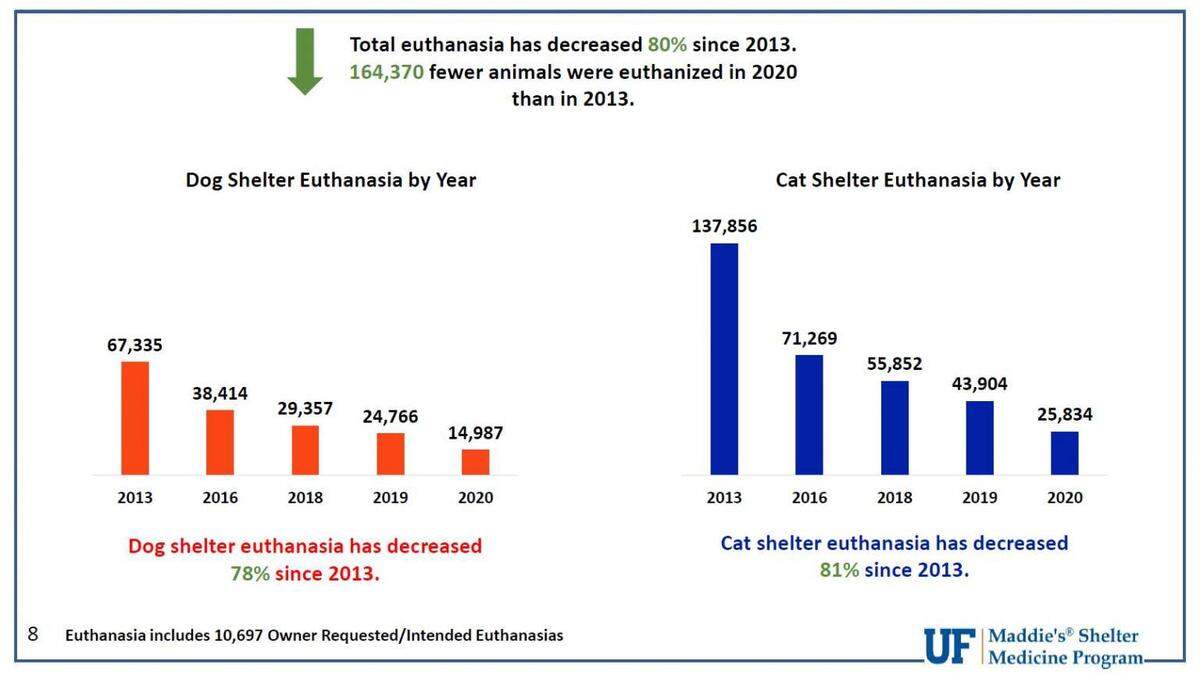
The state has also seen a significant decrease in euthanasia since 2013 although it’s reportedly still one of the highest in the country. About 40,821 of the cats and dogs admitted in 2020 were euthanized, according to the study. Of those, 10,697 were owner requested or intended euthanasia.
Collaboration among shelters, policymakers and volunteers the past few years is a positive trend, Levy said.
But 2020’s success had a lot to do with the pandemic.
How did the pandemic affect Florida animal shelters?
COVID made animal shelters across the country pivot to essential services only, including rescuing injured animals and investigating animal cruelty, according to the study. “Nonessential” services such as taking in animals from families that could no longer have them, picking up free-roaming community cats and operating spay/neuter clinics were put on hold.
The pandemic provided an opportunity for shelters to focus more on services, such as veterinary care, pet food banks and emergency boarding that could help families keep their pets or find them new homes without coming to a shelter, Levy said.
Many of the shelters, which were short staffed and physically distancing, also held “clear the shelter” events early in the pandemic to move pets into temporary foster homes or permanent forever homes.
Levy hopes the “reimagination” of public and private shelters will remain in the new normal. It’s inspired the creation of Human Animal Support Services, a coalition with more than 30 pilot organizations across the country, including some in Florida, that want to transform the traditional sheltering system to a foster-centric one that keeps pets with their families and helps struggling pet owners.
What about adoptions?
Researchers found that while Florida saw a record number of people coming forward to foster pets early on in the pandemic, permanent adoptions fell from 204,215 in 2019 to 172,269 in 2020.
Levy said adoptions were difficult last year because many shelters were closed for in-person visits, which meant people had to adopt online. Meanwhile, most shelters across the country called for foster families early on in the pandemic. Foster families temporarily care for an animal while they wait to get adopted and can help shelters avoid overcrowding.
Biggest challenge for Florida’s shelters? Saving cats, UF study says
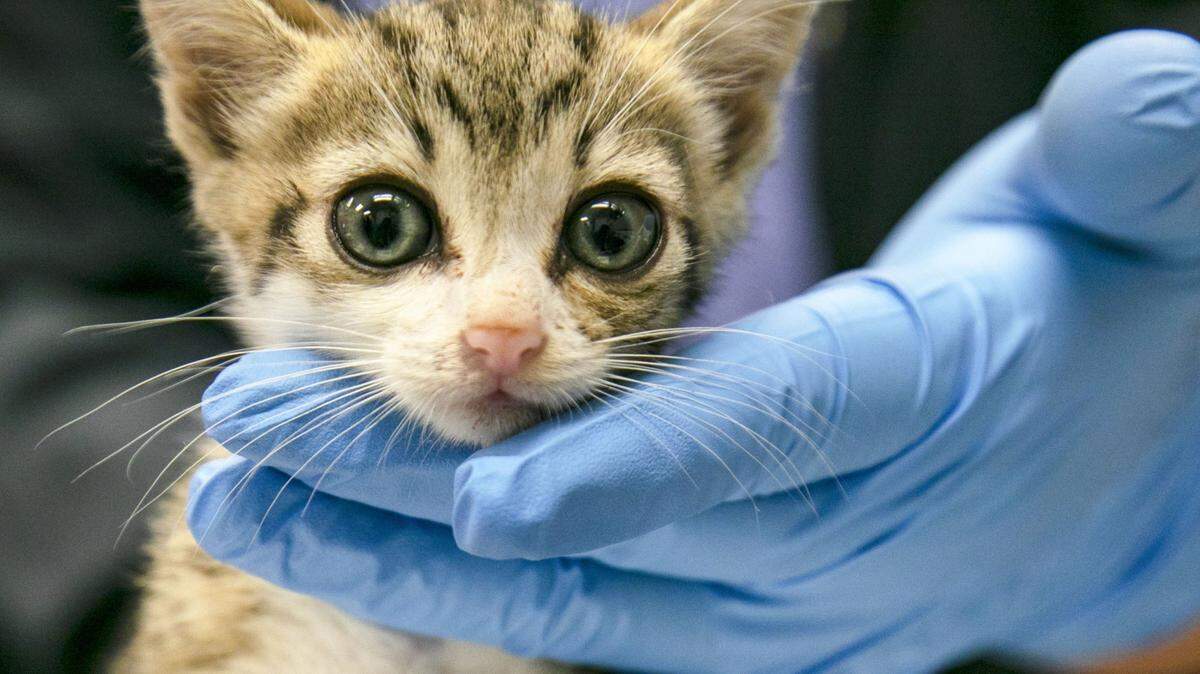
Saving cats is the biggest challenge for Florida’s shelters, although the gap between cats and dogs is narrowing, according to the study.
“Shelter intake of cats remained stubbornly high, even as intake for dogs inched down year after year. Once in the shelter, 97% of dogs were saved, compared to only 86% of cats,” Levy wrote in the study. “The most dramatic discrepancy was in the chance of a stray animal being returned to its family; 36% of dogs were returned home, but only 3% of cats were.”
There are several reasons why cats are at higher risk in shelters, said Levy, who also founded a joint project between UF and UC Davis, The Million Cat Challenge, to help shelters save cats.
Unlike dogs, many cats don’t have ID tags. Many also aren’t microchipped. That makes it difficult to reunite lost pets with their owners. Cats can overcrowd shelters quickly. That’s why spay and neuter campaigns are so important to help control the population, she said.
Rural county shelters also tend to have lower budgets, fewer workers and more basic facilities compared to urban shelters, even though they tend to have higher animal intakes. That can create a “perilous situation” for animals and usually causes rural shelters to have euthanizing rates nearly five times higher than in urban counties, Levy wrote in the study.
Where did the data come from?
The data used in UF’s study was obtained from 147 of Florida’s 154 operating shelters. Seven shelters did not provide the data, either because they did not keep records of animals cared for or because they did not respond to public records requests, researchers said. One of the shelters that did not respond to UF’s request was the nonprofit Saving Sage Animal Rescue Foundation in Fort Lauderdale.
Miami-Dade shelters that responded include Humane Society of Greater Miami, Paws 4 You Rescue and Miami-Dade Animal Services, which has worked with UF’s Shelter Medicine program for years.
Broward shelters that responded included Abandoned Pet Rescue, Animal Aid, Broward County Animal Care and Adoption, Cats Exclusive, Coral Springs Police Humane Unit, Humane Society of Broward County, and the Florida Humane Society. Monroe shelters that responded include Florida Keys SPCA, Humane Animal Care Coalition and Upper Keys Humane Society.
To know more
To read the full study or see a data breakdown by county, visit https://sheltermedicine.vetmed.ufl.edu/research-studies/current-studies/florida-animal-sheltering/
This story was originally published April 23, 2021 at 7:00 AM.