
Versatile lemon brings the zest to this Parmesan-swirled pasta recipe
There’s an old saying: “When life gives you lemons, make lemonade.”
While that advice urges us to turn life’s challenges into something sweet, lemons have far more to offer than just a refreshing drink. Lemons are culinary powerhouses that bring brightness and bold flavor to desserts and main dishes like chicken, pasta, or fish.
I think of lemons as food gifts: Their tangy juice, perfumed zest (grated rind), and fleshy pulp add a fresh spark of flavor to both sweet and savory dishes, enhancing all the other ingredients in a dish.
Native to India, lemons were introduced to Europe in the first century A.D. by the Romans and later brought to the New World by Christopher Columbus on his second voyage in 1493.
Not all lemons are created equal. The Eureka and Lisbon varieties — easily the most common — are known for their bright yellow, medium-thick skins and assertively acidic flesh and juice.
In contrast, the smooth-skinned Meyer lemon has a sweet, tangerine-like scent and lower acidity and is often juicier than its more acidic cousins.
When shopping, choose lemons with brightly colored unblemished skins that feel heavy for their size — that means they’re juicy.
And, forget the fruit bowl: Store them in in the refrigerator where they will last for 2-3 weeks.
If you need zest, use a microplane to remove it before cutting the lemon. For juicing, let lemons come to room temperature — or better yet, microwave them for 10 to 15 seconds to coax out every last drop.
Got a bounty of lemons? Zest them and freeze the zest in a small freezer bag and freeze the juice in ice cube trays for easy access later. Even whole lemons can be stored in a freezer bag for about 4 months — just thaw briefly in the microwave before using. Zest can be grated from frozen lemons too.
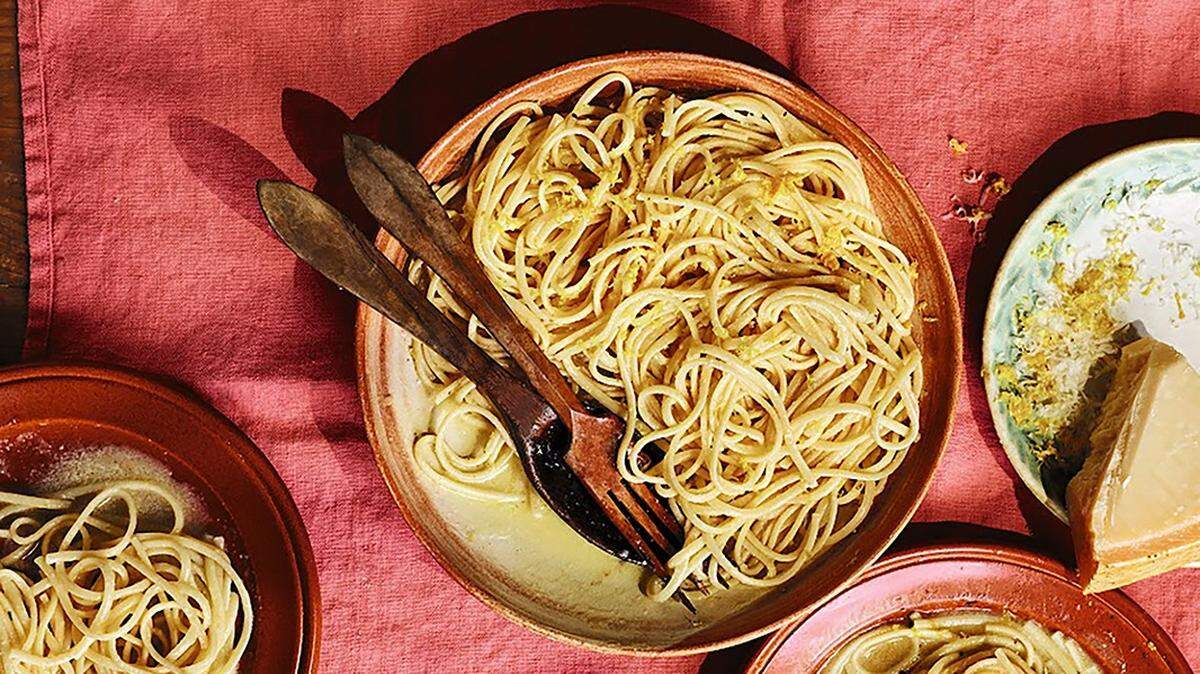
Pasta al Limone
This recipe is adapted from LEON Big Flavours: Salty, Sour, Spicy, Sweet by Rebecca Seal, distributed by Hachette Book Group, Conran is an imprint of Octopus Publishing Group ($26.99)
Light, bright and refreshing, this 2023 Stags’ Leap Napa Valley Sauvignon Blanc ($35) is my choice for this dish. Its bright aromatics of Meyer lemon peel and lively notes of green Anjou pear, white peach and juicy citrus complement the lemon, while its acidity cuts through the richness of the recipe.
Seal writes, “In this classic Italian pasta dish, lemon is the star ingredient, with Parmesan melting into the zest to create a silky yet zingy sauce. And it all comes together in barely more than 10 minutes. (Be sure to use an unwaxed lemon for this one.)”
14 ounces dried linguine
3-1/2 ounces unsalted butter, chopped into small pieces
2-3/4 ounces freshly grated Parmesan (Parmigiano Reggiano) cheese, plus extra to serve
zest of 1 large unwaxed lemon (see tip, below)
sea salt
Bring a pan of salted water to a boil, using slightly less water than usual.
Meanwhile, melt the butter in a small pan or in the microwave.
When the pasta is done, use a mug to scoop out about 1/2 cup of the cooking water and set it aside. Drain the pasta and return it to the hot pan, along with the melted butter, Parmesan, about half the lemon zest and a good pinch of salt. Use a wooden spoon to rapidly mix the pasta, allowing the butter and cheese to emulsify into a sauce around it. If the pan seems at all dry or sticky, add some of the reserved pasta water, just a tablespoonful at a time, until you have a light, silky sauce. (Don’t let it get too wet.) Add a tablespoonful of lemon juice, then taste and season with more salt, lemon zest or Parmesan, as needed.
Divide between 4 wide, shallow bowls and serve with a little more Parmesan grated over each serving and a pinch of the remaining lemon zest.
Yield: Serves 4
Tip: If you can’t find unwaxed citrus fruit, scrub the peel in hot water to remove any wax before using the zest.