
Seeds of flavor: Pomegranates brighten chickpea salad recipe
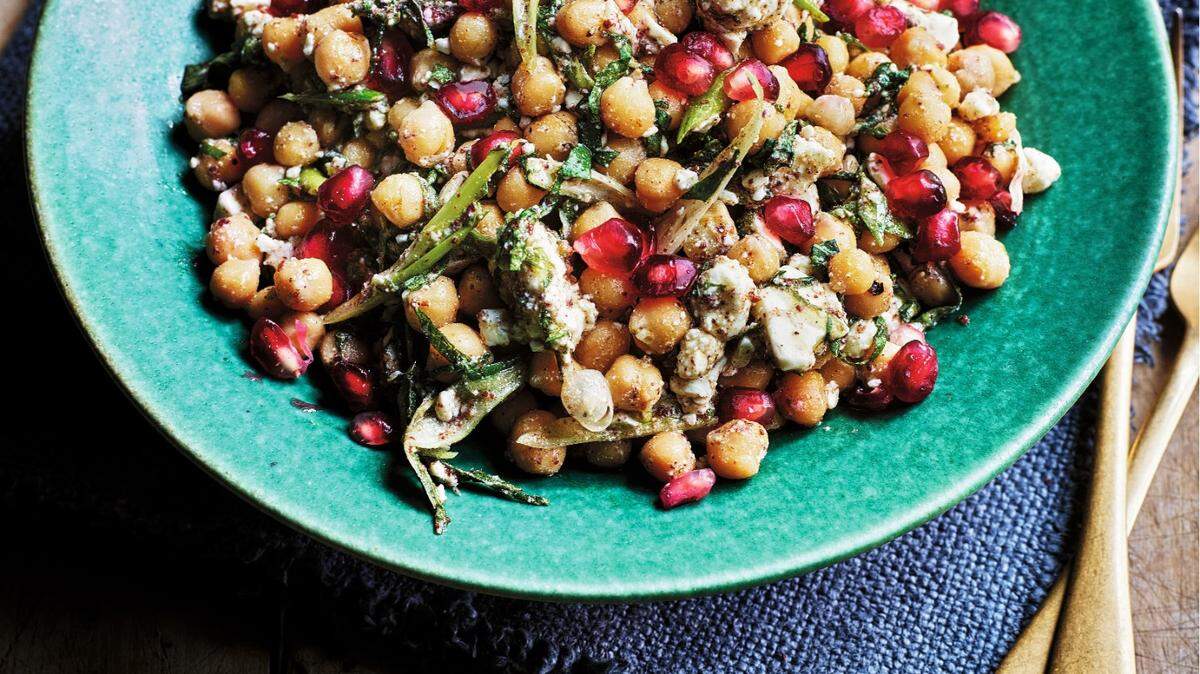
If you’ve never tried a pomegranate, don’t miss the opportunity to break one open this winter. Their sweet-tart seeds (called arils) can be incorporated into all kinds of recipes to add a dash of color, flavor, and texture to salads, meats, sauces, grains, and desserts.
Try dropping a few pomegranate seeds into a glass of sparkling wine for an entertaining way to start an evening with friends. Or use the juice to make a delicious and colorful “Pomtini” cocktail.
Pomegranate molasses (made from boiled down juice) is a welcome addition to your pantry to use in salad dressings, marinades and sauces. You can find pomegranate molasses at most grocery stores, Middle Eastern specialty stores, or on Amazon.
No one knows for sure where pomegranates originated, but they are thought to be native to ancient Persia (now Iran). In the late 1700s, Spanish missionaries brought pomegranates to California, which is currently the No. 1 pomegranate producer in the U.S.
Experts say pomegranates contain high levels of disease-fighting and heart-healthy antioxidants (higher than those in other fruits, red wine, and green tea), in addition to vitamins C and E.
Although pomegranates have been eaten out of hand in this country for many years, they have grown in popularity thanks to their featured role in Middle Eastern cuisine. Their red, round, leathery-skinned globes conceal beautiful ruby seeds or kernels that are the edible part of the fruit. The bitter membranes and outer fruit skin are discarded.
Choose heavier fruit, which tends to have more seeds, and avoid any with shriveled skin or soft spots.
Packaged pomegranate arils are available in most supermarkets, but I think it can be fun to open and seed the fruit yourself if you are careful about not getting crimson stains on everything. Cut the crown end off and score the skin in quarters from stem to crown. Immerse the fruit in a large mixing bowl of cold water and break the sections apart, separating seed clusters from membranes and skin. After a few minutes of work, the pomegranate seeds will sink neatly to the bottom of the bowl, while the skin and membrane will float on top.
Whole pomegranates will keep in the refrigerator for a month or more. The seeds should be refrigerated and used within a few days.
Bazaar Spiced Chickpea & Feta Salad with Pomegranates
This recipe is adapted from “Persiana Everyday” by Sabrina Ghayour. Octopus Books USA ($34.99).
This salad combines the sweet and slightly tart flavor of pomegranates with the creamy, salty taste of feta cheese and requires a wine that can complement both elements without overpowering them. Cartuxa EA Branca, 2022 ($12.99), a white wine from Portugal, is known for its intense citrus aroma with notes of tropical fruits that balance the flavors in the dish.
Ghayour writes, “This vibrant and delicious salad can be thrown together in minutes, perfect for a meal in a pinch or for adding a little extra pizzazz to a feast”.
14 oz. can chickpeas, drained
4 sprigs of mint, leaves picked, rolled up tightly and cut into ribbons
4 sprigs of basil, leaves picked, rolled up tightly and cut into ribbons
4 scallions, thinly sliced from root to tip
3 1/2 oz. feta cheese, crumbled
½ cup pomegranate seeds
For the dressing
2 tablespoons extra virgin olive oil
juice of 1/2 lemon
1 teaspoon honey
1 heaping teaspoon sumac
1/2 teaspoon ground cumin
1/2 teaspoon ground cinnamon
Maldon sea salt flakes and freshly ground black pepper
Put all the ingredients for the salad into a bowl and toss together. Mix all the dressing ingredients in a small pitcher or bowl until evenly combined, seasoning well with salt and pepper. Pour the dressing over the salad and toss again. Serve at room temperature.
Yield: Serves 4
This story was originally published February 1, 2024 at 1:39 PM.