
Boutique Fitness Is Changing — What Comes Next for Pilates, Boxing and Barre and Which Classes Are Worth It
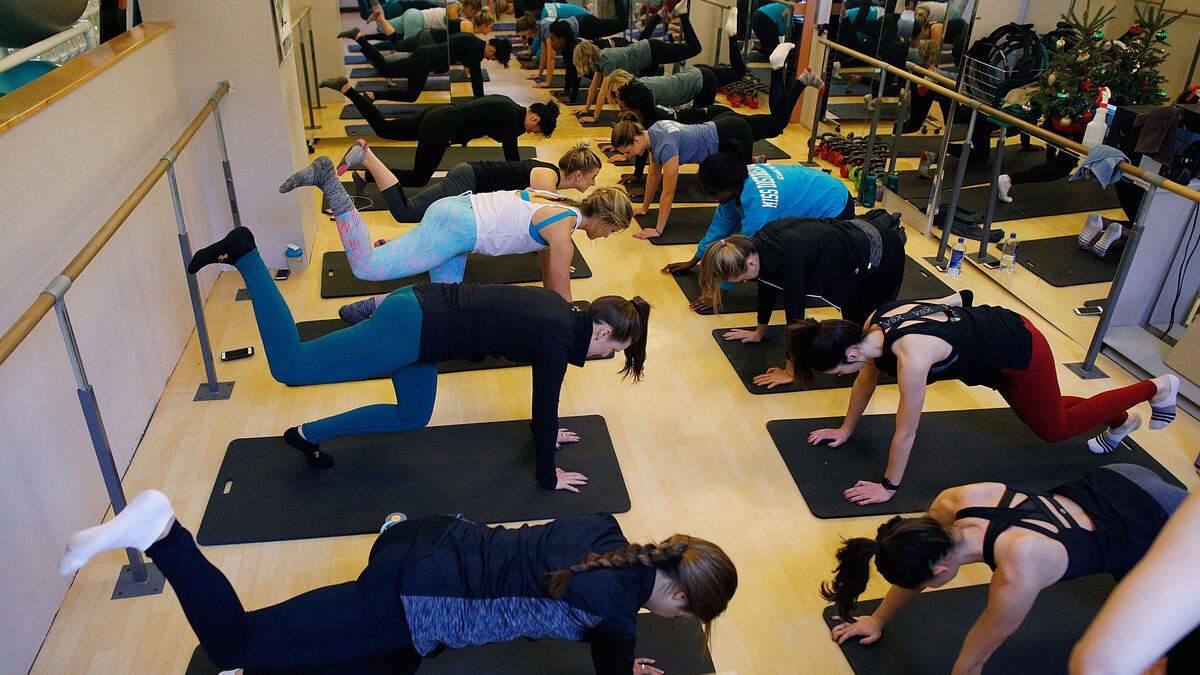
Group fitness is no longer a side hustle for gyms. Nearly 40% of regular exercisers now book group sessions, and drop-in classes have become the format of choice for everyone from influencers to coworkers looking for a Tuesday-night sweat. The catch is the price tag. A single session can run anywhere from $20 to $60, which makes one question worth asking before you book. Which drop-in classes are actually worth leaving your regular gym for?
Why drop-in classes are pulling people out of the gym
The shift toward boutique studios has some research behind it. A study in The Journal of the American Osteopathic Association found that working out in a group lowered stress by 26%, and participants reported significant improvements to their quality of life. Solo exercisers in the same study put in more effort but saw no real change in stress and only limited quality-of-life gains.
“The communal benefits of coming together with friends and colleagues, and doing something difficult, while encouraging one another, pays dividends beyond exercising alone. The findings support the concept of a mental, physical and emotional approach to health that is necessary for student doctors and physicians,” lead researcher Dayna Yorks, DO, said.
That payoff helps explain why drop-in formats keep multiplying across cities.
What to expect from a boxing class
Boxing has moved from fight gyms to mainstream studios, and first-timers should know it asks a lot of the body and the brain at once.
“Boxing is a high-intensity, full-body workout that involves striking,” Casey Hewitt, a master trainer at Virgin Active, told Women’s Health.
Classes typically cover correct stance, guard and foot positioning, basic punches and defensive movements like slips and rolls. Hewitt said the soreness afterward is not just upper body.
“Boxing targets the whole body. While a lot of people will feel the effects of holding their hands up in their shoulders, a lot of people experience DOMS in their legs too,” Hewitt said, referring to delayed onset muscle soreness.
For anyone new to the format, Hewitt said to expect a learning curve. “If you have never tried boxing before, expect to learn some movement patterns and coordination that will seem very unfamiliar to you to begin with. You can expect to have fun working to understand how your body moves with each combination, as well as a very intense, predominantly aerobic workout.”
How reformer and mat pilates compare on price and difficulty
Reformer pilates uses a specialized machine, described by Helen O’Leary, director and clinical director at Complete Pilates, in The Independent as a “sliding flat platform, five springs of varying resistance and two cables on pulleys, which you can pull to move the carriage.”
A single group reformer drop-in usually costs $35 to $60. Packages and memberships bring that down to $20 to $35 per class, while private sessions run $75 to $150 and up per hour. The payoff is visible core definition and a more refined trunk workout.
Mat pilates is the budget alternative, running roughly $20 to $35 per drop-in and widely available at commercial gyms. Cheaper does not mean easier. London-based instructor Nichola Desaymat told The Independent the mat is actually the harder format.
“Mat Pilates requires much more core engagement,” Desaymat said, noting that without the reformer springs to hold the body or assist a movement, the work falls entirely on the practitioner.
Why barre keeps showing up on class schedules
Barre is the low-impact entry in this lineup, blending ballet, pilates and yoga into high-repetition, small-range movements that tone muscles without battering the joints.
“Barre takes aspects of ballet and then puts an endurance-based spin on it with very fine-tuned movements and a high number of repetitions,” Jessica Waters, DPT, a sports physical therapist, told Cleveland Clinic.
Waters said the format hits parts of a muscle’s range that traditional strength work often misses. “Your muscles are strongest in mid-range, when they’re not fully extended or fully flexed. In end ranges, your muscles are a little bit weaker and barre helps to make you stronger in those areas,” she said.
Barre classes tend to sit at the higher end of the drop-in price range, and the teaching quality is consistently strong. For anyone weighing budget against benefit, online barre classes offer a cheaper way to try the format before committing to a studio package.
This article was created by content specialists using various tools, including AI.
.jpeg)