ArkLaTex Family Beats Astronomical Odds, Welcomes Three Identical Baby Boys Naturally
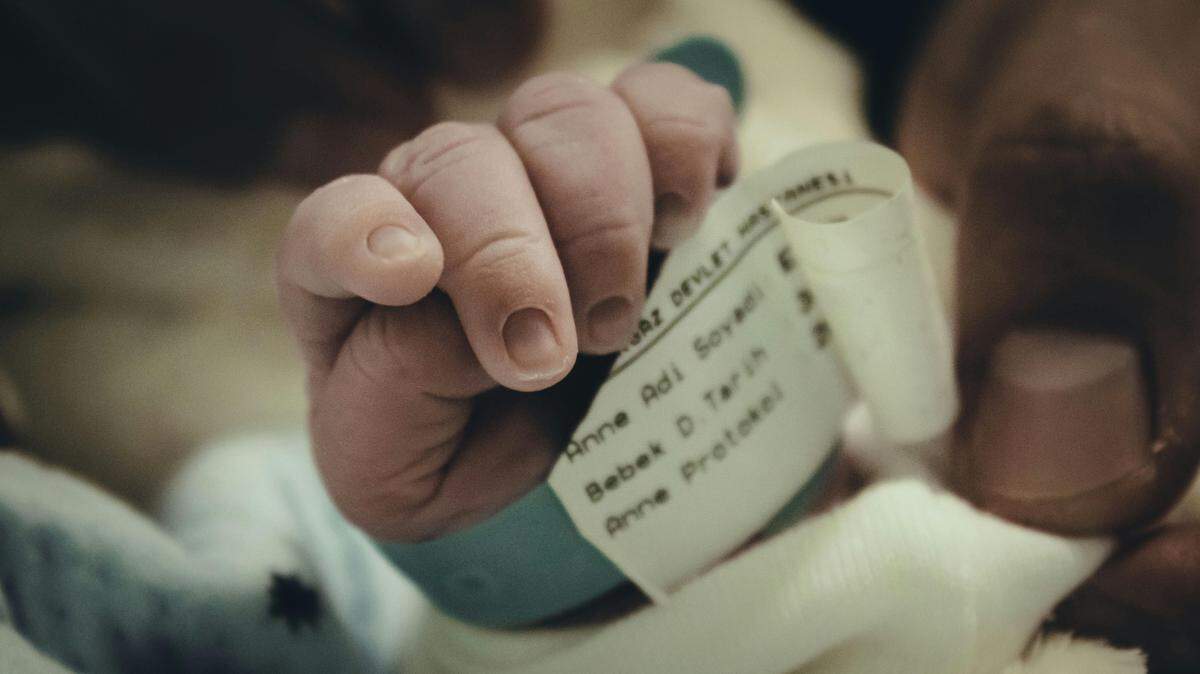
Mary Studebaker and Shane Perkins were already parents to a 10-year-old daughter when they decided to grow their family once more. Instead, they grew it by three.
“Let’s just try for one more,” Studebaker said in an interview with KTEN. “And then all of a sudden, triplets.”
The Texarkana couple, who live in the ArkLaTex region, welcomed identical triplets on Thursday, April 23, at Willis-Knighton Health System in Shreveport, Louisiana. The babies were conceived naturally — without IVF — making the birth extraordinarily rare.
According to KTEN, the odds of conceiving triplets naturally are about 1 in 10,000. The odds of conceiving identical triplets naturally fall closer to 1 in 1,000,000.
“This is a rare occurrence,” Dr. Christian Briery of Willis-Knighton told KTEN of conceiving triplets without IVF. “It happens in around one in 8,000 to 10,000 pregnancies spontaneously.”
A 2024 report from the U.S. Centers for Disease Control and Prevention shows that the rate of triplet and higher-order multiple births has dropped sharply in recent decades.
The rate peaked at 194 births per 100,000 in 1998 and fell to 74 per 100,000 by 2023. Over that span, the number of triplet and higher-order births declined from 7,625 to 2,653.
Identical Triplets 31 Weeks In the Making
The babies — Thomas Ray, Shane Austin and Beaux Bentley — were delivered prematurely at 31 weeks gestation. All three were born within one minute of each other, beginning at 7:52 a.m.
“I was scared to death,” Perkins told KTEN. “I was just holding her hand. Especially when you see, well, one baby comes out, and then another, and then another.”
Each newborn weighs between 2 and 3 pounds and is expected to remain in the NICU for several more weeks to grow and build strength.
“Any time this happens, we should celebrate,” Briery told KTEN. “It’s just a really neat phenomenon.”
The new parents aren’t navigating the experience alone. Their 10-year-old daughter has already pitched in to help welcome her brothers home.
“My 10-year-old actually made bracelets,” Studebaker told KTEN. “She has them color-coded — one’s green, one’s blue and one’s orange.”
How Can Triplets Be Identical?
According to the Cleveland Clinic, triplets typically form when a parent produces and releases three eggs at ovulation and all three are fertilized by sperm, or when a single fertilized egg splits into three separate fertilized eggs.
Identical triplets, however, develop from the same egg. That egg either splits into three or splits into two and then one of those eggs splits again, creating three genetically identical embryos.
Because they share the same genetic material, identical triplets almost always result in babies of the same sex. In the Studebaker-Perkins family, that meant three boys — and a household that just got a lot louder.
This article was created by content specialists using various tools, including AI.