NASA's Mars Rover Is Hunting Ruby-Like Gems — and It Just Found Some on the Red Planet
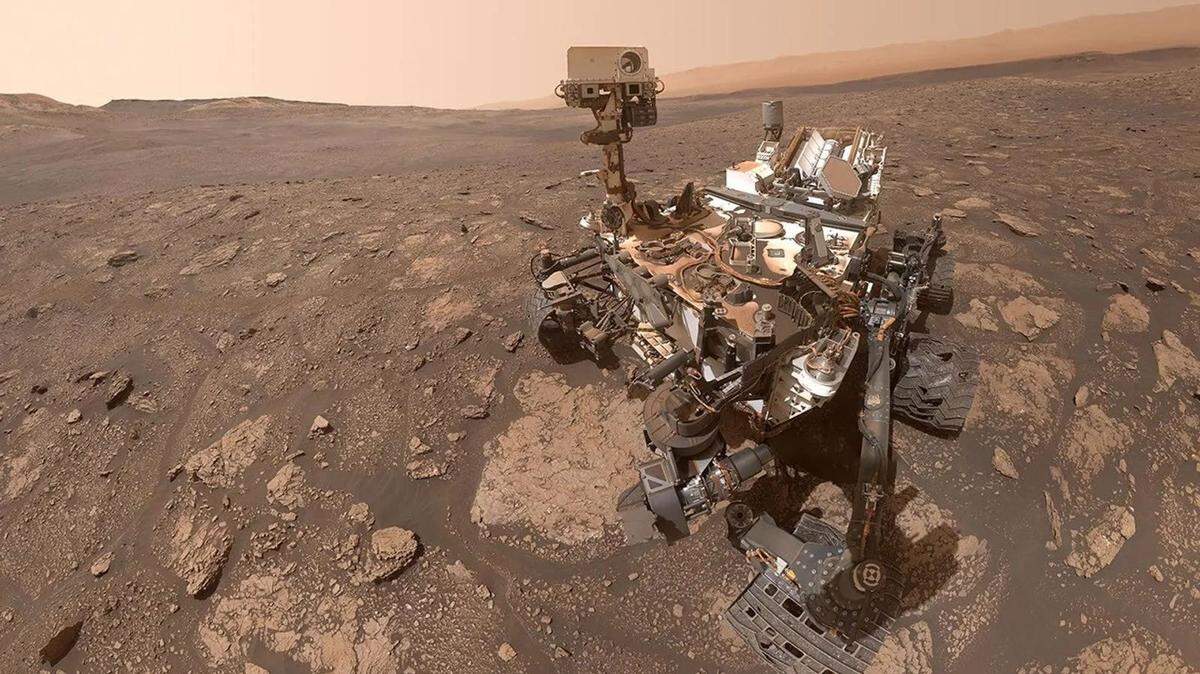
For decades, Mars has surprised scientists with evidence of ancient rivers, shifting sands and the chemical fingerprints of past water. Now NASA’s Perseverance rover may have added something far more dazzling to that list — tiny fluorescent gem grains embedded inside Martian pebbles.
According to New Scientist, the grains are made of corundum, the same mineral that forms rubies and sapphires on Earth.
That doesn’t mean Mars is hiding sparkling jewel deposits just beneath the surface. But it marks the first time scientists have documented the presence of ruby and sapphire material on another planet.
The NASA Mars rover made the discovery near the edge of Jezero Crater, where Perseverance has been exploring since 2021.
Researchers identified corundum in three separate rocks along the crater rim. The first, a small rock dubbed Hampden River, was followed by two additional pebbles named Coffee Cove and Smiths Harbour. Each tested positive for the mineral.
The grains themselves are incredibly small — measuring roughly 0.2 millimeters across, or about 0.008 inches.
That’s far too tiny to determine whether they would appear as rubies or sapphires to the naked eye. The difference between the two comes down to trace metals within the corundum, something scientists couldn’t confirm using imaging alone.
Still, the results were striking. Ann Ollila of Los Alamos National Laboratory, who led the research, said the grains emitted a bright glow when analyzed.
Ollila’s findings were described in two research papers, which can be read here and here.
To make the discovery, NASA Perseverance relied on its SuperCam instrument — a sophisticated system equipped with two lasers and cameras.
One laser vaporizes a tiny portion of the rock’s surface to analyze its composition. The other triggers luminescence, causing materials to emit light in ultraviolet, visible or infrared wavelengths. The cameras then capture and analyze those light patterns.
In the case of Hampden River, those readings closely matched laboratory measurements of rubies on Earth.
“I would love to be able to pick one of those up and analyze it and see if it looks red – it’s pretty disappointing that all you can see is this white pebble,” Ollila added, per New Scientist.
NASA’s Discovery Leaves Scientists With Plenty of Questions
On Earth, corundum typically forms deep within the planet under specific geological conditions tied to tectonic activity. But Mars presents a different puzzle. The planet no longer has active plate tectonics and only experienced more significant geological activity in its distant past.
So how did the mineral form?
Researchers believe meteorite impacts are the most likely explanation. These high-energy collisions would have generated intense heat and pressure, transforming aluminum-rich surface materials into corundum.
“[Corundum] usually is associated, on Earth, with tectonism. It’s a very specific environment – you have to have a very silica-poor environment, very aluminium-rich,” Ollila said during a presentation at the Lunar and Planetary Science Conference in Texas on March 16, per New Scientist.
Allan Treiman of the Lunar and Planetary Institute, who was not involved in the study, said the find was unexpected — even if, in hindsight, it makes sense.
“I was very surprised,” Treiman said during the conference, per New Scientist. “In retrospect, one might not have been, because there are aluminium-rich outcrops elsewhere on the planet and there are impacts, but I thought it was very shocking to see this.”
Beyond the novelty, the discovery could reshape how scientists understand Mars’ geological history. The presence of corundum suggests the planet may have remained chemically and thermally active more recently than previously believed.
It also adds to a growing list of intriguing finds. In 2023, NASA’s Curiosity rover identified opal on Mars — a mineral that forms in the presence of water and can point to potentially habitable conditions.
Together, these discoveries paint a picture of a planet that was once far more dynamic — and possibly more hospitable — than it appears today. Mars may look like a cold, dusty desert now, but beneath its surface, it continues to tell a richer story.
This article was created by content specialists using various tools, including AI.