10-Year-Old Saves Injured Axolotl From Welsh River, Takes Him Home and Names Him Dippy
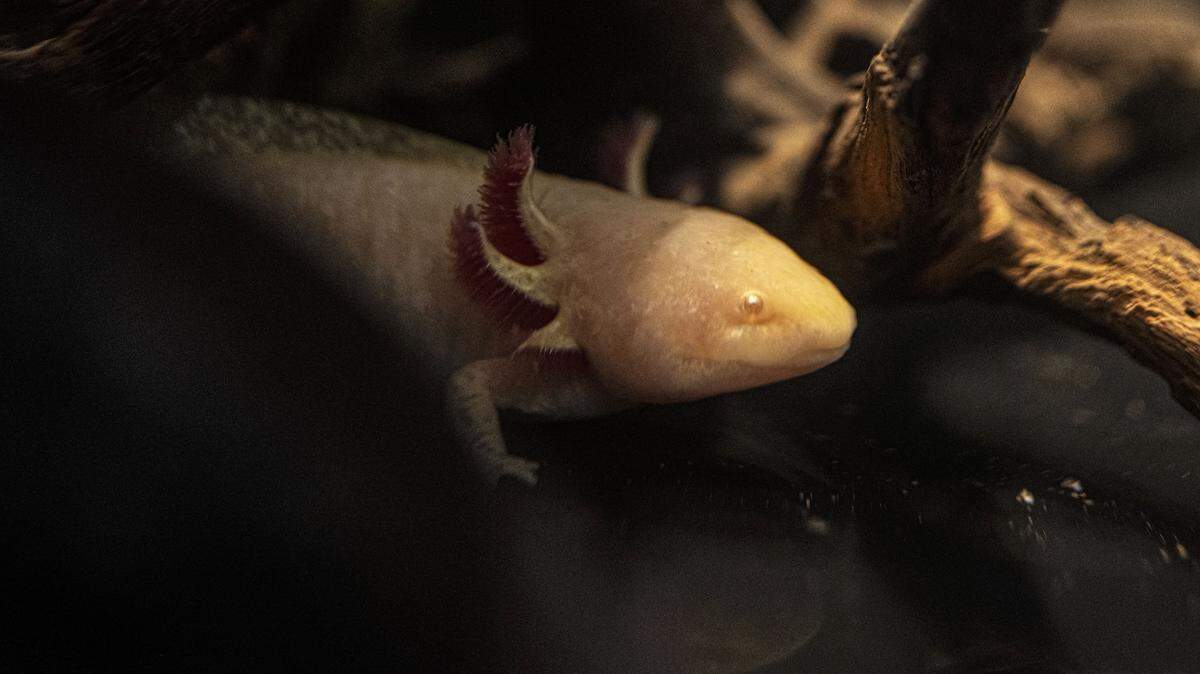
A 10-year-old girl on holiday in South Wales pulled a 9-inch Mexican axolotl from a river — marking the first documented discovery of the critically endangered creature in the wild in the U.K.
Evie Hill was with her family near the Dipping Bridge on the River Ogmore near Bridgend when she spotted the discolored, spotted animal in the water. The axolotl, which the family named Dippy, had injuries to its tail and stomach. They believe he could have been attacked by a predator.
“I went down to the bank and there was this thing with gills on its head. I was like: ‘That’s an axolotl.’ I was: ‘Mum, there’s an axolotl in the river.’ She went: ‘There’s not. You’re not going back in the water.’ So I went back in the water anyway, because I’d seen it. And then I caught it and brought it back,” Evie told BBC.
How Dippy Ended up in Leicester
Melanie Hill never expected to bring home a new pet from the trip. The family decided to end their vacation and brought the injured creature back to their Leicester residence. Right now, they’re preparing to move him into a new tank.
“We’ve got a much bigger tank and we plan to get that set up so it can be transferred,” Melanie said.
Why Finding an Axolotl in a Welsh River Is Extraordinary
Mexican axolotl salamanders are amphibians that spend their whole lives underwater, per National Geographic. Axolotls survive in the wild in only one remaining place: the Xochimilco lake system near Mexico City. This area is made up of a network of artificial canals, small lakes, and seasonal wetlands, and it also serves as an important water source for the roughly 18 million people living in the capital. One of the most unusual things about axolotls is a biological trait called neoteny, which means they retain juvenile features throughout their entire lives. Unlike most amphibians that undergo a dramatic change from water-dwelling larvae to land-based adults — such as tadpoles turning into frogs—axolotls never complete that transformation. They stay underwater permanently and keep their long tails and delicate external gills, giving them a “forever young” appearance. They are also famous in the scientific world for their extraordinary regenerative abilities. If an axolotl loses a limb, it can fully regrow it in about a month. This capability may be linked to their natural environment, where competition and aggression can occur, sometimes resulting in injuries like bitten-off gills or limbs. Because of this ability, researchers are especially interested in studying axolotls to understand whether humans might one day be able to regenerate tissues or even limbs in a similar way. Despite their unique biology, axolotls are under serious threat. As Mexico City has expanded over time, the Xochimilco lake system has gradually shrunk and become more polluted in certain areas, which has led to a steep decline in their population. Their situation has worsened further due to the introduction of non-native fish such as carp and tilapia. These species compete with axolotls for food resources and also eat their eggs, making it even harder for their numbers to recover in the wild.
This article was created by content specialists using various tools, including AI.
This story was originally published April 28, 2026 at 5:00 PM.