Scientists Discover Massive Kraken-Like Octopus That Roamed Seas in Dinosaur Era
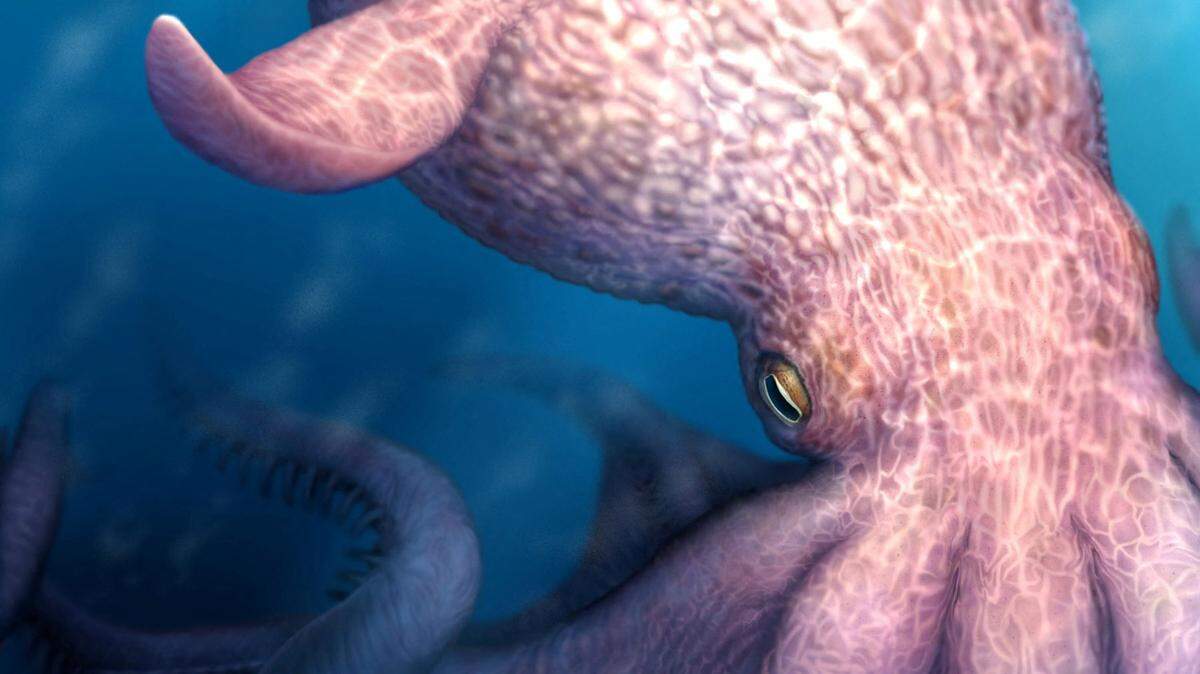
Long before the Kraken haunted sailors’ tales, something just as monstrous actually cruised the ancient seas — and scientists just found the proof.
A team of researchers has identified a massive octopus species that lived during the Cretaceous Period, the same era when Tyrannosaurus rex, triceratops and velociraptor roamed the land.
The findings were published Thursday, April 23 in the journal Science.
The species, named Nanaimoteuthis haggarti, measured somewhere between 22 and 62 feet in length.
That upper estimate dwarfs the modern giant squid, previously considered the largest known invertebrate, which tops out around 39 feet. A closely related species, Nanaimoteuthis jeletzkyi, reached between 9 and 25 feet.
Both rank among the biggest invertebrates ever documented.
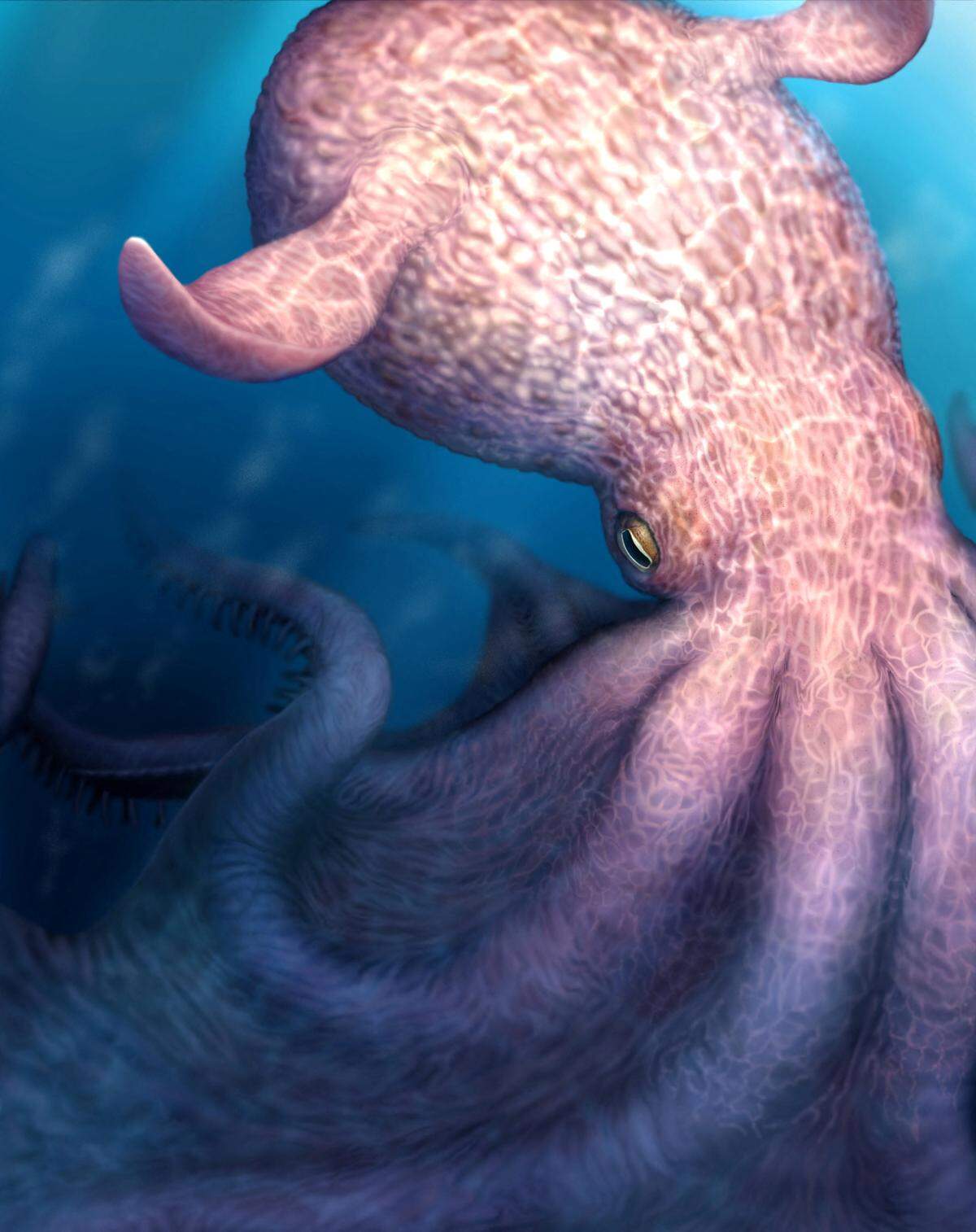
“These animals were remarkable. With their large bodies, long arms, powerful jaws and advanced behavior, they represent what could be described as a real ‘Cretaceous Kraken,’” lead author Yasuhiro Iba told Reuters.
Iba, a paleontologist and associate professor at Hokkaido University in Japan, said the discovery caught his team off guard.
“We were surprised. The fossil record of octopuses is extremely limited, so finding animals this large and ecologically important in the Cretaceous ocean was beyond our expectations,” Iba told CNN.
How Scientists Found the Kraken-Like Octopus
Most of an octopus’s body is soft tissue, which doesn’t preserve well after death. The beak — also called the jaw — is the only rigid portion, made of chitin, a tough material also found in the shells of crabs, lobsters and insects.
Iba’s team reanalyzed 15 previously discovered large jaw fossils and uncovered 12 additional fossilized jaws embedded in sedimentary rock. Specimens came from locations in Japan and on Vancouver Island in Canada.
Researchers used a 3D-imaging process known as grinding tomography to generate detailed datasets, and an AI model helped produce three-dimensional reconstructions. Iba calls the approach “digital fossil mining.”
Size estimates were derived by extrapolating from beak measurements using modern octopus anatomy as a reference.
Fierce Hunters With Worn-Down Jaws
The fossilized beaks display significant wear patterns consistent with regularly crushing tough materials like shells and bones.
“In the largest specimens, about 10% of the total jaw length appears to have been lost due to wear. This is more severe than what is typically seen in modern octopuses and cuttlefishes that feed on hard prey,” Iba told Reuters.
Their diet likely included sizable fish, shelled cephalopods and clams. Octopuses don’t just bite prey — they use flexible arms to capture it and their jaws to break it down. Larger body size allows for controlling bigger prey and processing tougher food.
Iba suggested Nanaimoteuthis likely relied on intelligence for hunting, much like octopuses do today. Octopuses rank among the smartest invertebrate animals.
The fossilized jaws also show uneven wear between sides, a pattern known as lateralized behavior — similar to handedness in humans. That asymmetry suggests sophisticated and adaptable behavior, not just brute strength.
What Makes the Kraken-Like Octopus Unique
The octopuses likely swam using paddle-shaped fins on their heads, making them among the earliest finned octopuses in the fossil record. N. haggarti inhabited the oceans roughly 86 to 72 million years ago, while N. jeletzkyi lived between approximately 100 and 72 million years ago.
For roughly 370 million years, scientists believed large vertebrate predators ruled ocean ecosystems — first fish and sharks, then marine reptiles, then whales. This research challenges that view by placing giant invertebrates at the top of the food chain.
These octopuses shared their environment with mosasaurs and plesiosaurs, marine reptiles that grew up to 50 feet, and sharks comparable in size to modern great whites. Nanaimoteuthis likely competed with them for prey.
“Their existence changes how we view ancient oceans. Instead of ecosystems dominated solely by vertebrate predators, we now see that giant invertebrates such as octopuses also occupied the very top of the food web,” Iba told Reuters.
Iba intends to expand the digital fossil mining technique, hoping it can reveal organisms previously invisible in the fossil record.
“Our goal is to reveal the hidden players of ancient ecosystems and build a much more complete picture of how past ecosystems really worked,” Iba told CNN.
This article was created by content specialists using various tools, including AI.