A Car Hit a Large Alligator in a North Carolina Bank Drive-Thru — Here’s What Happened Next
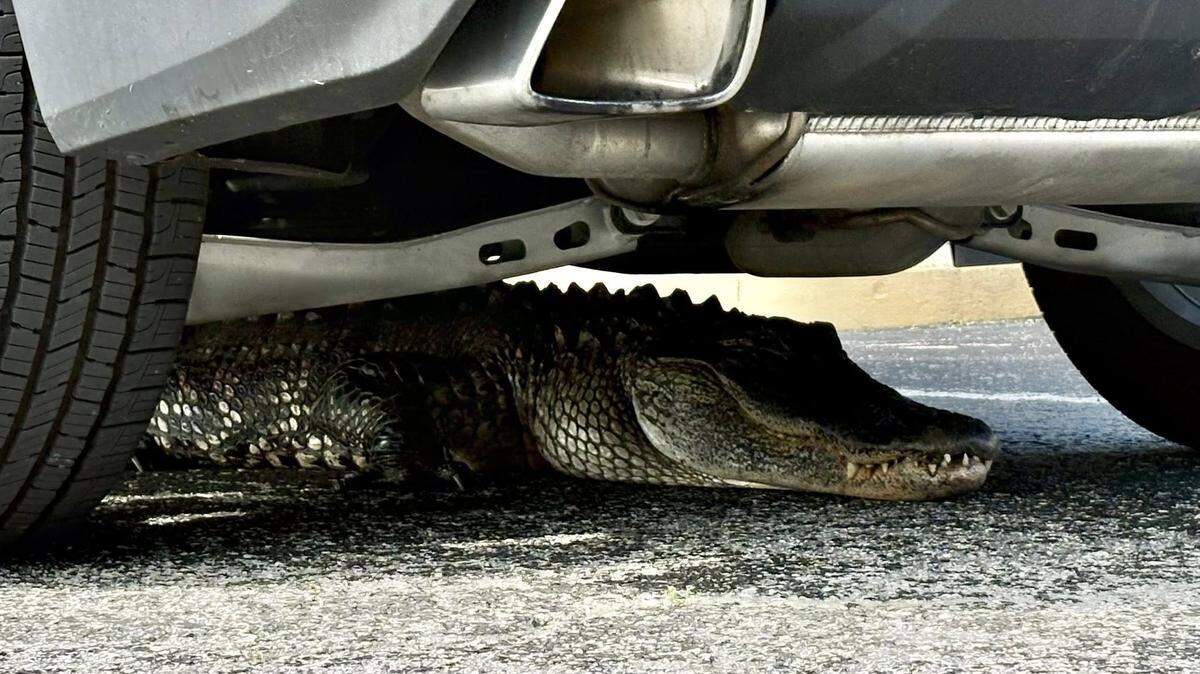
Sometimes the news writes itself. A large alligator was struck by a car — not on a back road, not near a swamp, but in a Truist Bank drive-thru in Southport, North Carolina.
The Southport Police Department shared the incident in a Facebook post on April 16, and the details are exactly as wild as you’d expect.
A Scene Straight Out of a Sitcom
Picture pulling into the bank drive-thru to deposit a check and realizing you’ve just run over an alligator. That’s apparently what went down in Southport, a small coastal town in Brunswick County.
Once the call went out, three agencies responded: the Southport Police Department, Southport Animal Protective Services and the Brunswick County Sheriff’s Office. Together, they created a perimeter around the vehicle while the alligator remained trapped underneath.
Yes — a full multi-agency perimeter. At a bank drive-thru. For a gator under a car.
The North Carolina Wildlife Resources Commission also responded and conducted an initial evaluation on-site. According to the police department’s post, “NC Wildlife arrived and determined the gator would need to be relocated.” The alligator was then extracted from underneath the vehicle. “The gator was loaded and transported away to a safer location,” the post stated.
No word on whether the driver ever completed that bank transaction.
Why This Keeps Happening
If this sounds like a freak occurrence, wildlife officials want you to know it’s becoming less unusual all the time. The Southport Police Department warned in its post that increased alligator activity is expected during warmer months — meaning encounters like this one could become more common as temperatures rise.
The department offered straightforward guidance for residents: avoid feeding alligators, do not dispose of fish or food scraps in water, supervise people and pets near waterways, keep a safe distance and remain vigilant near water.
According to the NCWRC, the majority of its public calls concern alligators. That volume prompted the agency to launch its “GatorWise” program in 2025, designed to educate the public on coexisting with alligators.
“As development continues to expand into once-remote areas where alligators live, we need to become GatorWise in order to safely share the land with this species,” said NCWRC Wildlife Biologist Alicia Wassmer at the time.
It’s Not Just About the Gator In the Drive-Thru
The bigger picture here is one of habitat overlap. North Carolina’s population growth is pushing development into areas where alligators have long lived, and according to the press release for GatorWise, the NCWRC is trying to get ahead of the problem.
Wassmer didn’t mince words about the trajectory: “Urbanization is projected to increase at exponential rates in areas where alligator habitat occurs. This continuous conversion of natural spaces, coupled with a constant influx of newcomers who may not know that alligators are here or aren’t familiar with alligator behavior, has amplified the need for state wildlife resource agencies to proactively connect residents and visitors with vital information on how to coexist responsibly with the alligators that live in these communities.”
In other words, if you’ve recently moved to coastal North Carolina and didn’t realize gators were part of the welcome package — now you know.
This article was created by content specialists using various tools, including AI.