Inky the Octopus Squeezed Through a Drainpipe to Freedom — and Was Never Found
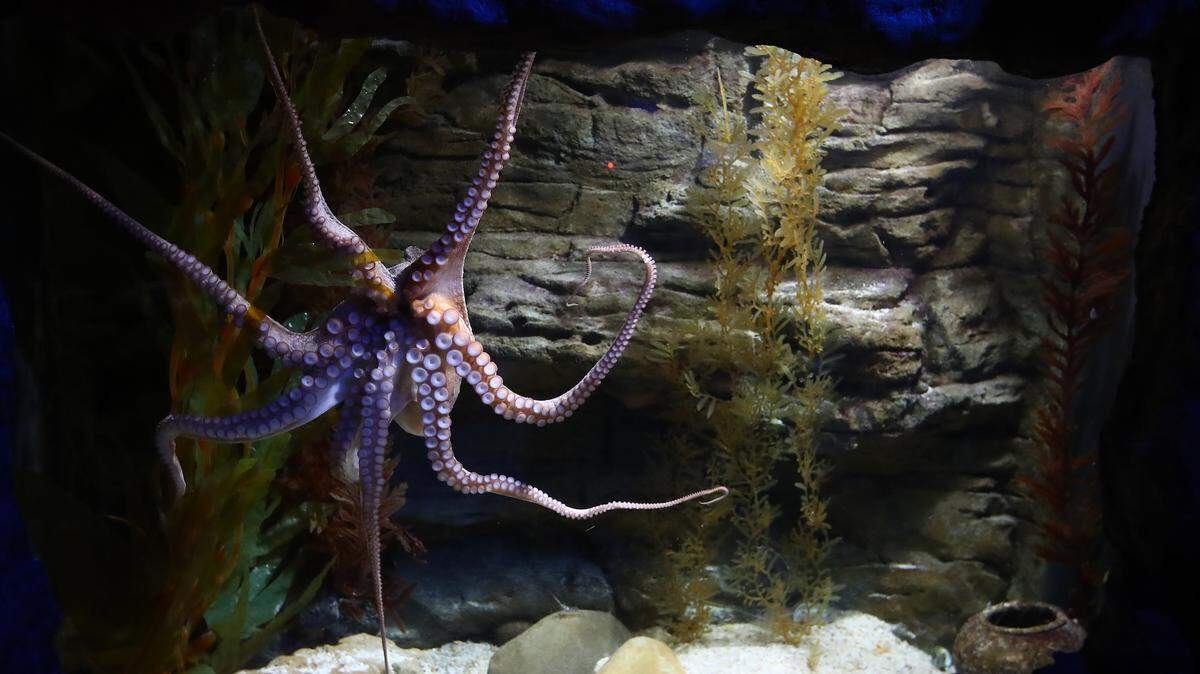
If your child has ever asked whether animals can really escape from aquariums, the answer is absolutely yes. And no creature has ever done it with more flair than an octopus named Inky, who vanished from the National Aquarium of New Zealand in 2016 in a breakout worthy of a storybook — complete with a daring nighttime crawl, a mysterious drainpipe and an ending nobody saw coming.
Ten years ago, staff at the National Aquarium of New Zealand in Napier inadvertently left the lid of Inky’s tank slightly open one night. That was all the common New Zealand octopus needed.
How Inky the Octopus Pulled Off His Great Escape in New Zealand
Under the cover of darkness, Inky climbed out of his tank, made his way across the aquarium floor and located a narrow drainpipe. He squeezed through it, traveling roughly 50 meters until the pipe led him to the waters of Hawke’s Bay on the east coast of New Zealand’s North Island.
By morning, the tank was empty.
“When we came in the next morning and his tank was empty, I was really surprised,” said Rob Yarrell, national manager of the National Aquarium of New Zealand, per The Guardian. “The staff and I have been pretty sad. But then, this is Inky, and he’s always been a bit of a surprise octopus.”
Yarrell added: “He managed to make his way to one of the drain holes that go back to the ocean, and off he went. Didn’t even leave us a message.”
Why Inky the Octopus Could Fit Through a Tiny Drainpipe
This is the part that will make your kids’ eyes go wide. Octopuses have no bones at all — not a single one. This gives them an extraordinary level of flexibility and control over their bodies. Instead of a skeleton, an octopus relies on a soft, muscular structure supported by an internal hydrostatic system, allowing it to squeeze through openings sometimes no larger than its own eye.
This boneless design also helps them move in unique ways, from crawling along the ocean floor to jetting through the water by expelling it rapidly from their bodies. Their lack of bones not only aids in escape from predators but also makes them highly adaptable hunters, capable of reaching into tight crevices to catch prey. So for Inky the octopus, a drainpipe was simply another opening to explore.
Why Experts Say Inky the Octopus Was Just Being Curious
Aquarium officials were not entirely surprised by Inky the octopus’s bold move. They noted that octopuses are known for their curiosity, problem-solving abilities and capacity to slip through small openings due to their soft bodies. They suggested Inky was not necessarily trying to flee poor conditions but rather acting on instinct and exploration.
“Octopuses are famous escape artists,” Yarrell said. “But Inky really tested the waters here. I don’t think he was unhappy with us, or lonely, as octopus are solitary creatures. But he is such a curious boy. He would want to know what’s happening on the outside. That’s just his personality.”
Alix Harvey, an aquarist at Britain’s Marine Biological Association, told The New York Times: “Octopuses are fantastic escape artists. They have a complex brain, excellent eyesight, and research suggests they have an ability to learn and form mental maps.”
Jennifer Mather, a professor in the department of psychology at the University of Lethbridge who studies the behavior of octopus and squid, put it bluntly: “Octopuses get bored. I mean, here’s an animal that explores everything in its environment and takes everything apart if you give it a chance. A tank can be a pretty boring place.”
Mather added: “Octopuses are smart, highly exploratory, very strong and their body is completely compressible because they have no fixed bones. So the result is if they want to go someplace, they will.”
What Happened to Inky the Octopus After the Escape?
Inky the octopus was never found after his daring drainpipe getaway. No attempt was made to retrieve him. He left behind his tankmate, a smaller octopus named Blotchy.
“We have another octopus, Blotchy, but he is smaller than Inky, and Inky had the personality,” Yarrell said.
This article was created by content specialists using various tools, including AI.