
The Secret to Cleaning Patio Furniture So It Looks Brand New Again Without Replacing a Thing
As warmer weather arrives, many of us step outside only to find our patio furniture looking worse for wear. Dust, pollen, mildew and months of neglect can leave chairs, tables and cushions looking tired and uninviting. The good news? You don’t need expensive products or professional help to restore your outdoor pieces. With a few household supplies and the right technique for each material, your patio furniture can look clean, modern and refreshed in an afternoon.
Here’s a step-by-step guide to getting every piece of your outdoor setup back into shape.
Start With a Simple Rinse
Before you grab a brush or any cleaning solution, reach for the garden hose. A thorough rinse removes loose dirt, pollen and debris — and this step alone can make a noticeable difference. It also prevents you from scrubbing grime deeper into the surface when you move on to more hands-on cleaning.
Think of rinsing as prep work. It clears the way so your cleaning solution can do its job more effectively.
Mix a Go-To Cleaning Solution
You likely already have everything you need in the kitchen. Mix warm water with a few drops of dish soap, and you have a versatile cleaner that works on most outdoor furniture surfaces.
For tougher buildup — the kind that accumulates over a full season — add a splash of white vinegar to the mix. Dip a soft brush or sponge into the solution and gently scrub the surface. This simple combination handles a surprising range of grime without harsh chemicals.
How to Clean Based on Your Furniture’s Material
Not all patio furniture is created equal. The material your pieces are made from determines the best cleaning approach. Here’s how to handle each type.
Plastic and Resin
Plastic and resin furniture is among the easiest to maintain. Use a soft brush with soapy water to wipe down surfaces. For stubborn stains, sprinkle baking soda on the affected area and scrub lightly. The mild abrasive action helps lift discoloration without scratching.
Metal (Aluminum or Steel)
Metal furniture responds well to a wash with soapy water, but there’s one crucial step many people skip: dry it right away. Letting water sit on metal surfaces can lead to water spots or, worse, rust. A quick towel-dry after washing goes a long way toward keeping metal furniture looking sharp.
Wood (Teak, Acacia, Eucalyptus)
Wood furniture requires a bit more care. Use mild soap and a soft brush, and always scrub in the direction of the grain. Avoid soaking the wood, as excess moisture can cause warping or damage over time.
If your wooden pieces have seen better days, a deeper restoration might be in order. Kyle Gesuelli, a home improvement expert at Handy, tells HGTV: “If your wooden furniture is weather-worn, begin by using a stiff wire brush to scrub away splintered wood or cracked paint. After the surface is smoothed down, use a putty knife to apply wood filler to repair major cracks and holes, and after the repairs dry, sand the patches down flush with the original piece. After repairs are made, prime and paint the piece, applying finishes in the direction of the wood grain.”
Wicker
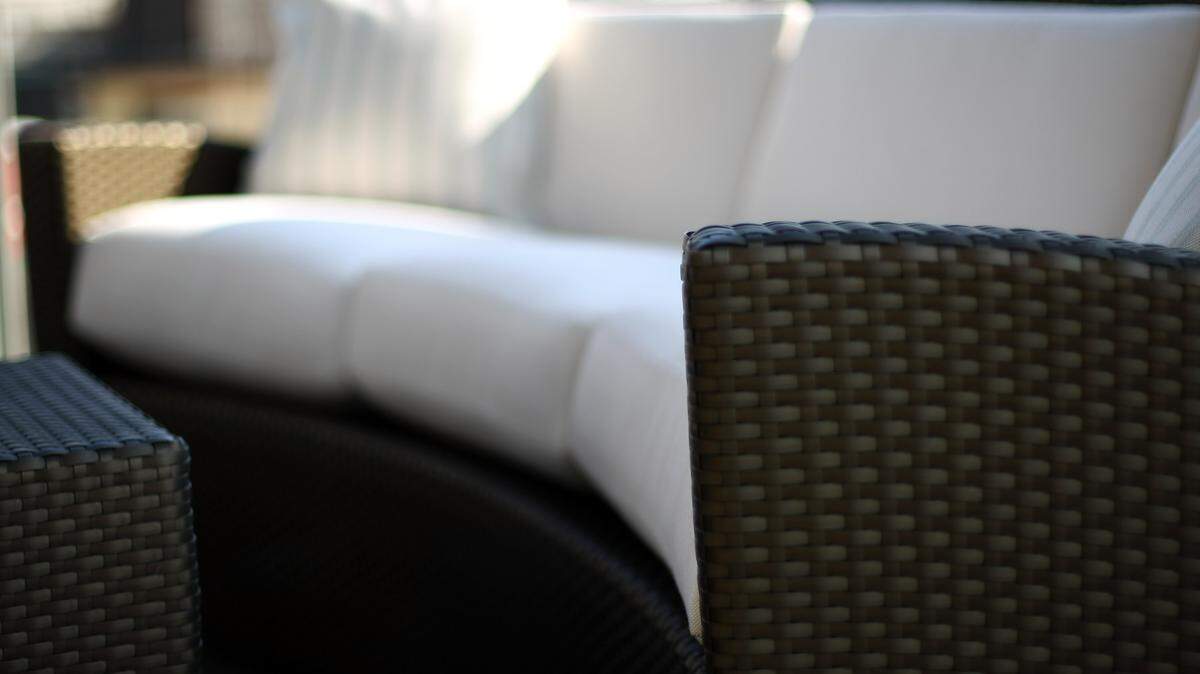
Wicker’s woven texture can trap dust and debris in hard-to-reach spots. Use a soft brush or even a toothbrush to get into crevices, and be gentle to avoid fraying the material.
Mick Telkamp with HGTV says: “Keep your wicker clean by regularly wiping it down with a microfiber cloth to remove dust and other detritus. Your vacuum cleaner and trusty crevice attachment are also helpful tools for keeping your wicker in good condition, or you can give it a deep clean with a household steam cleaner. If the coating on your wicker is deteriorating, re-seal it with a paste wax to maintain water resistance.”
Cushions and Fabric
For cushions and fabric covers, mix water with mild soap, scrub lightly and rinse. Let them fully air dry in the sun before putting them back on frames. Skipping the drying step can invite mildew growth — the very thing you’re trying to eliminate.
Tackle Mildew and Tough Stains
Some stains need more than soap and water. For stubborn spots, mix 1 part white vinegar with 1 part water. Spray the solution on the affected area, let it sit for 10–15 minutes, then scrub and rinse.
Janet Siroto and Sharlene Breakey with Consumer Reports says: “Remove chair/couch cushion covers and pretreat mold and mildew spots. Apply a spritz of distilled white vinegar and a sprinkle of baking soda (for up to 30 minutes). Wash, then air-dry to prevent shrinkage. For mildew stains on cushion covers that aren’t removable, try adding a solution of 1 cup bleach, ¼ cup mild detergent, and 1 gallon water to a spray bottle. Spritz it on, wait 15 minutes, then scrub with a soft-bristle brush and hose off.”
Rinse and Dry Thoroughly
Once you’ve finished cleaning, rinse everything well to remove any soap or cleaning solution residue. Then let all pieces dry completely. This final step is key to avoiding streaks and preventing mildew from returning.
With just a few hours of effort, your outdoor space can feel brand new — no replacement furniture required.
This article was created by content specialists using various tools, including AI.