Meet the Horned Lizard: The Toad-Like Reptile That Shoots Blood From Its Eyes
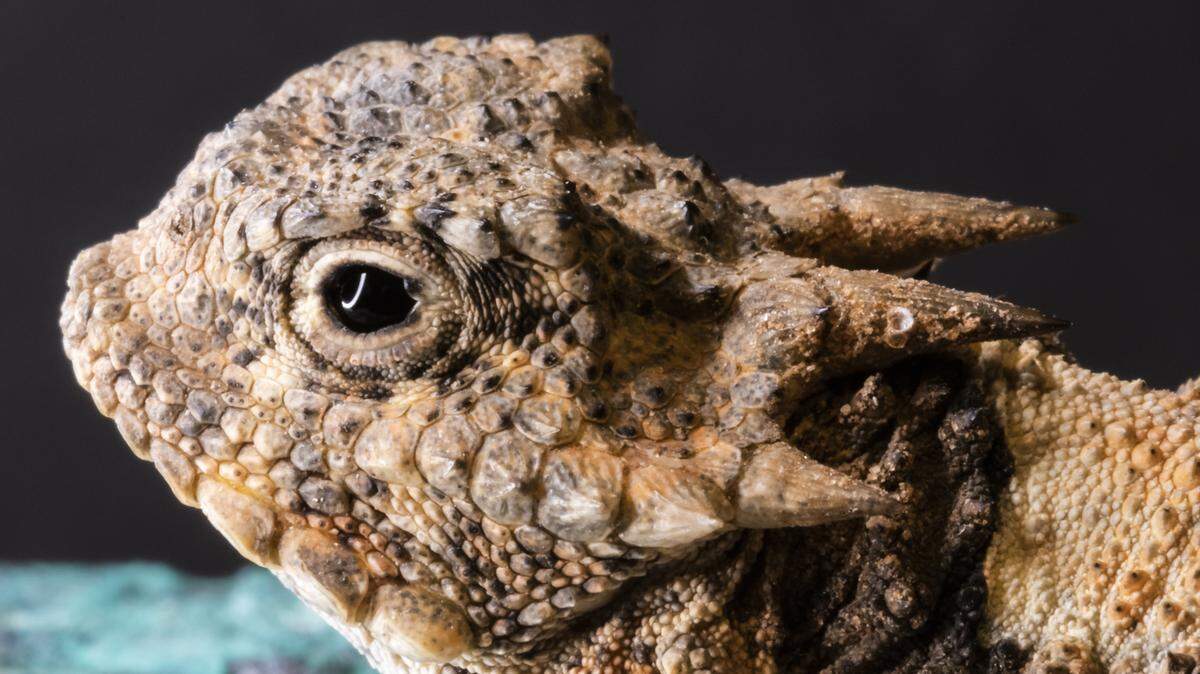
When it comes to creative survival tactics in the animal kingdom, few creatures can compete with a small, spiky reptile that weaponizes its own blood.
The greater short-horned lizard (Phrynosoma hernandesi) — Wyoming’s state reptile — possesses one of nature’s most bizarre defense mechanisms. When threatened, it can shoot a pressurized stream of blood directly from its eyes.
One 2024 study from the Annual Review of Chemical and Biomolecular Engineering found that it can hit targets up to about one meter (3.2 feet) away.
Scientists call this behavior ocular autohemorrhaging, and while early naturalists in the 1800s mentioned it in passing, rigorous scientific investigation didn’t begin until the 20th century.
How Horned Lizards Shoot Blood From Their Eyes
The mechanism behind this bloody spectacle is surprisingly precise.
The lizards have blood-filled sinuses surrounding their eyes. When a threat appears, they restrict the veins that drain blood from their head while arterial blood continues flowing in. This causes blood pressure in the eye sinuses to spike rapidly.
Under that intense pressure, tiny vessels in the conjunctival area near the eyelid rupture, and blood is expelled through the eyelid as a fine stream. Remarkably, the ruptures are minor and the tissue is adapted to heal quickly.
One specimen fired blood nine times within 17 minutes with no apparent harm to the creature, according to a 2001 study in Copeia.
Perhaps most impressively, the lizards aim. They orient their heads toward the threat before firing, making this a controlled and targeted defense rather than a random reflex.
A stream of blood alone might startle a predator, but these lizards take it a step further.
Horned lizards specialize in eating harvester ants of the genus Pogonomyrmex. These ants contain defensive compounds, including formic acid, and the chemicals or their derivatives get incorporated into the lizard’s blood.
Predators that get sprayed react with immediate disgust — head shaking, gaping and licking. In some cases, predators are deterred entirely from attacking.
Horned Lizards Don’t Use This Strategy Every Predator
One of the most fascinating aspects of this defense is its selectivity.
The blood-squirting response is mainly used against canids such as coyotes, foxes and domestic dogs. A 1992 Copeia study found that canids triggered the response 100% of the time.
By contrast, humans mimicking canids triggered it only 20% of the time. Non-canid predators like roadrunners and grasshopper mice did not trigger the response at all.
This specificity is unusual. Most animal defenses, such as camouflage or spines, work broadly against many predator types. Horned lizards already have those general-purpose defenses and reserve the blood-squirting exclusively for canids.
With that said, blood shooting is only one tool in this lizard’s impressive survival kit. Their coloring allows them to blend seamlessly into rocks, sand and bushes, making them difficult for predators to spot.
Their spiked, armor-like bodies also serve as a physical deterrent.
The lizards are sometimes called “horny toads” because of their toad-like shape — the genus name Phrynosoma literally translates to “toad-bodied.” If captured, they will puff up with air and drive their spikes into the mouth or throat of the predator, wiggling their bodies to inflict further damage.
Horned Lizards Are a Lesson in Evolutionary Creativity
The blood-squirting defense is a textbook example of what scientists call exaptation — a trait that evolved for one purpose and was later repurposed for another.
The eye sinuses likely originally evolved for thermoregulation in hot, arid environments. Eating toxic ants started as a feeding strategy, not a defensive one.
Over time, these unrelated traits combined into a single coordinated defense. It illustrates how evolution is opportunistic, building complex adaptations from existing parts — turning a diet of venomous ants and a set of blood-filled sinuses into one of the most startling weapons in the natural world.
This article was created by content specialists using various tools, including AI.