Scientists Confirm Fish Can Climb Waterfalls by the Thousands — and It’s Fascinating
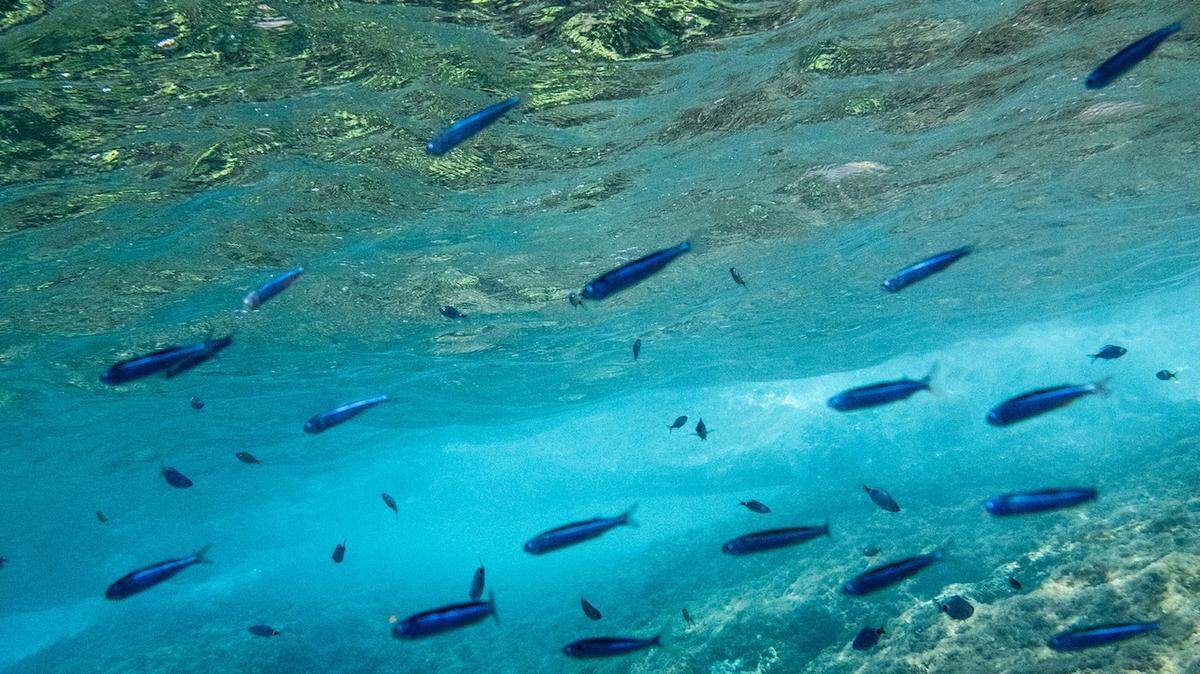
A fish the size of a thick french fry shouldn’t be able to defy gravity. But in the Democratic Republic of the Congo, thousands of them do it at once — and researchers now have the evidence to prove it.
For roughly 17 years, rumors circulated in Central Africa about tiny shellear fish somehow scaling waterfalls. Local accounts and scattered observations hinted at the behavior, but it remained largely anecdotal. Many scientists had never been able to confirm the claims.
That changed when researchers began closely studying the Luvilombo Falls through fieldwork conducted between 2018 and 2020. Using photos and video, they documented thousands of small freshwater fish called Parakneria thysi ascending vertical rock faces during seasonal floods — turning what once sounded like myth into confirmed science.
“If you would ask a regular person, do you think fish can climb falls, most of them will tell you: you are crazy,” says Emmanuel Vreven, an ichthyologist at the Royal Museum for Central Africa in Belgium, per NPR. “Well, it exists, it is out there.”
What Makes the Feat So Extreme
These fish measure under 48 millimeters — roughly comparable to a fat french fry. Yet researchers documented them climbing waterfalls up to approximately 15 meters (50 feet) high, often in groups numbering in the thousands. The study suggests this represents a large-scale migratory strategy rather than an isolated quirk.
To put the feat in perspective, the climb has been likened to a salmon scaling something as extreme as Niagara Falls or even the CN Tower.
The Secret to Climbing Is in the Fins
The fish possess hook-like projections on their pectoral and pelvic fins that function like Velcro, enabling them to grip slippery rock surfaces under strong water currents. Their locomotion combines this fin-based adhesion with body undulation, allowing them to inch upward against both gravity and flowing water.
Vreven describes the movement vividly: “You see also the lateral undulations of the fish very fast. It’s as if they are swimming vertically.” The motion is called a power burst.
But the real surprise is in the pacing. While the total journey can take nine to 10 hours, the fish spend only about 15 minutes actively moving. The rest is recovery time.
“When they arrive at a flat surface,” Vreven says, “they will pause for a longer time. When they recover the energy, they can begin another step of the climbing. Most of the time is in fact resting.”
Researchers reinforced these findings through frame-by-frame video analysis and CT scanning, confirming both the mechanics of movement and the structural adaptations involved.
Not Every Fish Makes It to the Top of the Waterfall
The ascent carries real risk. Individuals can be dislodged by fast-moving water or struggle to navigate complex features such as overhangs, sometimes requiring inverted positioning. Climbing success is also size-dependent — only smaller individuals, generally under 48 millimeters, can complete the ascent. Larger fish are likely limited by their weight.
Why the Fish Climb at All
The behavior is closely tied to seasonal flooding, which can wash fish downstream and force a return to upstream habitats. By climbing waterfalls, the fish may avoid predators, reduce competition and access more favorable ecological conditions.
What This Means for Conservation
Beyond the discovery itself, the findings underscore real conservation concerns. Migratory species like Parakneria thysi are particularly vulnerable to extinction, especially in the face of human activities such as overfishing and river modification.
The study highlights a rare and extreme example of evolutionary adaptation — demonstrating how behavior and anatomy can work together to enable survival in highly challenging environments. A fish smaller than your finger, climbing a five-story waterfall on fins that work like Velcro, resting its way to the top over nine to 10 hours. It’s a finding that transforms a 17-year-old rumor into one of the more remarkable discoveries in freshwater biology.
This article was created by content specialists using various tools, including AI.