An Inch-Long Frog That Carries Babies on Its Back Was Just Discovered In Peru
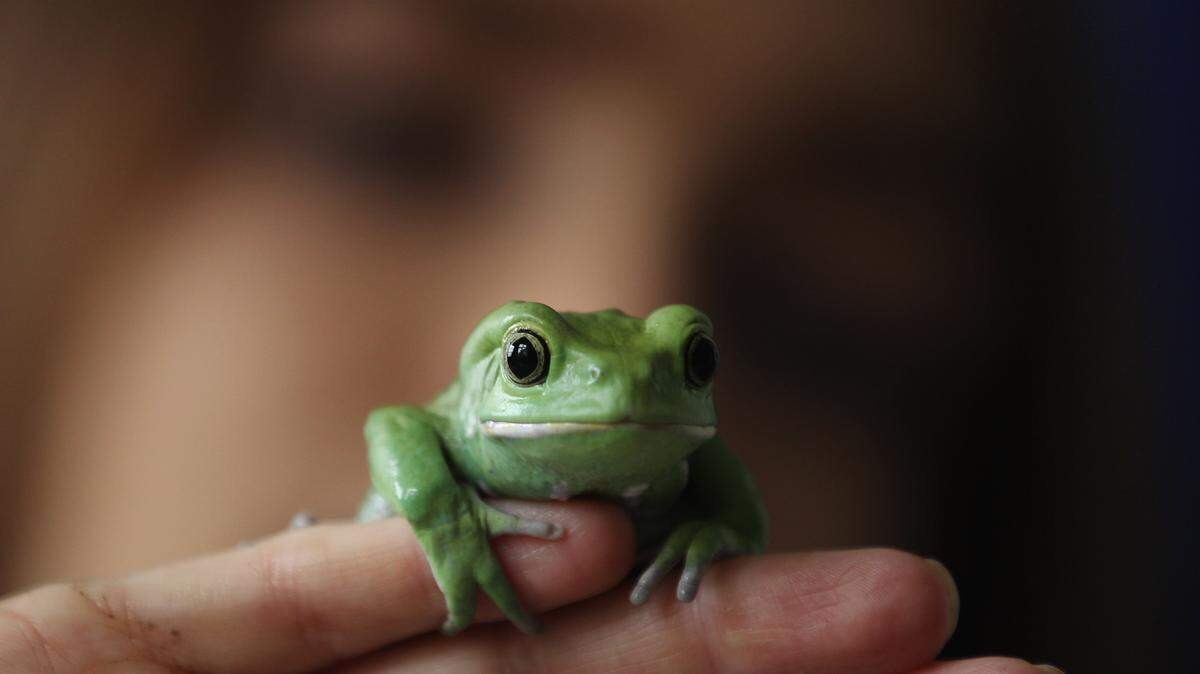
Deep in a mountainous corner of the Peruvian Amazon, scientists have found a tiny bright green frog with a remarkable trick: it carries its developing young in a pouch on its back.
The newly identified species, named Gastrotheca mittaliiti, was discovered in the Amazonas region of Peru near the border with Ecuador. The find was published in the scientific journal Zootaxa, adding a previously unknown member to one of the most unusual groups of frogs on the planet.
A Frog That’s Smaller Than a Thumb, With a Built-In Nursery
Gastrotheca mittaliiti measures between 2.7 and 3.3 centimeters — roughly 1 to 1.3 inches — in length. It is described as bright green with small protuberances on its back. The number of specimens living in the wild is currently unknown.
What sets this species apart from most frogs is how it reproduces. Unlike the vast majority of frog species that rely on water for egg development, this miniature amphibian uses a dorsal pouch to carry and nurture its young. That reproductive adaptation is the defining characteristic of marsupial frogs, the group to which Gastrotheca mittaliiti belongs.
The Gastrotheca genus is a group of marsupial frogs found across Central and South America. These frogs distinguish themselves from other amphibians precisely because of this pouch-based approach to rearing offspring — a strategy that sounds more like something you would expect from a mammal than from a creature that fits on the tip of your finger.
An International Research Effort
The discovery was announced by AFP and credited to the Ceja de Selva Research Institute for Sustainable Development, part of Toribio Rodriguez de Mendoza National University in Peru. The institute worked in collaboration with researchers from Florida International University and the University of Seville in Spain.
That cross-continental team pooled expertise to confirm the frog as a distinct species — one that had been quietly inhabiting its mountainous ecosystem, unrecognized by science until now.
Even as the discovery was being celebrated, researchers raised alarms about the species’ future. Scientists say Gastrotheca mittaliiti is at “high risk” due to environmental threats.
Its habitat is being affected by climate change and fires started by farmers clearing land, both of which are contributing to ecosystem degradation in the region. For a species whose population size remains unknown, those pressures raise serious questions about its long-term survival.
A Window Into Undiscovered Biodiversity
Manuel Oliva, director of the research institute, emphasized the broader importance of the find in comments to AFP.
“This is further evidence of the enormous natural wealth we possess… If we continue our research, there are many species still waiting to be discovered,” Oliva said.
That statement points to a wider reality: the mountainous forests along the Peru-Ecuador border remain among the least studied ecosystems in the region. If a bright green frog with a pouch on its back could go unnoticed until now, it raises the question of what else might be out there, still waiting to be named.
For Gastrotheca mittaliiti, the race is now twofold — to learn more about this remarkable little amphibian and to protect its shrinking habitat before it disappears along with whatever other species have yet to be found.
This article was created by content specialists using various tools, including AI.