A Prehistoric Sea Monster the Size of a Bus Once Ruled the Seas of What Is Now Mexico
More than two decades after a skull was pulled from rock in northeastern Mexico, scientists have finally put a name to the creature it belonged to — and it turns out to be a species entirely new to science.
The animal, now called Prognathodon cipactli, was a mosasaur, a type of aquatic reptile that lived approximately 70 million years ago during the Late Cretaceous period.
While it shared the era with dinosaurs, the creature was not related to them.
At roughly 6 meters long, it was the apex predator of its region — and it met its end in the same mass extinction event that wiped out the dinosaurs.
The findings were published in the journal Neues Jahrbuch für Geologie und Paläontologie on March 9.
An Ancient Sea Monster With ‘Very Robust Teeth’
What set this mosasaur apart from others was its physical design.
While many mosasaurs had slender teeth and elongated skulls, Prognathodon cipactli had short jaws armed with conical and very robust teeth, making it uniquely suited for taking down large prey.
“It was a mosasaur with short jaws, with conical and very robust teeth, allowing it to attack large prey,” Héctor Rivera-Sylva, a paleontologist at the Desert Museum and one of the study’s authors, said in an interview with Spanish newspaper El País.
Its diet included other marine reptiles, large fish and shelled animals. It likely hunted in open ocean but also near coastlines. Rivera-Sylva compared the creature’s ecological role to a familiar modern predator.
“What we see is that it was an active hunter, which tells us a lot about how we can compare it, for example, to modern-day orcas,” he added.
“At that time and in this region, it was the top predator; that was its place in the food chain. There was none bigger or more dangerous than it,” he said of the sea monster.
Where Did Scientists Discover the Sea Monster?
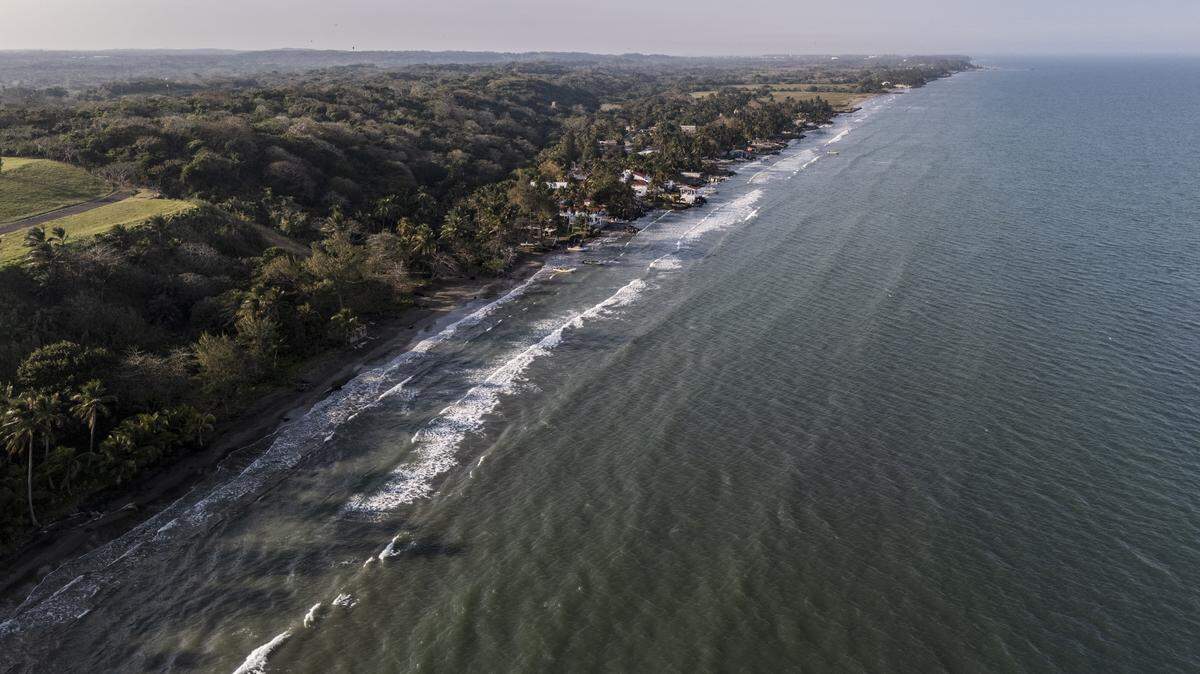
The nearly complete skull was found in 2001 in the Méndez Formation in Nuevo León, northeastern Mexico, dozens of kilometers from the modern Gulf of Mexico.
It was initially analyzed in 2007 as an unidentified mosasaur species.
Only now has it been officially identified as a new species by paleontologists from the Desert Museum in Saltillo and the University of Bath in England.
The region where the skull was found looks nothing like it did 70 million years ago. Back then, the landscape was dominated by swamps, shallow beaches and tropical vegetation.
Over millions of years, tectonic activity pushed sedimentary seabed rocks to the surface, eventually exposing fossils like this one.
Scientists Hope to Find More Sea Monsters
The discovery carries significance well beyond a single species.
It expands the known diversity of prehistoric reptiles in Mexico and suggests that biodiversity at the end of the Cretaceous period was greater than scientists previously understood.
It also positions northeastern Mexico — where the states of Coahuila and Nuevo León are home to dozens of fossil sites — as an important global paleontology destination, not merely a “transitional area” but a place with unique species and speciation.
For Rivera-Sylva, the discovery is also personal. He recalled growing up with a very different understanding of Mexico’s prehistoric past.
“When I was a child, we had the idea that dinosaurs hadn’t inhabited Mexico; this whole area was a big question mark. We thought it was something very distant, only in the United States or other parts of the world, but no: they’re here in Mexico too,” he told the newspaper.
That shift in awareness has contributed to a boom in paleontology interest in Mexico, especially among younger generations.
“Now I have kids who are nine, 10, or 12 years old who contact me with great interest, and I tell them, ‘If you want to see Mexican dinosaurs, you can come to the Desert Museum because Mexican dinosaurs are on display here,’” he added.
This article was created by content specialists using various tools, including AI.