Viral Claims of a Second Buried Sphinx at Giza Are False, Archaeologists Say
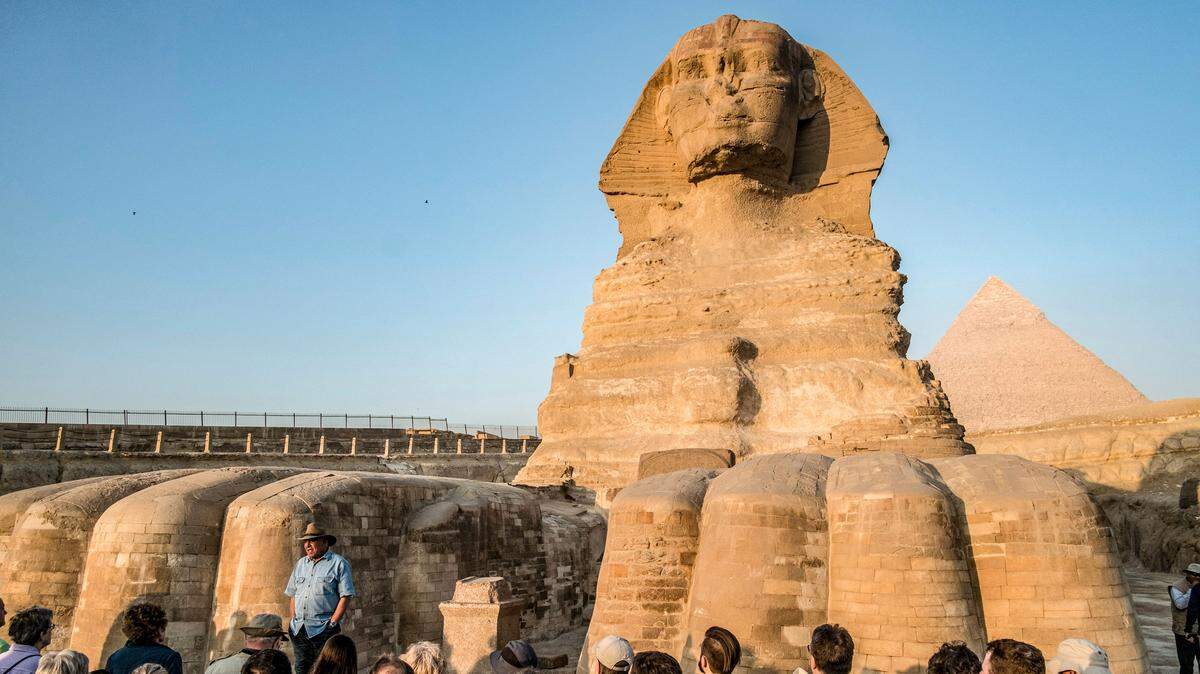
A claim that a second Sphinx lies buried beneath the sands of Egypt’s Giza Plateau has gone viral.
Italian researcher Filippo Biondi says radar scans point to a massive hidden structure near the 4,500-year-old Great Sphinx — and he’s awaiting permission from Egyptian authorities to start digging.
Archaeologists and Egypt’s former Minister of Antiquities are dismissing the theory as false, despite Biondi claiming to be 80% confident in his theory.
Here’s what we know about the viral claim.
Who Is Behind the Second Sphinx Claim at Giza?
Biondi presented his theory on the March 26 episode of the Matt Beall Limitless podcast.
He says radar scans of the Giza Plateau revealed what he believes is the outline of a second Sphinx buried beneath a sand mound approximately 108 feet tall. The mound, he says, is made of hardened sand rather than bedrock.
The scans also showed vertical shafts and horizontal passages that Biondi interprets as evidence of an underground “megastructure.” He puts his confidence at about 80%.
His argument draws on geometric alignments he says exist between the pyramids and the known Great Sphinx. Those alignments, according to Biondi, point toward the sand mound.
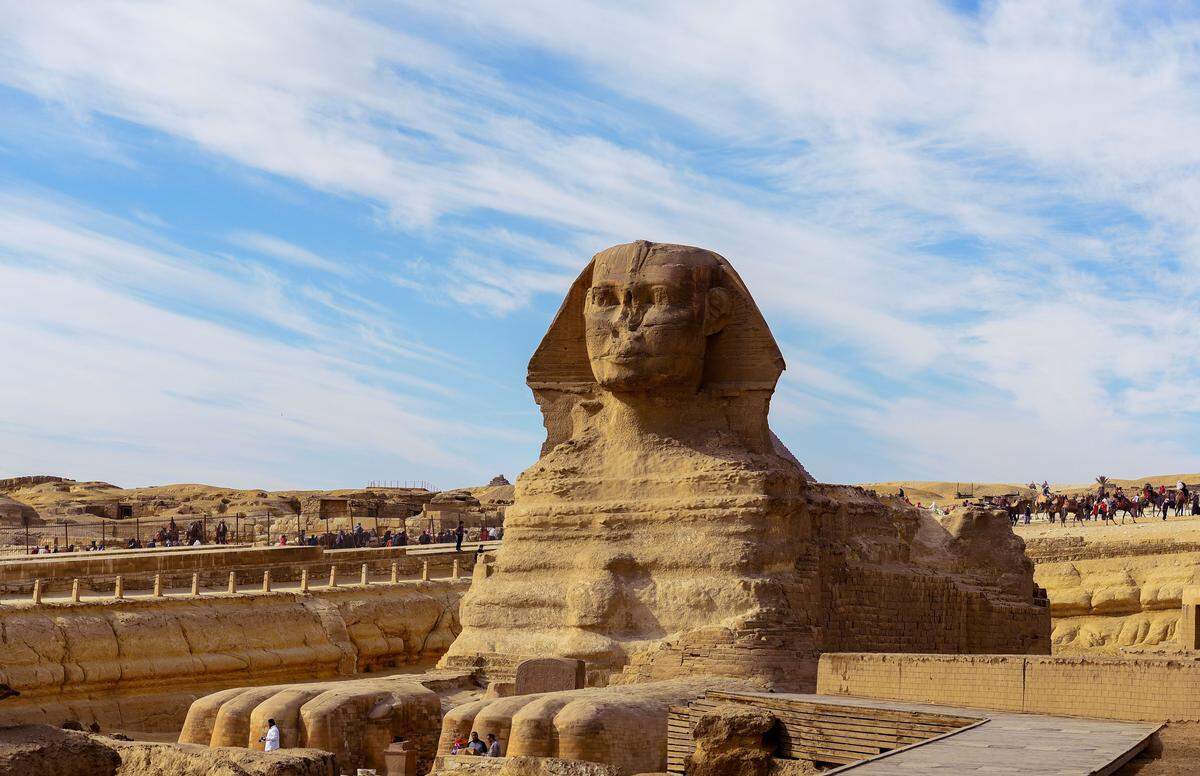
He also cites the Dream Stele, a granite slab placed in front of the Great Sphinx around 1400 BC, which appears to depict two sphinx figures and has been the driving force behind similar claims in years past.
Biondi isn’t the only person to have floated the idea.
Egyptologist Bassam El Shammaa raised a similar theory over a decade ago, citing ancient records that describe a lightning bolt striking the Sphinx as possibly referencing a destroyed second monument.
In 2021, Egyptian tourism official Reda Abdel Halim claimed a second Sphinx had already been found, reportedly measuring 246 feet high with a 67-foot head and hands extending over 50 feet.
Some Experts Are Dismissing Claims of a Second Sphinx
To be clear, no confirmed archaeological evidence of a second Sphinx exists, and no excavation has taken place at the mound Biondi identifies. No peer-reviewed study has validated the findings.
Egypt’s former Minister of Antiquities Zahi Hawass dismissed the claims in a statement on his Facebook page in 2025.
“The rumors suggesting the presence of columns beneath the Pyramid of Khafre are nothing but fabrications propagated by individuals with no expertise in ancient Egyptian civilization or the history of the pyramids,” he wrote.
Hawass noted the area has been extensively studied and excavated for decades without anyone finding anything resembling a second monument.
The radar technology itself poses a problem. Geophysics experts caution that ground-penetrating radar typically only resolves features a few meters below the surface — not the depths Biondi’s theory requires.
The Dream Stele argument faces pushback, too. Mainstream Egyptologists interpret the stele’s imagery symbolically, not as a literal map, and note the stele’s text does not explicitly mention a second Sphinx.
What the Verdict Means for the Second Sphinx Theory
As of right now, the claims of a second sphinx being discovered are false. The theory remains speculation, not a confirmed scientific discovery.
The Great Sphinx of Giza itself — 240 feet long and 66 feet high, located on the Giza Plateau on the western bank of the Nile — was largely buried in sand for centuries.
The first modern excavation began in 1817 under Giovanni Battista Caviglia, who uncovered the statue’s chest. The full monument wasn’t exposed until Émile Baraize completed the work between 1925 and 1936.
More than 200 years of study at the Giza Plateau have turned up no trace of a second Sphinx. Until Biondi secures excavation permission and produces results that survive peer review, the theory remains just that — a theory.
This article was created by content specialists using various tools, including AI.