Mass Turtle Grave Found in Canada. River Otters Turned It Into an All-You-Can-Eat Buffet.
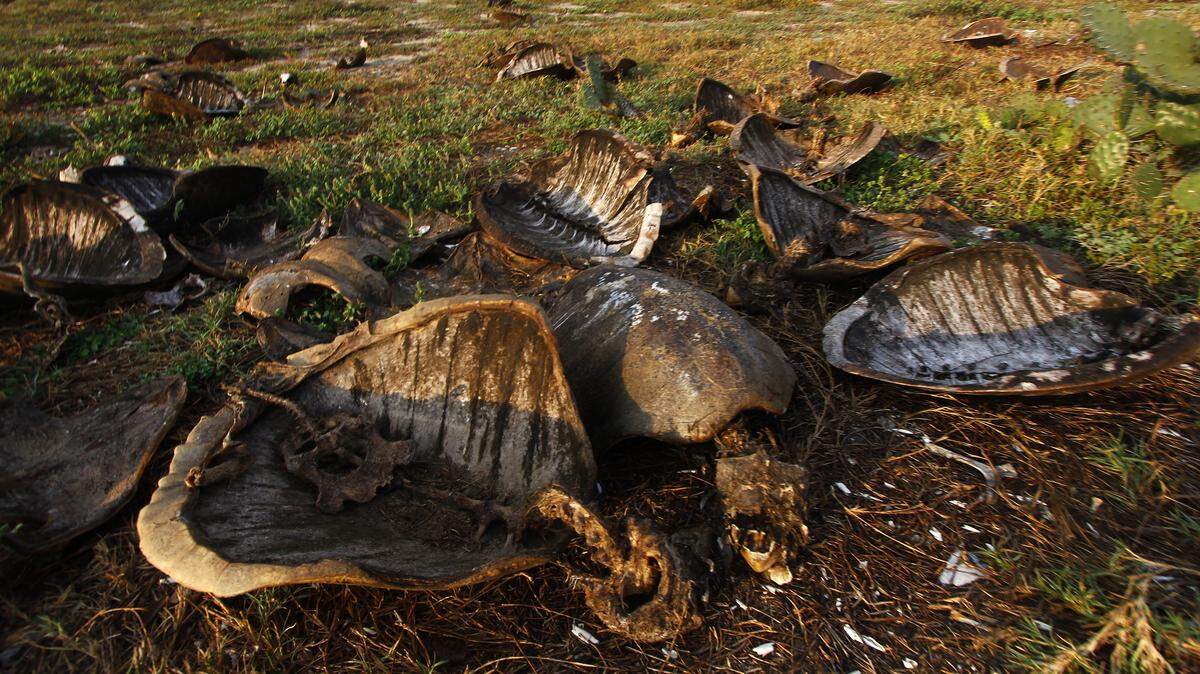
In April 2022, a researcher made a grim discovery at the bottom of a lake in eastern Ontario: 142 dead Northern map turtles with smashed shells and missing limbs, scattered across the floor of Opinicon Lake.
The mass grave wiped out roughly 10% of the lake’s entire turtle population. And the culprits, according to the scientist who found them, were river otters.
Gregor Bulté has monitored the turtle population at Opinicon Lake for over 20 years. The 2022 die-off was the first — and so far only — mass mortality event he has seen at the lake.
Of the 142 dead turtles recovered, 105 were male. No adult females were killed. The reason comes down to anatomy: females have larger, thicker shells that are harder to crush, making males far easier targets.
The actual death toll was likely even higher, as some turtles could not be recovered.
Why the Turtles Were Vulnerable
Northern map turtles spend their winters clustered together in shallow water around one island in the middle of Opinicon Lake — likely a defensive strategy tied to good ice coverage and access to cold, oxygen-rich water.
Their hibernation sites are fixed and consistent year after year, with the turtles returning to the same spots.
But what helps them survive the cold also leaves them dangerously exposed. Clustered together in shallow water, the turtles are too slow and exposed to hide or escape predators.
The shallow water places them close to the ice, making them accessible if the ice is breached.
If found, predators can have an “all-you-can-eat buffet of turtles,” Bulté told CNN on March 14 — and that’s exactly what happened to the 142 turtle victims in 2022.
He further described it as a “very, very easy meal” for the otters in an interview with National Geographic, published January 21.
River Otter Populations In Canada Are Increasing
River otters are the only animal powerful enough to crush turtle shells in the Opinicon Lake environment.
Otter populations declined in the 19th century due to fur trapping but have since recovered through conservation efforts. They are now listed as “Least Concern” by the IUCN.
Once rarely seen at Opinicon Lake, otters are now returning regularly. They typically eat fish but will prey on turtles when accessible. How exactly the otters breached the ice in 2022, however, remains a mystery.
But the need for swift action is imminent.
Bulté is now working with a wildlife statistician to assess whether the Opinicon population is stable, growing, or shrinking — and whether the male-female ratio has been permanently shifted by the 2022 die-off.
He also plans to identify other hibernation clusters throughout the Rideau Canal to better protect them.
The use of underwater drones is expected to help researchers study turtle behavior that was previously impossible to observe.
This can prove to be essential since much of freshwater turtle behavior — including hibernation — happens underwater and out of sight, which Bulté describes as the “iceberg principle.”
A Warning Sign for a Vulnerable Species
Canada is home to an estimated 10,000 northern map turtles. They are designated a species of “special concern” because of the threats they face, per the Ontario Endangered Species Act, 2007 and federal Species at Risk Act.
The 2022 event is described as a “cautionary tale” and a “warning sign,” per Bulté. The species faces numerous simultaneous threats, which Bulté describes as a “death by a thousand cuts.”
Those threats include boat strikes from propellers slicing through shells, being caught in fishing nets, shoreline development, tree removal reducing natural cover, de-icing bubblers that give otters access to hibernating turtles, and climate change.
The turtles’ overwintering sites — especially those in busier, more developed lakes — need stronger protection, according to the findings.
For now, the question is whether one devastating night in 2022 left a permanent mark on Opinicon Lake’s turtle population.
This article was created by content specialists using various tools, including AI.