If You Keep Waking Up at At Night, Your Late-Night Snack Choices May Need Work
That middle-of-the-night jolt awake is not random. Per Ultrahuman’s research coverage and Root Functional Medicine, when blood sugar drops too low overnight, the body releases cortisol as an emergency correction that wakes you up right around 3 a.m., when cortisol naturally begins its early morning rise. Cortisol and melatonin work like a seesaw. When one spikes, the other drops, and your body loses the hormone it needs to stay asleep.
A dinner or evening snack heavy on simple carbs with nothing to slow glucose absorption sets up a spike-and-crash cycle that triggers that response hours later. The fix starts with what you eat before bed.
What Your Bedtime Snack Needs to Do
Per Carolinas Thyroid Institute and Northwestern Medicine, the ideal bedtime snack stabilizes blood sugar overnight, delivers tryptophan to support melatonin production and provides magnesium to help regulate cortisol and calm the nervous system. The formula is protein plus healthy fat plus a complex carb, eaten 30 to 60 minutes before bed. Keep it small, around 150 calories. Sweet or starchy snacks eaten alone cause another spike-and-crash cycle and trigger the exact cortisol response you are trying to prevent.
The Snack Rotation Worth Trying
All of these are under $5 per unit at most grocery stores and target the blood sugar, tryptophan and magnesium mechanisms directly:
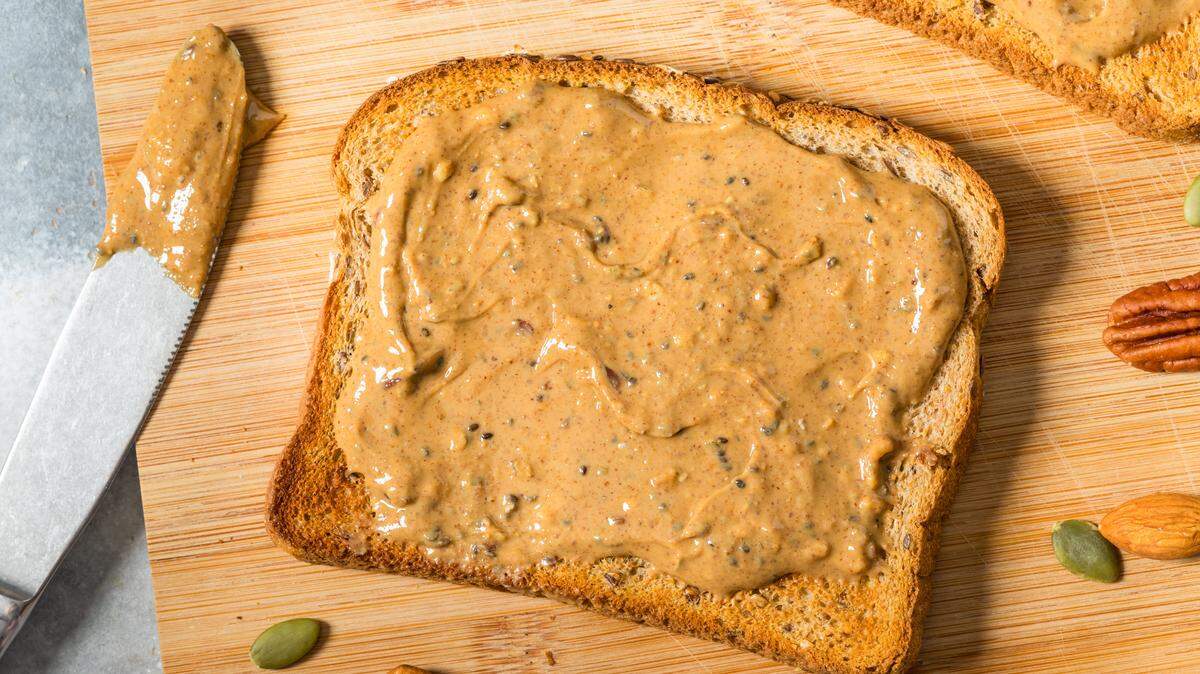
- Peanut butter on whole grain toast: tryptophan, healthy fat and complex carbs in one simple combo
- Greek yogurt with half a banana: protein, potassium and natural carbs that release slowly
- Mixed nuts with a few tart cherries: multiple studies link tart cherries to improved sleep duration; nuts deliver magnesium and melatonin
- Almond butter and oat crackers: magnesium-rich almonds with slow-digesting complex carbs
- A hard-boiled egg with pumpkin seeds: one of the highest magnesium food sources paired with a clean tryptophan source
- Tart cherry juice with a handful of walnuts: walnuts contain naturally occurring melatonin; tart cherry juice is among the most evidence-backed sleep foods available
- Cottage cheese with whole grain crackers: protein-dense, slow-digesting and easy to prepare
- A small bowl of oatmeal with chia seeds and almond butter: oats contain both melatonin and magnesium; chia seeds add additional magnesium and fiber
On Magnesium Specifically
Nearly half of Americans do not get enough magnesium from diet alone, per Mayo Clinic. Food sources worth prioritizing include pumpkin seeds, chia seeds, almonds, black beans and spinach. For those considering supplements, a 2025 randomized controlled trial in Nature and Science of Sleep found meaningful sleep improvements with magnesium bisglycinate. It is the most recommended form, absorbable and gentle on digestion, with a commonly cited range of 250 to 400mg taken 30 to 60 minutes before bed. Talk to your doctor before starting, especially if you take medications for blood pressure or blood sugar.
What to Cut
High-sugar snacks, alcohol, heavy meals and afternoon caffeine all work against overnight blood sugar stability and melatonin production. A 2 PM coffee still has half its caffeine in your system at 8 PM.
The snacks on this list cost almost nothing and address the underlying mechanism behind most 3 AM wake-ups. That is a more useful place to start than a new supplement or sleep gadget.
This article was created by content specialists using various tools, including AI.