Divers Snorkeling in a Texas Cave Found Ice Age Bones Scattered Across the Floor — Including Species No One Expected There
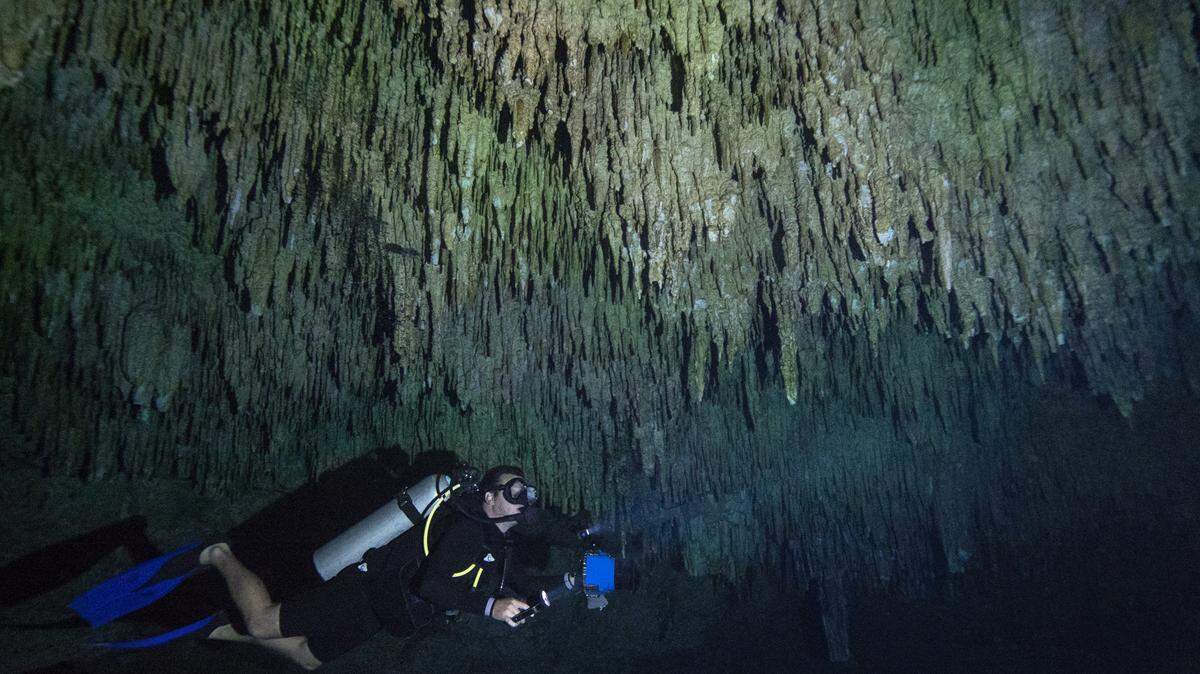
Saber-tooth cats. Giant tortoises. Mastodons. A paleontologist swimming through an underground stream in Central Texas kept finding fossils that weren’t supposed to exist in that part of the state.
Bones Just Lying On the Cave Floor
Paleontologist John Moretti from the University of Texas at Austin Jackson School of Geosciences didn’t have to dig. During exploration trips between 2023 and 2024, he and co-author John Young snorkeled through the underwater passages of Bender’s Cave in Comal County, Texas — and picked fossils directly off the streambed.
“There were fossils everywhere, just everywhere, in a way that I haven’t seen in any other cave. It was just bones all over the floor,” Moretti said.
The haul reads like a roster of creatures most people associate with museum dioramas, not a flooded Texas cave: pieces of giant tortoise shell, armor from a pampathere (a large armadillo relative of the genus Holmesina), remains of giant ground sloths, saber-tooth cats, camels, mastodons and mammoths.
The findings are published in the journal Quaternary Research.
Species That Shouldn’t Be There
Here’s what makes Bender’s Cave genuinely surprising: the giant tortoise and pampathere had never been documented in Central Texas before. Other species recovered from the cave, including mastodons and ground sloths, are rare in the region.
The fossils weren’t neatly arranged either. They were unevenly distributed — clustered in certain areas, with some buried in clay deposits. Scientists say floodwater likely carried bones into the cave through sinkholes over vast stretches of time, which explains why the fossils appear smooth, rounded and mineral-stained. The cave essentially acted as a natural collection system, trapping remains that washed in from the surrounding landscape.
A Different Picture of Ice Age Texas
The species found in the cave are rewriting assumptions about what Central Texas looked like during the Ice Age. Giant tortoises require warm climates. Pampatheres prefer warm environments. Ground sloths and mastodons are linked to forest habitats. Together, these animals point to a warmer, wetter interglacial period — not the cold, dry grassland that scientists typically associate with the region.
“This site is showing us something different, and that’s really important because of all the work that’s been done in this region,” Moretti said.
When researchers compared Bender’s Cave to more than 40 other Texas fossil sites, the cave’s collection looked more similar to sites from warmer periods than to nearby Central Texas locations. That comparison suggests the region wasn’t always the arid landscape people might picture when they think of Ice Age Texas.
Dating the Bones Proved Tricky
Pinning down exactly how old the fossils are has been a challenge. Researchers attempted radiocarbon dating but got unclear results. Cave water and minerals affect fossils over time — bones absorb new material, making traditional dating methods less reliable. Instead, scientists estimated the age of the collection using the types of species found and habitat clues those animals provide.
David Ledesma, an additional researcher on the study, emphasized just how unexpected the findings are.
“Some of the fossils that John has come across are species that we didn’t think would occur in this part of Texas. That we’re still learning new things and finding new things is quite exciting,” Ledesma said.
Bender’s Cave isn’t a typical fossil site — it’s an underground stream where a snorkeling scientist found an Ice Age menagerie hiding in plain sight. And the animals he found there suggest Central Texas during the Ice Age may have included forests and warmer conditions that no one had documented in the area before.
This article was created by content specialists using various tools, including AI.