Japan’s First New Bird Species in Over 40 Years Was Hiding in Plain Sight — Its Songs Gave It Away
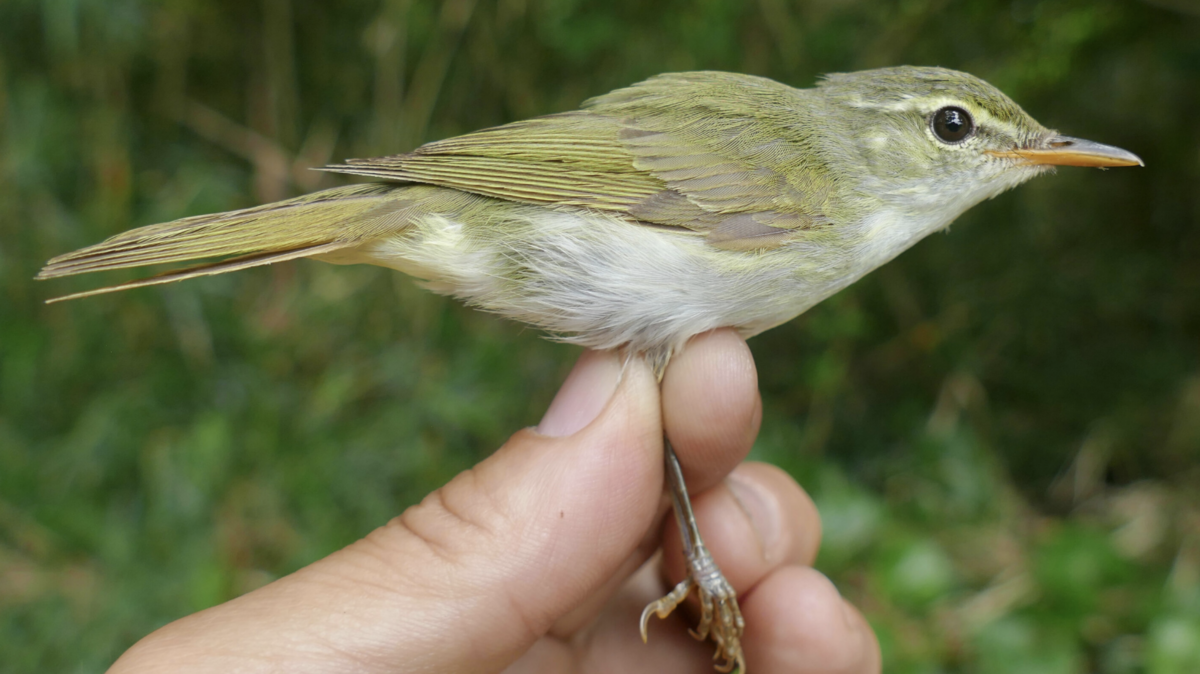
For decades, researchers looked right at the Tokara Leaf Warbler and had no idea it was a separate species. It looked identical to another bird. It lived on islands hundreds of miles apart. But nobody caught the difference — until they listened more closely and decoded its DNA.
A team of researchers from Uppsala University, the University of Gothenburg and Japanese institutions has formally identified the Tokara Leaf Warbler as a new species, making it the first new bird species discovered in Japan since the Okinawa Rail in 1982.
The findings, announced March 17 by Uppsala University, were published in PNAS Nexus.
Two Birds, One Identity — Until Now
The Tokara Leaf Warbler had long been classified as the Ijima’s Leaf Warbler. To the naked eye, the two birds are virtually indistinguishable. That’s what made this discovery so elusive — and so remarkable.
“The new species is a little cryptic and tricky to define. In terms of appearance, it doesn’t differ from the Ijima’s Leaf Warbler. It is DNA analyses and differences in song that show that this is a separate species,” said Per Alström, a researcher involved in the study.
The initial clue surfaced roughly 10 years ago, when scientists noticed DNA differences between warbler populations living on two separate island groups. That discovery launched years of extended fieldwork, museum study and lab analysis.
The Ijima’s Leaf Warbler is found on the Izu Islands, located south of Tokyo. The Tokara Leaf Warbler, meanwhile, lives on the Tokara Islands — approximately 621 miles to the southwest. Despite the geographic distance, both populations had been lumped under the same species classification for years.
What DNA and Birdsong Revealed
Researchers used DNA sequencing, full genome analysis and careful comparisons of bird songs to confirm the split. The results were definitive.
“Analyses based on the entire genome showed that the birds on the Tokara Islands are very unlike those on the Izu Islands, a finding that was corroborated by careful comparisons of their songs,” the release stated.
In other words, the birds may look the same, but their genetic makeup and the songs they sing tell a completely different story. It took the combination of cutting-edge genomic tools and old-fashioned field observation to crack the case.
Why This Matters for Conservation
The discovery carries real urgency beyond the thrill of identifying a new species. Both the Tokara Leaf Warbler and Ijima’s Leaf Warbler show low genetic diversity, making them vulnerable to disease and environmental change.
“This shows how important it is to use genetic methods to reveal hidden biodiversity at a time of global biodiversity crisis. These methods can help provide more complete knowledge on which to base future nature conservation efforts,” Alström said.
The Ijima’s Leaf Warbler is already officially listed as Vulnerable by the International Union for Conservation of Nature and is protected as a Japanese “Natural Monument.”
“Yet both species also show signs that they may have recovered somewhat from past population declines,” the release read.
Still, the scientists aren’t taking chances. Because the Tokara Leaf Warbler is at least as rare as the Ijima’s Leaf Warbler, the researchers recommend that both species should be classified as Vulnerable and both should be monitored to detect any future population changes.
This article was created by content specialists using various tools, including AI.