A Wooden Coffin Fell From the Sky In 1899. Scientists Just Solved the Mystery Inside It
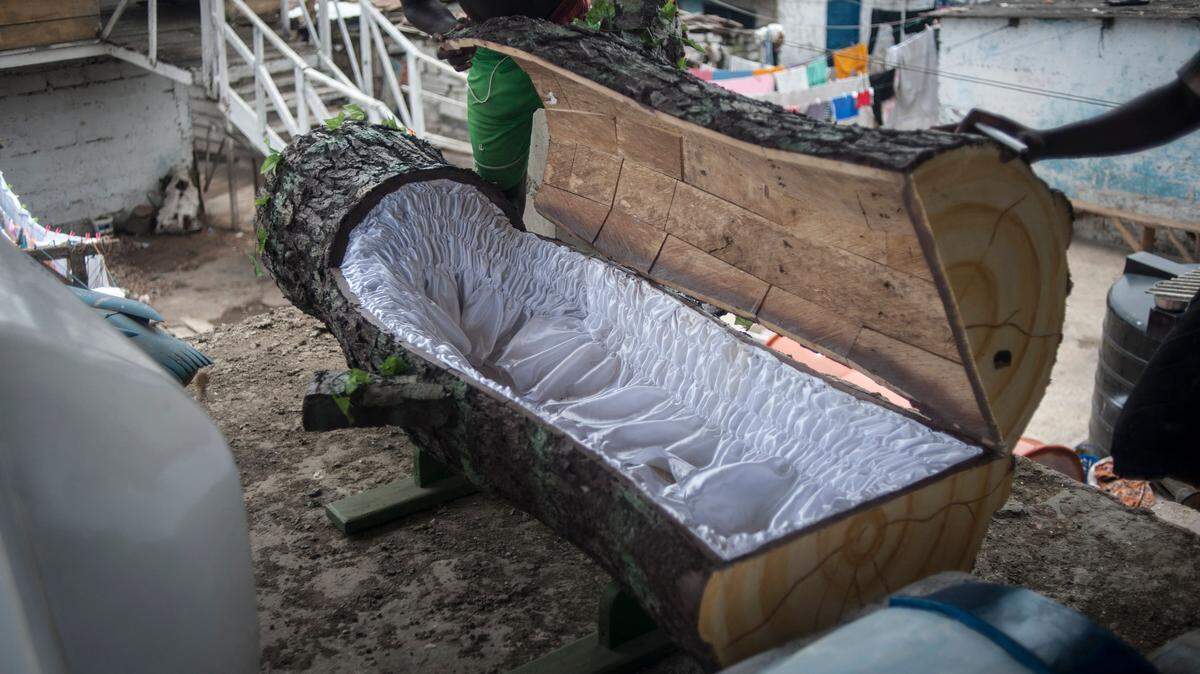
In 1899, in the village of Bagicz in northwestern Poland, an eroding seaside cliff gave way and released something extraordinary: a wooden log coffin, tumbling from the earth where it had rested for nearly two millennia.
Inside lay the remains of a woman, remarkably preserved alongside a collection of artifacts — bronze bracelets, a bronze pin, a necklace of glass and amber beads — that would captivate archaeologists for generations.
She was buried on a cowhide, and her coffin and its lid had been carved from a single tree trunk.
The woman came to be known as the “Princess of Bagicz,” a nickname inspired by her unique burial style and the quality of her well-preserved grave goods. Her coffin is the only preserved wooden sarcophagus of its kind from the Roman Iron Age.
It survived the centuries because it was located in a wet, humid environment — conditions that, rather than accelerating decay, helped protect the wood.
But when was she actually buried? That question proved far more difficult to answer than anyone expected. And the method that ultimately resolved it offers a compelling lesson in how different scientific disciplines can check — and correct — one another.
Two Different Answers, Centuries Apart
A 1980s analysis of the grave goods found alongside the woman suggested she died between A.D. 110 and 160. The artifacts were consistent with what scholars understood about material culture during that period in the region.
Then, in 2018, a carbon-dating analysis of her tooth told a strikingly different story. It dated her to between 113 B.C. and A.D. 65 — placing her death as little as 100 and as much as 300 years earlier than the artifact analysis had suggested. This created a major conflict. Which date could researchers trust? The answer came not from the woman’s body, but from her coffin.
A team of researchers led by Marta Chmiel-Chrzanowska of the University of Szczecin, Poland, turned to dendrochronology — the science of dating events and environmental conditions by analyzing the growth rings of trees.
Because trees add one ring per year and ring widths vary based on growing conditions, scientists can match ring patterns against established regional chronologies to determine the precise year a tree was felled.
Applied to the oak trunk from which the Princess of Bagicz’s coffin was carved, this method yielded a clear result.
“The estimated felling date of the oak used for the coffin was calculated as 120 AD,” the researchers wrote in the study. “It is likely that the coffin was crafted immediately after felling.”
That date — around A.D. 120 — aligned closely with the 1980s grave goods analysis, which had placed her death between A.D. 110 and 160. The findings were published Feb. 9 in the journal Archaeometry.
The dendrochronological evidence effectively confirmed the artifact-based dating and cast serious doubt on the radiocarbon result from the tooth. But why had the carbon dating been so far off?
When Diet Distorts the Clock: The Marine Reservoir Effect
The researchers concluded that the tooth’s radiocarbon date was likely thrown off by the woman’s diet or water sources — specifically, seafood consumption.
This phenomenon is known as the marine reservoir effect. Carbon stored in oceans is older than carbon found on land.
Organisms that live in the sea absorb this older carbon, and when humans consume significant quantities of seafood, that older carbon is incorporated into their bones and teeth.
The result is that radiocarbon dating can make marine-consuming individuals appear older than they actually are.
The distortion is not trivial. In extreme cases, the marine reservoir effect can skew radiocarbon dates by up to 1,200 years. In humans who ate significant amounts of seafood, the offset can range from dozens to hundreds of years — which is precisely the kind of discrepancy seen in the Princess of Bagicz’s case.
Was the ‘Princess of Bagicz’ Really a Princess?
Despite her evocative nickname, the woman buried in Bagicz may not have been of high status.
Her estimated age at death was 25 to 35 years old, and she showed no signs of paleopathologies that could indicate a cause of death, according to Live Science.
She did, however, have osteoarthritis, possibly from work-related overuse — suggesting she was a common worker, not an actual princess, according to a 2020 study by Chmiel-Chrzanowska.
But there is still more to learn. No successful DNA analysis has been completed yet, but new attempts are planned.
“We will attempt to drill into the skull in such a way as to obtain material from the temporal [skull] bone, without the need to damage it,” Chmiel-Chrzanowska told Live Science.
Chmiel-Chrzanowska traveled to Warsaw in February for further DNA testing. If successful, the genetic data could reveal details about the woman’s ancestry, her population affinities, and perhaps even her relationship to other individuals buried in the same Wielbark cemetery.
This article was created by content specialists using various tools, including AI.