Hand-Sized Spider That Weaves Golden Webs Is Rapidly Spreading Across the United States
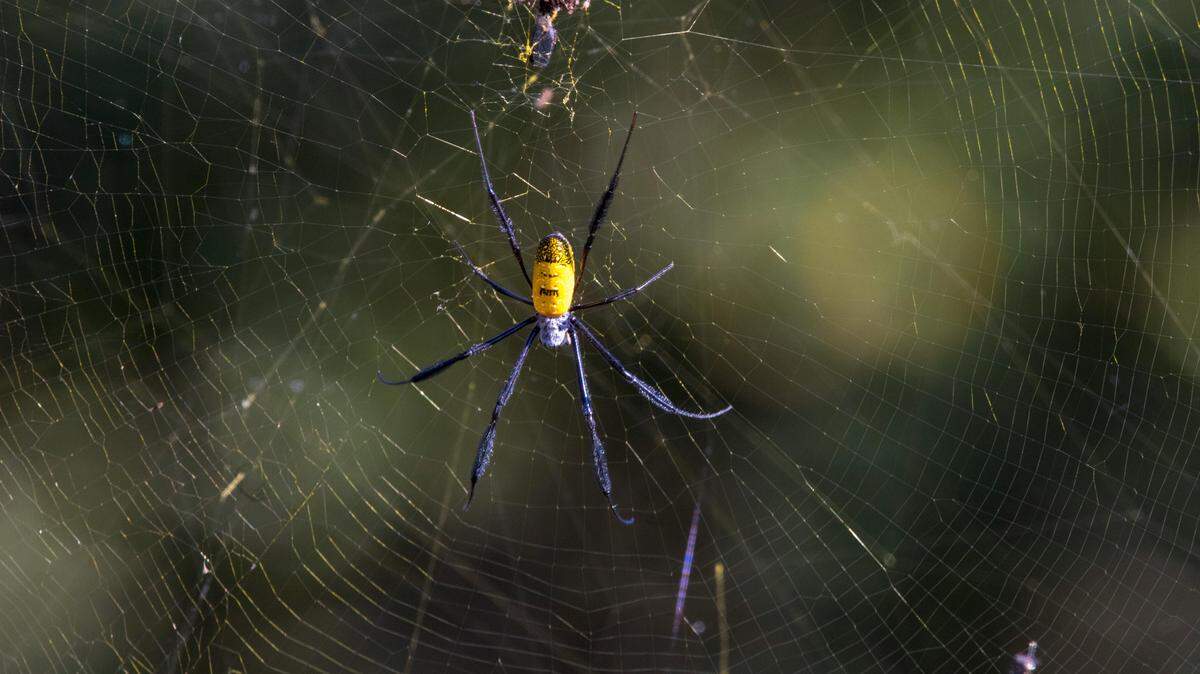
A bright yellow spider as large as a human hand is rapidly spreading across the United States.
It spins golden webs between power lines, atop stoplights, and even over gas station pumps — but should you be worried? Let’s explore.
The Joro spider, or Trichonephila clavata, is native to Japan, China, Korea, and Taiwan and is also found in other parts of Asia. It was first spotted in the U.S. in 2013 in northern Georgia, according to University of Georgia researchers.
Since then, it has spread across the Southeast and is now pushing past Mississippi. According to Joro Watch, the spiders have been seen in Georgia, Tennessee, North Carolina, South Carolina, California, Virginia, Maryland, and Pennsylvania.
That range is expected to grow. Researchers believe the spiders will continue to spread due to a process called “ballooning,” where they “release sail-like trails of silk that lift them up and off into the wind,” per National Geographic.
In some cases, the spiders travel a few feet. In other cases, they can travel across oceans. It all depends on where the wind takes them.
What They Look Like
Joro spiders have a bright yellow body with blue stripes and distinctive red markings. Females, significantly larger than males, can grow as large as a human hand.
“When it’s fully mature, it has this big red patch on its underbelly and tends to have striped legs — black and yellow,” said Dr. David Nelsen, a biology professor at Southern Adventist University, per Local 3 News.
Females build large webs, often golden or yellow colored, to capture food. Those webs have become an increasingly common sight across the Southeast, showing up in locations where native spiders are typically absent.
Why They Thrive in Cities
One of the most striking things about the Joro spider is how well it adapts to urban environments. The species tolerates urban noise and vibrations better than most animals, which is why it is thriving in cities across the Southeast.
A study conducted by Andy Davis at UGA’s Odum School of Ecology used tuning forks to simulate prey vibrations near roadsides and found the spiders’ overall health was unaffected by urban stressors.
High metabolism, heart rate, and cold tolerance contribute to rapid population growth. The full study was published in the journal Arthropoda.
“But these Joro webs are everywhere in the fall, including right next to busy roads, and the spiders seem to be able to make a living there. For some reason, these spiders seem urban tolerant,” Davis said, per UGA Today.
“I don’t know how happy people are going to be about it, but I think the spiders are here to stay,” co-author Alexa Schultz added.
Should You Be Worried?
Despite their size and striking color, experts say the Joro spider is considered relatively timid and poses no significant threat to humans.
“Risk of being bitten is really, really minimal,” Nelsen said. “Even if you walk into a web, the spider is going to run away or drop out. That’s its first response.”
The spiders primarily feed on small insects caught in their webs and help regulate pest populations.
“Joro spiders will likely continue to spread in the U.S., but they aren’t the ‘flying venomous spider invasion’ that’s been sensationalized in the media,” said Virginia Tech entomologist Theresa Dellinger.
“If Joro spiders become a nuisance around doorways, porches, or patios, they can be removed the same way as any other spider, using a broom or an aerosol insecticide spray,” Dellinger added.
When You’ll See Them
Joro spiders’ eggs usually hatch between May and June, according to USA Today. You’re likely to see more of them between August and October when they reach full size and start looking for mates.
Late summer and fall are the peak months to encounter these large, web-spinning arachnids — particularly in urban areas where they’ve proven remarkably at home.
Its ability to tolerate city life, its cold hardiness, and the ballooning technique that carries it on the wind all point to a species that will continue expanding its range across the country.
If you come across a Joro spider on your porch, take a picture and report it to Joro Watch so scientists can monitor its spread.
And if you’re not a fan of spiders, simply shoo it away with a broom — they’ll know enough to run away.
This article was created by content specialists using various tools, including AI.