Hair Thinning? Your Hair Texture Is A Key Factor — Here's What To Look For
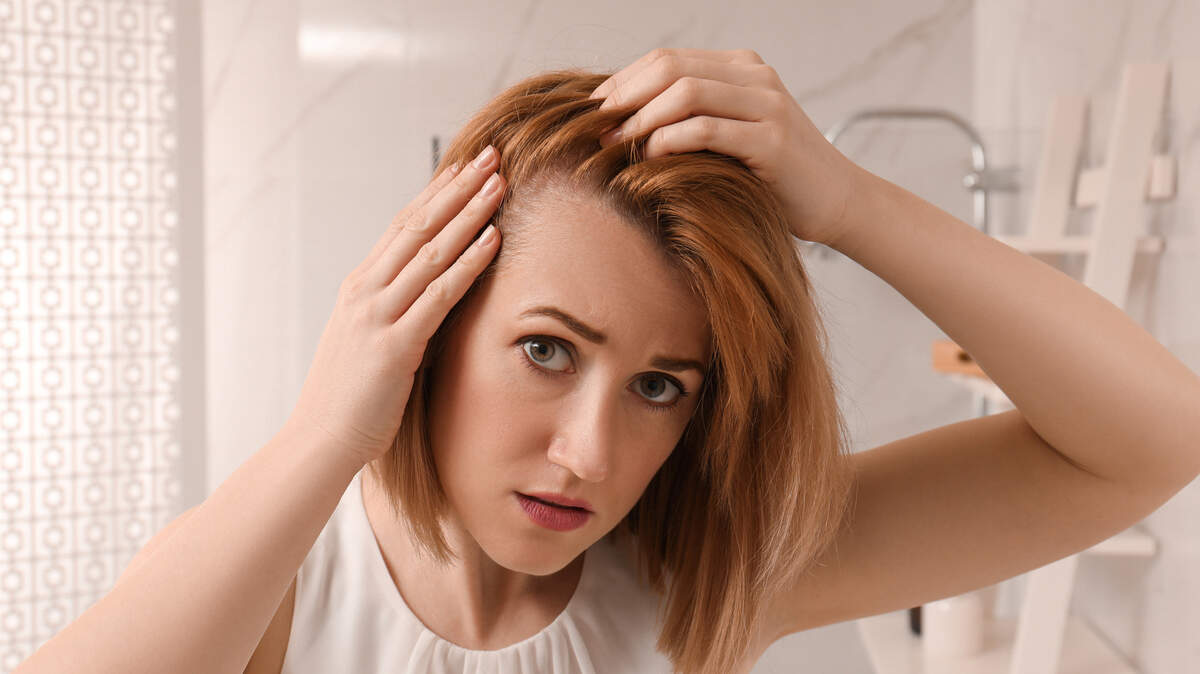
You’ve noticed it. Maybe your part looks a little wider than it did a few years ago. Maybe your ponytail feels thinner in your hand, or your hair just doesn’t behave the way it used to. You’re not imagining things, and you’re in very good company.
Androgenetic alopecia is the most common form of hair loss in the U.S., affecting roughly 50 million men and 30 million women, according to Dermatology Times. What fewer people realize is that your hair’s curl pattern and strand thickness directly shape how thinning shows up, what’s driving it, and what will actually help.
Someone with fine, straight 1B hair and someone with tight 4C coils can lose the same percentage of density and see completely different results in the mirror.
Hair type and hair texture aren’t the same thing
Most people conflate these terms, but the distinction matters. Hair type refers to your curl pattern (the Andre Walker 1A–4C system: straight, wavy, curly, coily). Hair texture refers to the thickness of each individual strand: fine, medium, or coarse, per OLAPLEX. Then there’s density (how many strands per square inch) and porosity (how readily hair absorbs moisture).
You can have Type 3A curly hair with fine texture and low density, which creates a totally different thinning experience than someone with 3A curls who has coarse, high-density hair. That’s why generic “thinning curly hair” advice can feel so off. It’s calibrated to one idea of what curly hair is, without accounting for the variables that actually drive your experience.
Many people are also hybrid types with different textures on different parts of the scalp, and those textures can shift over time with hormones, damage, and stress, according to Theradome.
Why your hair doesn’t feel the way it used to
If your hair has quietly changed over the last few years, there’s real biology behind it. People assigned female at birth tend to reach peak hair thickness around age 40, and 38% of those over 50 experience significant thinning, according to UCLA Health. As follicles shrink with age, strand diameter decreases and the follicle shape can subtly shift, making previously thick hair feel finer and more fragile.
Stress and hormonal changes accelerate the process. The Dermatology Times study found that high stress increased the odds of severe sudden thinning by 1.41x in women and 1.26x in men.
For women navigating menopause, lower estrogen and progesterone can produce hair that feels thin, coarse, and dry all at once. The products and routines that worked at 35 may not match the hair that’s growing out of your scalp at 50.
How thinning looks different depending on your hair type
This is the part most haircare content skips, and it’s arguably the most useful.
Straight and fine hair (Types 1A–1C): Fine hair lies flat, so even modest density loss reveals the scalp quickly. A widening part or hair that seems to vanish when pulled back are early signals. The catch is that heavy thickening products can backfire, weighing fine strands down and making them look flatter.
Wavy hair (Types 2A–2C): Thinning often shows up as a loss of wave definition and overall volume drop. Waves need neighboring strands for support, so as density decreases, hair can look limp where it once had movement. The silver lining: even reduced waves create some visual fullness, though that can delay awareness.
Curly hair (Types 3A–3C): Curly hair has a more delicate structure, and its twists and turns make it more prone to breakage from styling, heat, or harsh treatments. Curls may loosen as strands weaken, and increased frizz can mask density loss for longer than you’d expect.
Coily hair (Types 4A–4C): Tight coils face a unique risk in traction alopecia, where high-tension styles pull on follicles and can cause permanent loss along the hairline. Shrinkage can also disguise how much density has actually changed, since compressed coils look full even as strand count drops.
What actually works for each texture
Fine and straight: Lightweight, residue-free shampoos and matte styling products that create lift without weighing strands down.
Wavy: A balance between moisture and weight. Heavy oils that work for curly or coily hair can drag waves flat and make thinning more visible. Go lighter.
Curly: Deep conditioning, gentle detangling, and minimal heat. Protecting curl structure protects the visual volume curls naturally provide.
Coily: Low-tension styles are the single most protective choice. Pair them with moisture-rich routines and consistent scalp care to address the dryness that makes coily strands vulnerable to breakage.
Across every type, the 2026 shift in haircare is toward treating the scalp as living skin. That means barrier support, microbiome-friendly cleansing, and anti-inflammatory ingredients, according to MDhair. Think of it the way facial skincare was transformed by ingredient transparency and barrier repair. That same logic now applies to your scalp.
When it’s time to talk to a professional
There’s a limit to what routine changes can address. If shedding persists beyond three months, or you notice rapid thinning, patches, or scalp irritation, it’s worth getting a professional assessment. Clinical tools like trichoscopy let dermatologists examine follicles at a level of detail your bathroom mirror can’t offer.
The key distinction: breakage (hair snapping along the shaft) is often fixable through care changes, while follicle miniaturization typically requires medical intervention. A professional can tell you which one you’re dealing with.
Your hair has changed. But understanding your texture gives you a clearer lens on what’s happening and a more targeted path forward.
Production of this article included the use of AI. It was reviewed and edited by a team of content specialists.