Researchers Discover Catastrophic Litter Levels in the Mediterranean's Deepest Point
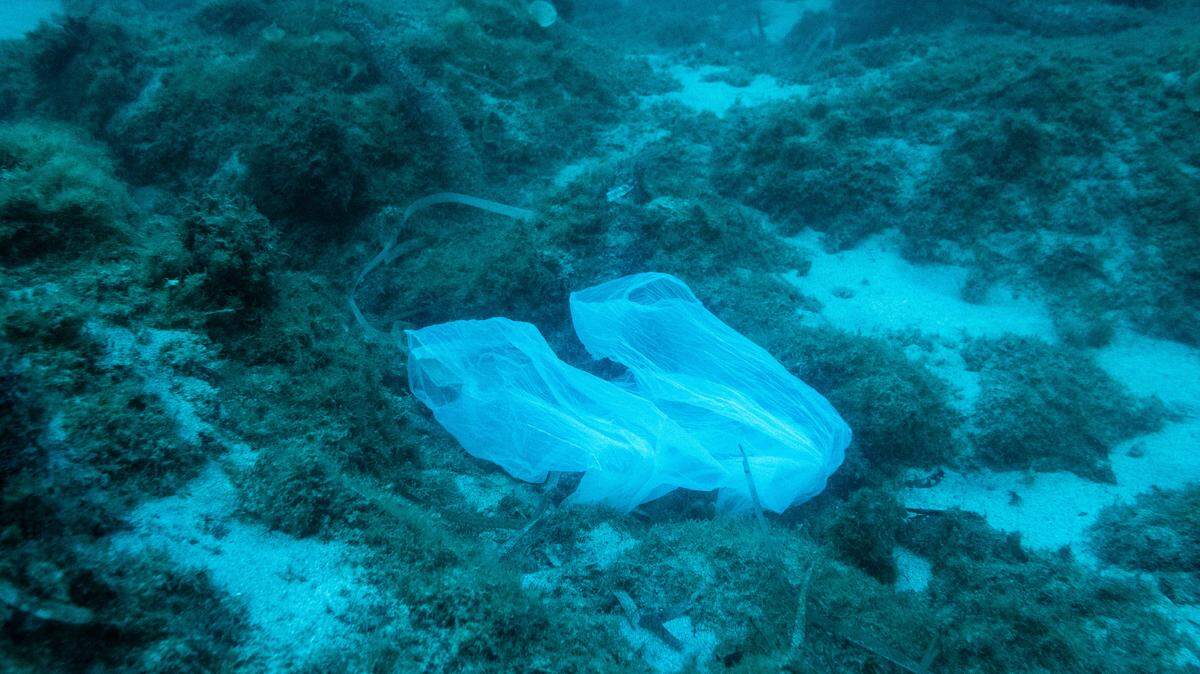
Researchers discovered 26,715 items of litter per square kilometer at the deepest point in the Mediterranean Sea, with plastic making up nearly 90% of the debris.
A team led by Miquel Canals, from the University of Barcelona’s Faculty of Earth Sciences, descended to the Calypso Deep, a 5,112-meter depression in the Ionian Sea located about 60 kilometers west of Greece’s Peloponnese coast.
The Calypso Deep is the deepest point in the Mediterranean Sea.
What they found there was one of the highest concentrations of deep-sea litter ever recorded. The findings were published in the journal Marine Pollution Bulletin in 2025.
The debris included plastic, glass, metal, and paper waste. Plastic dominated, accounting for nearly 90% of all debris at the site.
How the Trash Gets There
Ocean currents carry lightweight waste like plastic bags from coastlines into the trench, according to the research. But natural forces aren’t the only driver — direct dumping by boats has also been confirmed.
“We have also found evidence of the boats’ dumping of bags full of rubbish, as revealed by the pile-up of different types of waste followed by an almost rectilinear furrow, Canals said, per the University of Barcelona.
“Unfortunately, as far as the Mediterranean is concerned, it would not be wrong to say that “not a single inch of it is clean,” he added.
The trench’s “closed depression” shape and weak currents make it a natural trap for debris. Once waste sinks to the Calypso Deep, it has essentially nowhere else to go.
What Scientists Saw on the Seafloor
The team explored the Calypso Deep using a crewed submarine called the Limiting Factor, built by Triton Submarines. The vessel carried two passengers and traveled at about 1.8 km/h through pitch-black depths.
During a 43-minute stay near the bottom, the submarine covered about 650 meters in a straight line, capturing high-quality images of the seafloor. Video footage was shared on YouTube in 2020.
The images revealed more than just trash. Animals were observed ingesting the debris at the bottom of the Calypso Deep.
Some organisms were found using the debris as a surface to grow on, hide in, or lay eggs. The waste is not simply sitting inert on the ocean floor — it is actively interacting with and reshaping the ecosystem.
“Some plastics, such as bags, drift just above the bottom until they are partially or completely buried, or disintegrate into smaller fragments,” Canals said, per the University of Barcelona.
That fragmentation means larger pieces of plastic break down into smaller and smaller particles over time, making the contamination even harder to track and address.
Why the Mediterranean Is Especially at Risk
Researchers describe the deep sea as a “final sink” for pollution. The Mediterranean is described as particularly vulnerable due to it being an enclosed sea surrounded by dense human activity, heavy maritime traffic, and widespread fishing.
According to a 2018 report by the World Wide Fund for Nature, “plastic represents 95 per cent of the waste floating in the Mediterranean and lying on its beaches.”
Most of the plastic is released into the sea by Turkey and Spain, followed by Italy, Egypt and France.
With millions of people along its coastline and countless vessels crossing its waters, the Mediterranean receives an enormous and constant flow of waste — much of which eventually settles into its deepest recesses.
Global Efforts to Address Plastic Pollution Have Stalled
In March 2022, the UN Environmental Assembly convened in Nairobi, Kenya, to debate the global plastic crisis. In a historic move, 175 nations voted to adopt a global treaty for plastic pollution.
However, the negotiations fell through in 2025, according to CNN. The treaty is not currently in effect.
That collapse leaves a significant gap in the global response to marine plastic pollution.
The study calls for global policies to reduce marine waste and changes in human consumption habits. Researchers are urging a joint effort among scientists, journalists, media, and public influencers to address the problem.
“The ocean floor is still largely unknown to society as a whole, which makes it difficult to raise social and political awareness about the conservation of these spaces,” Canals said.
The research from the Calypso Deep makes clear that the consequences of human waste do not stop at the shoreline — they sink, accumulate, and endure in the deepest places on Earth.
BOTTOM LINE: With a global plastics treaty stalled and tens of thousands of items piling up per square kilometer in the Mediterranean’s deepest trench, the gap between the scale of ocean plastic pollution and the world’s response to it is only growing.
Production of this article included the use of AI. It was reviewed and edited by a team of content specialists.