Couple Faces $319k Bill After Discovering Ancient Remains During Home Renovation
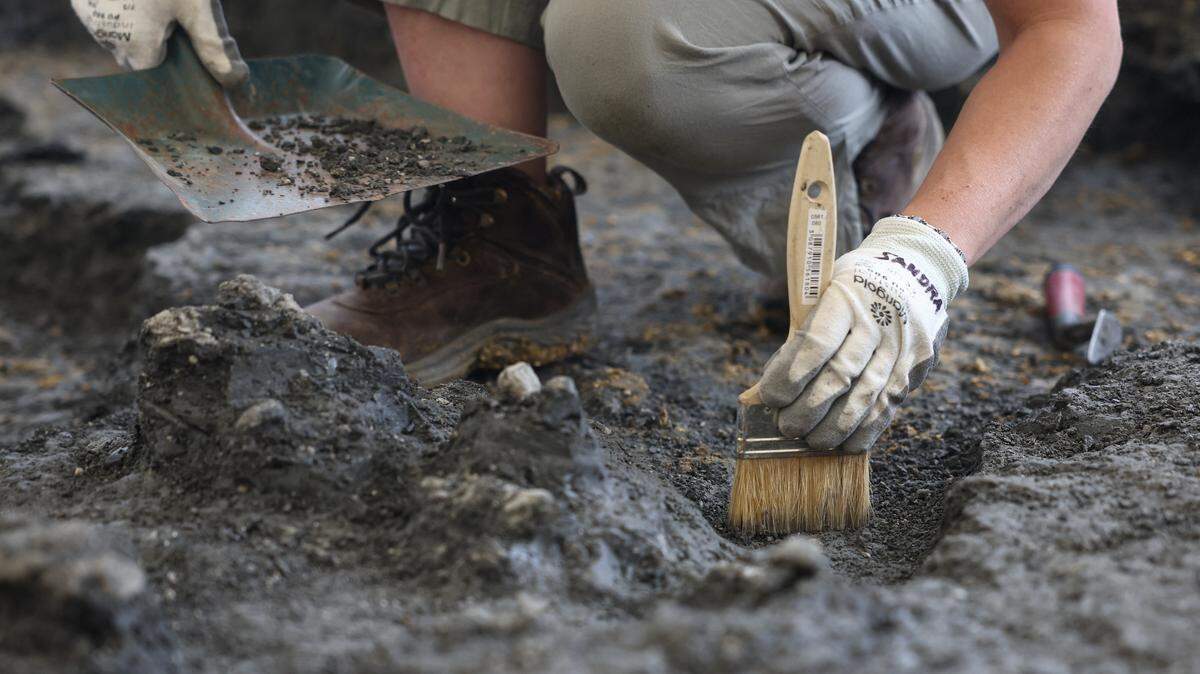
An Ontario couple’s pandemic-era home renovation turned into a financial nightmare after ancestral Indigenous remains were discovered on their property, triggering a provincial law that forces homeowners to fund costly archaeological investigations with little hope of relief.
Christine and Dan Reio bought a bungalow overlooking Lake Erie in Wainfleet, Ontario, during the pandemic, planning to expand the Niagara region property and eventually retire there, according to the CBC.
Just days into construction, their foreman called to report finding human bones in the ground.
Police investigated and ruled out any connection to a crime. A provincial official informed the couple the bones were ancestral Indigenous remains belonging to a young man, likely in his early 20s at the time of death.
Tanya Hill-Montour, archaeology supervisor with Six Nations of the Grand River, estimates the remains are at least 1,000 years old, per the CBC.
The Six Nations of the Grand River includes the Mohawk, Seneca, Oneida, Cayuga, Onondaga, and Tuscarora — Haudenosaunee peoples whose traditional homeland includes the Wainfleet area.
The Law That Shifted the Cost to Homeowners
A 2002 provincial law — the Funeral, Burial and Cremation Services Act (FBCSA) — governs what happens when human remains are discovered on a property. It requires a formal Burial Site Investigation whenever remains are found.
Ontario’s Ministry of Public and Business Service Delivery and Procurement (MPBSDP) oversees the Registrar of Burials, who ordered the investigation on the Reios’ property.
Under the law, the homeowners — not the government, not the municipality — must hire a licensed archaeologist to carry out the work.
The investigation is designed to determine the site’s history, establish the boundaries of any burial area, and establish how the remains should be handled. If more remains are found, the property must be reclassified as a cemetery.
The Unexpected Costs of a Home Renovation
One quote the Reios received for the required archaeological work came in at $319,000, according to the CBC.
That covered a crew of six working approximately 27 days, sifting through roughly 100 square metres of dirt using 3mm mesh screens, plus Indigenous community monitoring throughout the process.
The meticulous nature of the work — carefully screening soil to ensure no fragments are missed — drives the cost well beyond what most homeowners could anticipate or afford.
And $319,000 may not be the ceiling.
Archaeologists are advised to dig a 5-metre buffer around any find, meaning costs could climb to $1 million or more if additional remains are discovered. The $319,000 figure is only an estimate, not a cap.
“This is an insane amount of money,” Christine said in an interview with the CBC. “This is not within the scope of what’s reasonable.”
“I can’t even imagine the investment of man hours spent to give us no answer,” Christine added. “I know that I personally have spent hundreds and hundreds of hours. Do they know that we don’t sleep at night? Do they know that we cry?”
A Relief Process With No Clear Rules
The FBCSA does include a provision allowing homeowners to apply for financial help if the mandatory dig causes “undue financial burden.”
In practice, however, the law provides no criteria for how a homeowner qualifies for that relief.
There is no public formula, no threshold, and no defined process that tells applicants what “undue financial burden” actually means or how the province evaluates claims.
That could be why the Reios have yet to receive any word of financial relief.
The Reios applied for relief in October 2024. At the time of publication, they had not received a response. The ministry confirmed with the CBC that the application is “still in progress” with no timeline given.
Between 2023 and 2025, the province received 19 applications for financial relief; 6 were approved, per the CBC — an approval rate that offers little comfort to families awaiting a decision.
The burden on homeowners has drawn criticism from Indigenous community leaders as well.
“It’s a financial burden so costly that nobody wants to take accountability for it,” Hill-Montour told the CBC. “I truly do not believe that homeowners should be completely responsible.”
The Reios did everything by the book — they purchased a home, applied for proper permits, and hired a construction crew. Nothing in the process warned them of what they might find or what it would cost.
Their renovation sits frozen and their bills continue to accumulate.
BOTTOM LINE: The Reios’ financial relief application remains unanswered with no timeline, and under Ontario’s current law, any homeowner who discovers remains during construction could face the same open-ended financial burden.
Production of this article included the use of AI. It was reviewed and edited by a team of content specialists.