Emergency Fund After 55: How Much You Need in 2026 and How to Build It Fast
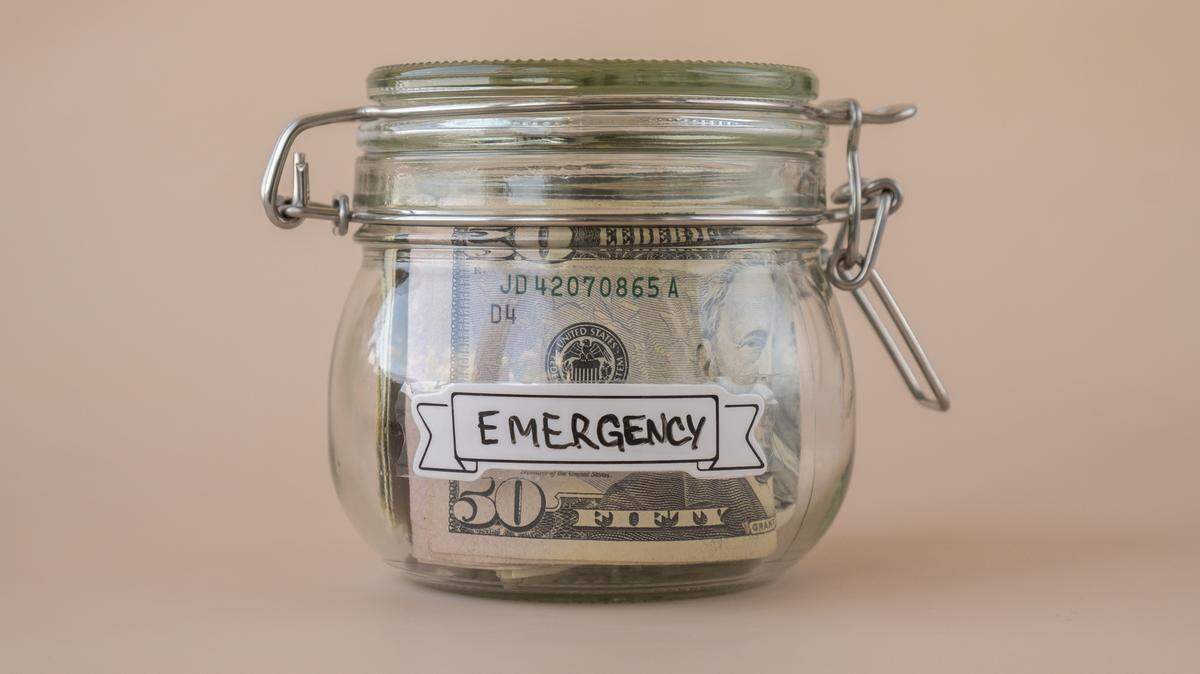
The standard advice — keep three to six months of expenses in a savings account, and you’re covered — was written for someone in their 30s with a steady paycheck and decades of runway.
For retirees on a fixed income, it was never quite the right rule. In 2026, with savings’ rates finally offering a real return and the cost of being unprepared rising, it is worth revisiting what the right target actually looks like and how to get there.
Why the Old Rule Does Not Hold After Retirement
The three-to-six-month guideline assumes that the main financial risk is a temporary income disruption, like a job loss you can recover from, a lean stretch before the next paycheck. Retirees face a different set of risks entirely.
There’s no next paycheck to fall back on. An unexpected expense, like a major home repair, a car replacement, a medical bill, cannot be absorbed through overtime or a new job.
Without liquid reserves, the most common fallback is debt or a forced withdrawal from a retirement investment account. If markets happen to be down at that moment, those losses are permanent. The money is gone from the portfolio at its lowest point, reducing the base from which remaining savings can grow.
This is why a growing number of financial planners are recommending a substantially larger cushion for retirees than the old baseline suggests.
Kristen Beckstead, a CFP and vice president at First Horizon Advisors in Nashville, is quoted in AARP recommending that retirees consider holding 18 to 24 months of essential expenses in a liquid emergency fund. That is one expert’s professional guidance, not a universal standard — but it reflects a meaningful shift in how financial planners are thinking about cash reserves for people who are no longer earning.
How Much That Actually Means in Dollars
The Bureau of Labor Statistics tracks spending by age group through its Consumer Expenditure Survey. According to the most recent available data, adults ages 55 to 64 averaged $84,946 in total annual expenditures in 2024: roughly $7,079 per month. That figure was released December 19, 2025, and is the current benchmark for this age group.
Note that this figure reflects all spending, not just essential expenses. A retiree who has paid off a mortgage, eliminated commuting costs, and reduced discretionary spending may run meaningfully lower than this average. The number is most useful as an upper-end benchmark; individual budgets will vary.
Using $7,079 per month as a full-spending reference point, savings targets across different timeframes look like this:
- 6-month fund: Roughly $42,000
- 12-month fund: Roughly $85,000
- 18-month fund: Roughly $127,000
For a retiree whose actual monthly essentials are closer to $4,000 to $5,000, those targets scale accordingly — roughly $24,000 to $30,000 for six months, and $72,000 to $90,000 for 18 months.
These figures are best used as a frame of reference, not a precise prescription. The more useful exercise is calculating your own monthly essential expenses (housing, utilities, food, insurance, transportation, and healthcare) and building the fund around that number. The closer you are to retirement, the more months of coverage matter.
The Savings Gap Is Wider Than Most People Realize
The survey data suggests that most Americans approaching or in retirement have far less than these targets in place.
Among adults ages 61 to 79, 16% have no emergency savings at all, according to the Bankrate 2025 Emergency Savings Report (survey conducted December 2025). Among those ages 45 to 60, that figure is 24%.
The median emergency savings balance for baby boomers is $2,000, and for Gen Xers — many of whom are now in the 55+ bracket — just $500, per the Empower “The Safety Net” Survey from June 2025.
Being ahead of these medians is better than average. “Ahead of average” and “adequately protected” are not the same thing, though, and the stakes of being underprepared are meaningfully higher in retirement than they were at 35.
The Market Timing Risk That Does Not Get Enough Attention
One of the most underappreciated arguments for a larger emergency fund in retirement has nothing to do with emergencies per se, rather it’s about protecting investment accounts from forced selling.
Retirees who lack liquid reserves are vulnerable to what financial planners call sequence-of-returns risk: the danger of having to sell investments during a market downturn to cover everyday expenses or an unexpected bill.
Unlike someone still working, a retiree cannot wait for the market to recover. If investments must be liquidated when they are down 15% or 20%, that loss compounds over the remaining retirement. A large, liquid cash buffer is one of the most direct ways to avoid it.
Beckstead’s 18-to-24-month recommendation, as reported by AARP, is partly about this: having enough in cash to cover expenses for a year and a half or more means a retiree can ride out a market downturn without touching invested assets. The fund is as much a portfolio protection tool as it is an emergency one.
Make Existing Savings Work Harder
For retirees who already have cash set aside, the first priority is making sure it is earning a competitive return.
As of March 2026, top high-yield savings accounts are offering APYs ranging from roughly 4% to 5%, per Bankrate. The FDIC national average savings rate sits at approximately 0.39%. On $50,000 in reserves, the difference between those two rates is roughly $2,000 in annual interest — in an account carrying the same federal deposit insurance as a traditional savings account.
Yet according to data cited by AARP, Americans keep money in the same bank account for an average of 17 years, largely out of habit. Moving to a high-yield account does not require closing an existing bank relationship. Most retirees keep everyday checking where it is and simply transfer emergency reserves to an online high-yield account. The higher return starts accruing immediately.
Note: HYSA rates shift with Federal Reserve decisions. The figures cited here reflect March 2026 conditions and should be verified at the time of any move.
Building the Fund: Practical Levers on a Fixed Income
For retirees on fixed incomes, building reserves requires identifying sources of cash that are not obvious. A few that hold up:
Unused subscriptions. A 2025 CNET survey cited by AARP found the average U.S. adult spends close to $200 per year on unused subscriptions — streaming services, apps, memberships signed up for and forgotten. That $200 redirected and compounding in a high-yield account is a low-effort starting point.
Insurance rate reviews. Nearly half of homeowners saw premium increases in 2025, per J.D. Power’s 2025 U.S. Home Insurance Study as cited by AARP. Car owners who shopped for a new insurer saved a median of $461 annually in a 2024 Consumer Reports survey. These are recurring savings that compound once the switch is made.
Automate what you can. Even a modest automatic monthly transfer into a high-yield account adds up significantly at 4% to 5% APY over a few years.
Focus on one priority. CFP Stephen Kates, Bankrate financial analyst, recommends concentrating on one financial goal at a time rather than trying to tackle everything at once, as quoted in the Bankrate 2025 Emergency Savings Report. For a retiree with thin cash reserves, getting the emergency fund to a meaningful threshold is a worthy single priority for 2026.
A Note on Healthcare as Part of the Equation
Healthcare deserves mention because it represents a significant and growing share of retiree expenses and because it is less predictable than most. A 65-year-old retiring in 2025 is projected to spend an average of $172,500 on healthcare throughout retirement, excluding long-term care, per Fidelity’s 2025 Retiree Health Care Cost Estimate. The monthly Medicare Part B premium rose to $202.90 in 2026, up $17.90, per official CMS figures.
For retirees already enrolled in Medicare, existing Health Savings Account balances (if any) can serve as a healthcare-specific reserve. New contributions to an HSA must stop upon Medicare enrollment, but existing funds roll over indefinitely, can be invested, and are withdrawn tax-free for qualified medical expenses at any age. After 65, HSA funds may be used for any purpose; nonmedical withdrawals are subject to ordinary income tax but carry no penalty.
The Bottom Line
The 18-to-24-month guideline from experts like Beckstead is a benchmark, not a mandate. Many retirees will find that a well-funded 12-month reserve in a high-yield account is a meaningful and achievable improvement over where they currently stand.
The variables that matter most in retirement: protecting investments from forced selling, staying out of high-interest debt, maintaining financial flexibility when unexpected things happen. These all depend on having liquid cash available. Getting the size right, and making sure it earns a competitive return while it sits, is the work.
Production of this article included the use of AI. It was reviewed and edited by a team of content specialists.