NASA’s Curiosity Rover Discovers Martian ‘Spiderwebs’ Covered In Egg-Like Nodules
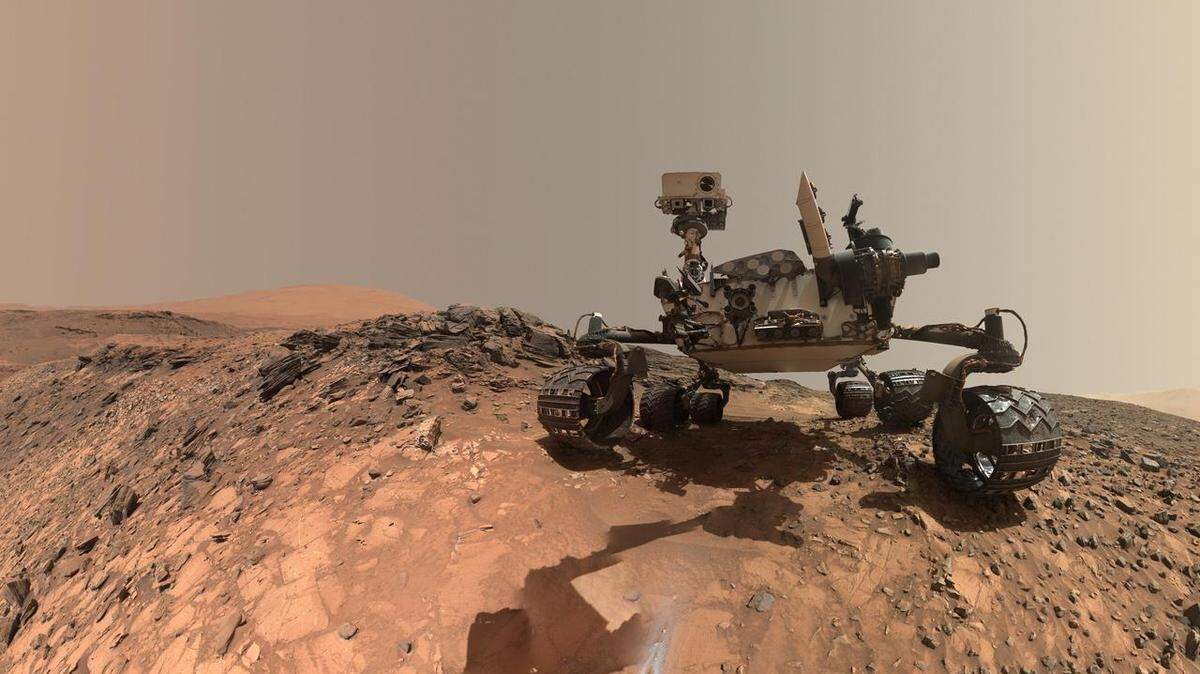
A set of rocky ridges on Mars that look like giant spiderwebs from orbit are challenging what scientists thought they knew about water on the Red Planet.
And the implications for the search for ancient microbial life are bigger than the photos suggest.
NASA’s Curiosity rover has spent about six months studying unusual geological formations called boxwork — a network of low ridges about 3–6 feet tall that crisscross the Martian surface for miles, with sandy hollows nestled between them.
The ridges suggest groundwater existed on Mars later than scientists previously believed, which raises a pointed question: how long could microbial life have survived billions of years ago before Mars became the dry desert we know today?
NASA released Curiosity’s first boxwork photos in June 2025, shortly after the rover reached the rocky ridges. On Monday, Feb. 23, the agency released two more images showing the structures in much greater detail.
How These Boxwork Formations Took Shape
Before Curiosity rolled up to the ridges, scientists only had orbital images to work with. The exact structure and composition were uncertain. Close-up images and samples have now filled in the gaps.
Scientists believe the formations followed a specific sequence.
Groundwater flowed through fractures in bedrock. Minerals were deposited in those fractures, strengthening certain areas of rock. Then, over enormous stretches of time, wind erosion stripped away the weaker surrounding rock.
The reinforced areas remained, standing as raised ridges. From orbit, the result looks like giant spiderwebs stretched across the landscape.
“These ridges are maybe two parking spaces wide, and they stand 3 to 6 feet tall above the sandy hollows between them. So would be a pretty fun landscape to ride your BMX bike across,” Tina Seeger told News 2’s sister station, NewsNation.
Why This Changes the Water Timeline
The formations sit on Mount Sharp, a mountain about 3 miles tall that Curiosity has been ascending. Each layer represents a different period in Mars’ climate history.
As the rover climbs higher, the environment shows signs that water gradually disappeared over time, with occasional periods of returning rivers and lakes.
Finding boxwork this far up the mountain caught scientists off guard.
“Seeing boxwork this far up the mountain suggests the groundwater table had to be pretty high,” said Seeger of Rice University in Houston, one of the mission scientists leading the boxwork investigation. “And that means the water needed for sustaining life could have lasted much longer than we thought looking from orbit.”
That distinction matters. If groundwater persisted at higher elevations and for longer periods than orbital data alone suggested, the window during which Mars could have supported microbial life stretches wider than previous estimates.
Egg-Like Nodules Turned Up Where Nobody Expected Them
Curiosity also found small mineral nodules among the boxwork: bumpy, pea-sized lumps that formed from minerals left behind as groundwater dried out billions of years ago.
These nodules are typically signs of ancient groundwater activity.
Their location was surprising. Instead of appearing near fractures, where you’d expect groundwater deposits, they turned up along ridge walls and inside the hollows between ridges.
Scientists do not yet fully understand why.
One possible explanation: the ridges may have been cemented by minerals first, and later groundwater activity could have created nodules around them.
That would mean multiple distinct phases of water moving through this terrain, each one leaving its own chemical fingerprint on the rock.
Driving Through Boxwork Is Its Own Challenge
Navigating a nearly one-ton rover through this terrain presents real problems. The ridges are barely wider than Curiosity, which weighs 899 kilograms.
Rover drivers at NASA’s Jet Propulsion Laboratory in Southern California, which built Curiosity and leads the mission, must guide it across ridge tops and then down into the sandy hollows.
“It almost feels like a highway we can drive on. But then we have to go down into the hollows, where you need to be mindful of Curiosity’s wheels slipping or having trouble turning in the sand,” said operations systems engineer Ashley Stroupe of NASA’s Jet Propulsion Laboratory. “There’s always a solution. It just takes trying different paths.”
The rover is expected to leave the boxwork behind in March.
What Comes Next in the Search for Life
Seeger framed the broader stakes of the boxwork investigation in direct terms.
“We all need water. All sorts of microbes need water. So our investigation on Mars has been about looking for signs that there was water and signs that it was a neutral pH, a good temperature, where microbes could have lived,” Seeger said.
“So, now that we see this evidence for later-stage groundwater where we could have maybe had microbes living in the subsurface, if they were there, we can keep looking for fossil evidence,” she added.
That phrase — “later-stage groundwater” — is the operative one. The boxwork doesn’t prove life existed on Mars. What it does is push back the deadline.
If water was present at these elevations and during these geological periods, the conditions for microbial survival lasted longer than the orbital data showed. That changes where scientists look next and what they look for.
The gap between “Mars had water” and “Mars had water long enough to support life” is exactly the kind of gap these formations help close.
Whether fossil evidence eventually surfaces in this terrain or farther up Mount Sharp, the boxwork has already shifted the conversation about what the Martian subsurface could have sustained — and for how long.
Production of this article included the use of AI. It was reviewed and edited by a team of content specialists.