Researchers Searching For an Extinct Fish in South Africa Found a New Species Instead
A team of scientists went looking for a minnow declared extinct. What they pulled from a South African river turned out to be something no one had ever documented — a small, colorful fish with a distinctively large head and bright orange-red spots near its fins.
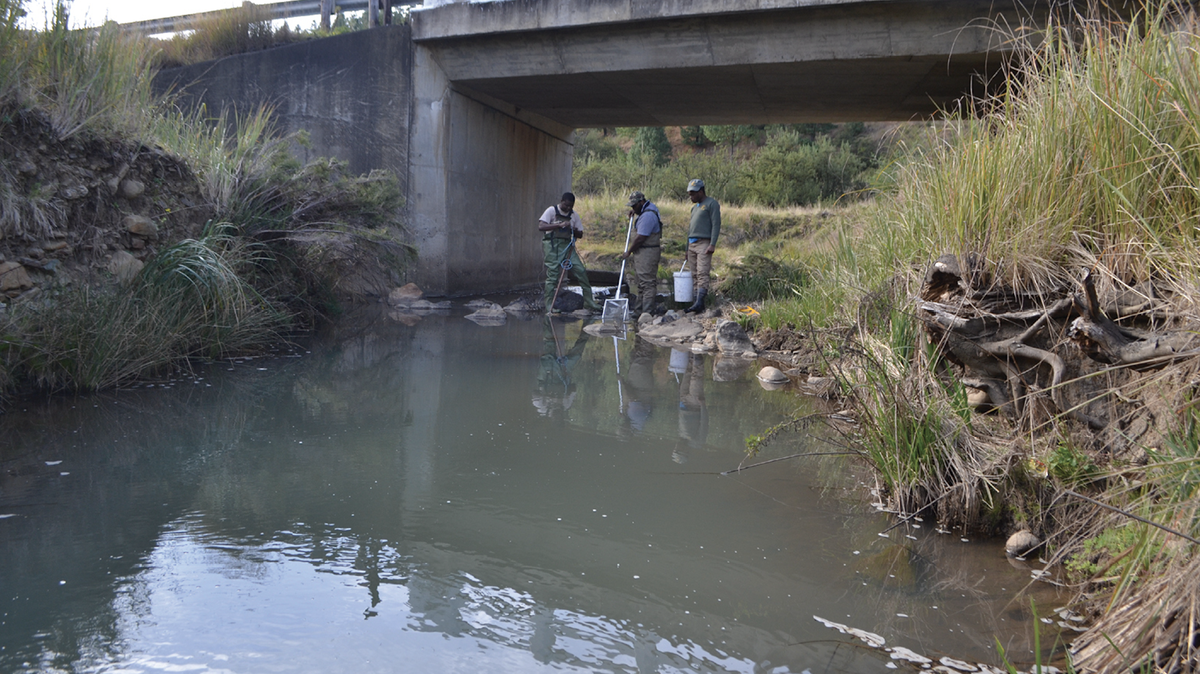
In 2017, researchers traveled to South Africa’s Umzimkhulu River hoping to find surviving populations of the Maluti redfin minnow, a species that had been abundant in a nearby area during the early 1900s but was later declared extinct due to “predation and competition” with introduced trout, according to the study. Their findings were published Jan. 2 in the peer-reviewed journal Zoosystematics and Evolution.
The fish they caught were not the species they were looking for. They were a new species entirely.
Why the Umzimkhulu River
The research team thought the Maluti redfin minnow might be only locally extinct — that undiscovered populations could have survived elsewhere beyond the area where it had originally been documented. The Umzimkhulu River, located in eastern South Africa approximately 400 miles southeast of Johannesburg, seemed like a promising place to search.
Introduced species, animals brought into an ecosystem where they don’t naturally occur, can pose serious threats to native wildlife. Non-native fish such as trout can outcompete or prey upon smaller native species, sometimes driving them to extinction. That dynamic is what wiped out the Maluti redfin minnow in its original habitat.
A Catch That Sparked Debate
During their search, the scientists caught a dozen minnows that resembled the extinct Maluti redfin minnow. At first glance, the fish appeared as though they might be survivors of the lost species. But whether these fish were truly the extinct species became what the study described as a “long-standing debate.”
The research team — which included Fatah Zarei, Xiluva Mathebula and Albert Chakona — set out to settle that debate using modern scientific tools. They conducted DNA analysis, examined the fish’s physical characteristics and compared them to related species.
The results were surprising. The minnows were not the Maluti redfin minnow at all.
Meet Pseudobarbus Kubhekai
The analysis determined the fish were a completely new species: Pseudobarbus kubhekai, commonly known as the Umzimkhulu redfin minnow.
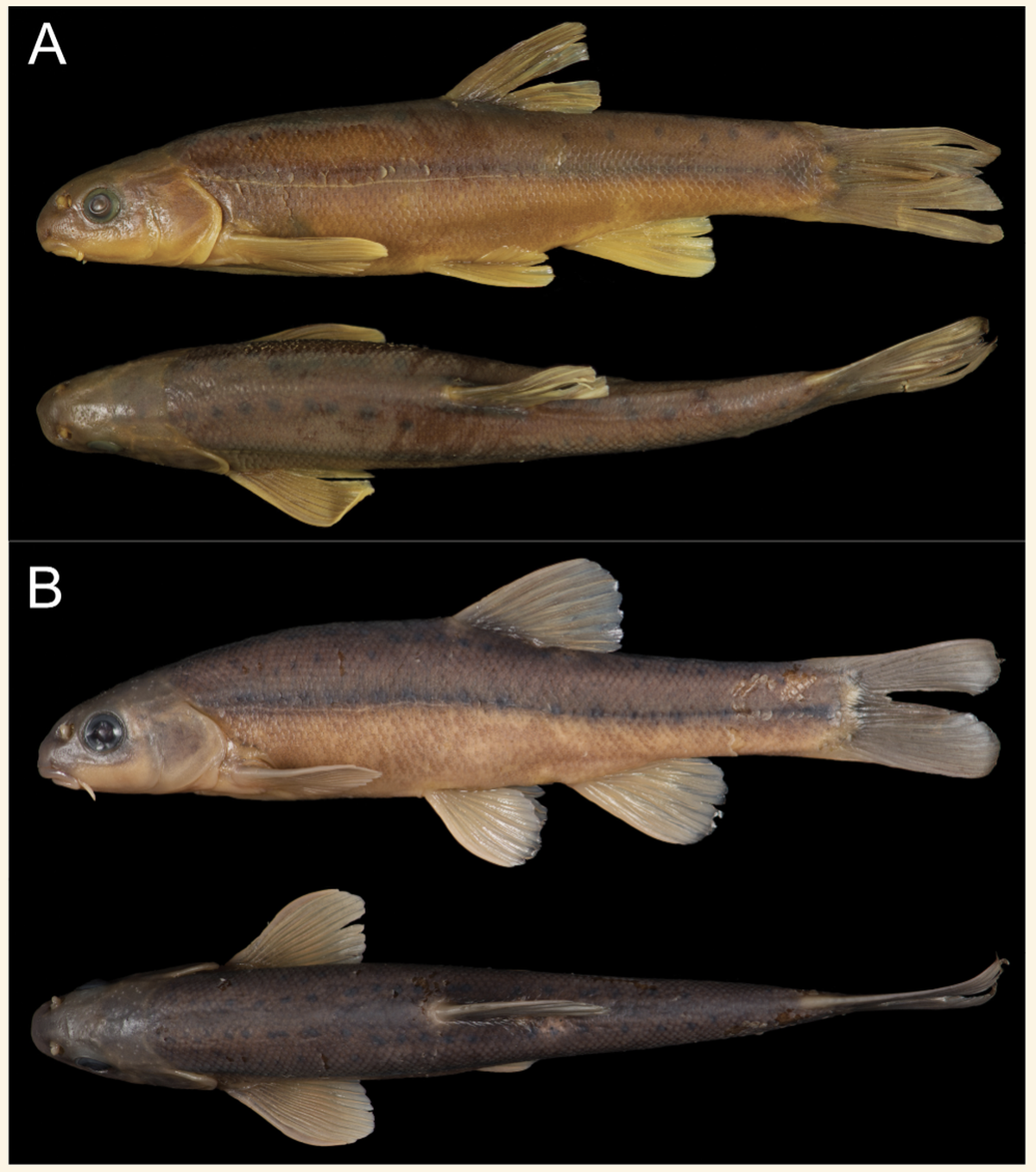
The study found at least 6% genetic divergence from related species — a significant enough difference to classify it as distinct. Researchers further identified the species based on its scale pattern, coloring, skeleton and other subtle physical features that set it apart from its relatives.
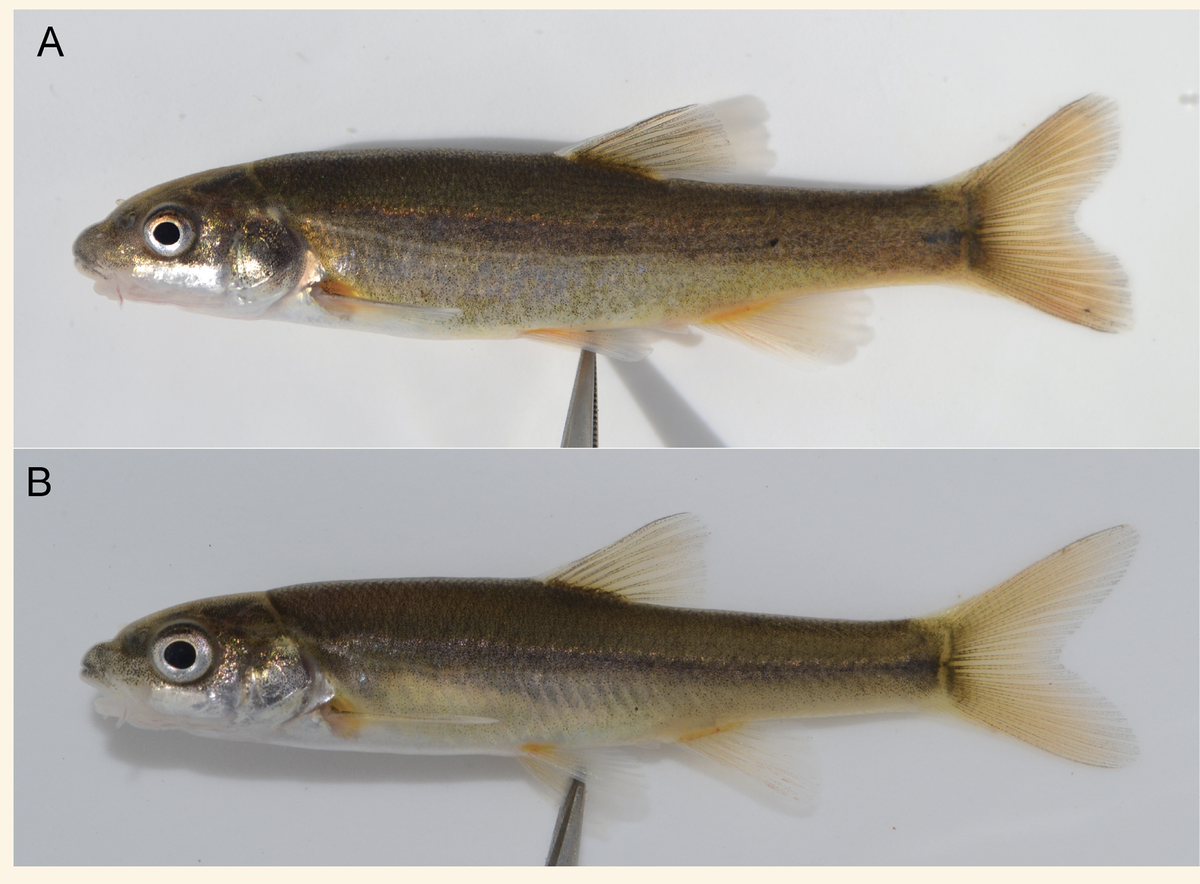
These fish can grow to more than 3 inches long. According to the study, they have “large” heads with “blunt” snouts, “large” eyes and “sickle-shaped” mouths. Their “moderately elongate” bodies are covered “with numerous” small bumps. The species has “olive-brown” coloring and “bright orange-red” spots near its fins — a combination that likely makes for a striking appearance in the shallow, rocky streams where they live.
Researchers said much of the species’ biology and lifestyle remains unknown. How long do they live? What do they eat? How do they reproduce? Future research will need to answer those questions.
The Story Behind the Name
The species name kubhekai honors Skhumbuzo Kubheka, a wildlife researcher who helped discover the fish “through extensive sampling efforts,” according to the study. The common name refers to the Umzimkhulu River, where the species was first discovered and, so far, the only known location where it has been found.
Already Critically Endangered
The most sobering part of this discovery: the Umzimkhulu redfin minnow is “a critically endangered species,” according to the study. That classification — generally the highest risk category before extinction — means the species faces an extremely high risk of disappearing from the wild.
The situation is serious enough that researchers said they withheld the exact location of the fish “due to conservation sensitivities,” according to the study. Scientists sometimes take this step to prevent poaching, habitat disturbance or other threats that could arise if a vulnerable species’ precise location becomes widely known.
The study’s authors did not stop at documenting their find. They urged conservationists and government officials to take action to protect the species from extinction.
A Team That Set Out for One Species, and Found Another
The identification of the Umzimkhulu redfin minnow speaks to how much remains undiscovered in the world’s rivers and waterways. A team searching for a species declared extinct instead found one that science had never documented, living quietly in the same region.
With the species already classified as critically endangered, the researchers’ call for conservation action highlights a reality that applies far beyond this single river in South Africa: newly discovered species are sometimes already in peril by the time they receive a name.
The small, olive-brown fish with bright orange-red spots and a distinctively large head now has a scientific record and a group of researchers advocating for its survival. What happens next depends on whether conservationists and officials act on that call.
Production of this article included the use of AI. It was reviewed and edited by a team of content specialists.