Hubble Telescope Just Found a ‘Dark Galaxy’ That’s 99% Invisible. Here’s How
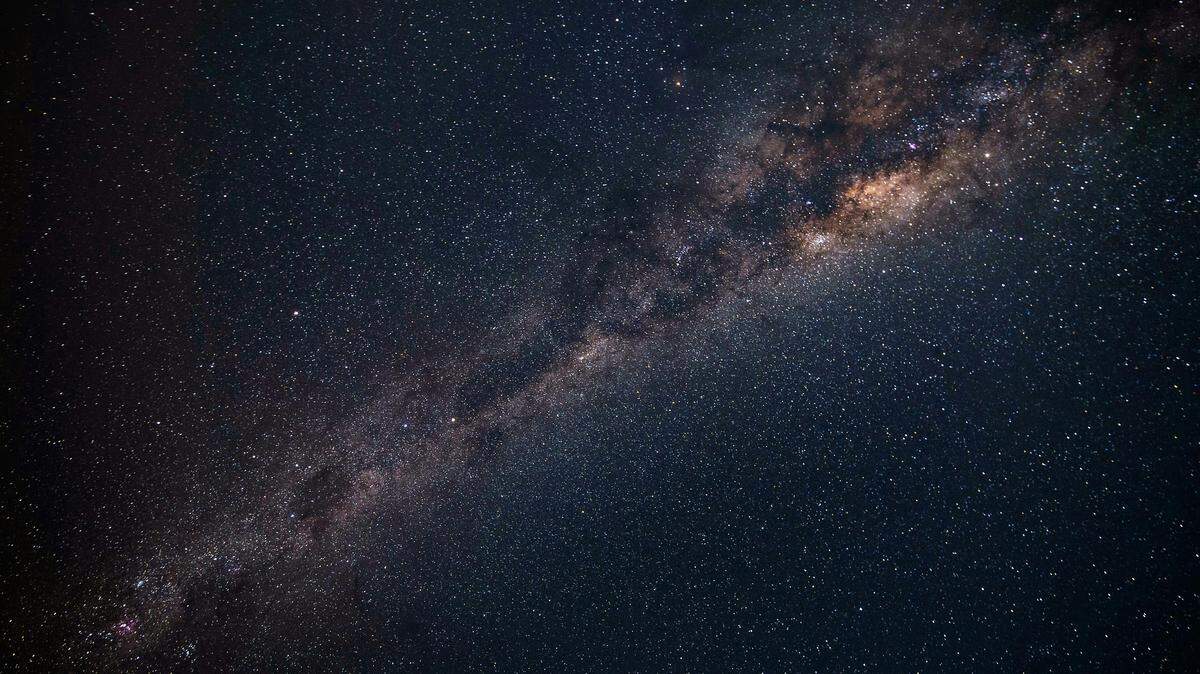
A galaxy so faint it escaped detection for as long as anyone has been scanning the sky has finally been found.
Called CDG-2, this newly identified “ghostly” galaxy may be one of the most dark matter-dominated galaxies ever discovered, with a staggering 99% of its total mass made up of dark matter — a mysterious substance that cannot be seen, touched, or felt.
The Hubble Space Telescope, now more than three decades into its mission, played a key role in revealing this cosmic phantom.
The research was led by David Li of the University of Toronto, and the findings were published in The Astrophysical Journal Letters.
What Is CDG-2, and Why Was It So Hard to Find?
CDG-2 is what scientists call a low-surface-brightness galaxy. It contains very few visible stars and is extremely faint.
It sits within the Perseus galaxy cluster, approximately 300 million light-years away from Earth.
To put that distance in perspective: light, the fastest thing in the universe, would need 300 million years to travel from CDG-2 to Earth. Across that distance, astronomers found a way to spot something that barely gives off any light at all.
And they did it by thinking creatively.
The Cosmic Breadcrumbs That Gave CDG-2 Away
Detecting such faint galaxies directly is very difficult. So the researchers took a clever indirect approach. They searched for tight groupings of globular clusters — dense, spherical groups of stars that orbit galaxies.
These clusters can indicate a hidden or faint galaxy, like signposts pointing toward something larger lurking beneath the surface.
CDG-2 was identified after astronomers found four closely grouped globular clusters that were once believed to be independent objects in space. For years, no one suspected these four stellar clumps were connected to anything bigger.
A closer look changed everything.
Thanks to data from the Hubble Space Telescope, ESA’s Euclid space observatory and Hawaii’s Subaru Telescope, the researchers discovered a faint light around the clusters. That glow was the key — clear evidence of an underlying galaxy.
“This is the first galaxy detected solely through its globular cluster population,” Li said in a press release. “Under conservative assumptions, the four clusters represent the entire globular cluster population of CDG-2.”
Think of it as finding a dark house on an unlit street because you noticed the glow of a few nightlights in the windows.
What the Numbers Reveal About the Ghost Galaxy
Preliminary analysis suggests CDG-2 has the luminosity of about 6 million Sun-like stars, with the clusters accounting for about 16% of the galaxy’s visible light. That may sound like a lot, but in galactic terms, it is extraordinarily dim.
Many galaxies contain hundreds of billions of stars. CDG-2’s visible light output is vanishingly small by comparison.
And that faint starlight accounts for only a tiny fraction of the galaxy’s total makeup. A full 99% of the galaxy’s total mass is dark matter — hence the term “ghost galaxy” or “dark galaxy.”
Most of the galaxy’s normal matter, such as hydrogen gas, was likely stripped away by gravitational interactions within the dense Perseus cluster.
What remains is an enormous, nearly invisible halo of dark matter with just a whisper of light at its center.
The Invisible Substance That Makes Up Most of CDG-2
Dark matter, like normal matter, takes up space and holds mass, according to NASA. But unlike normal matter, it doesn’t absorb, reflect, or emit any light.
It’s invisible. You can’t see it with a telescope. You can’t bottle it up and study it in a lab.
And yet, it’s out there in enormous quantities.
Researchers can study dark matter based on how it interacts with and influences ordinary matter throughout the universe.
Scientists detect its gravitational pull, watching how it tugs on visible stars and bends light from distant sources. It’s a bit like knowing the wind is there not because you can see it, but because you can watch the trees sway.
Scientists estimate that ordinary matter makes up only about 5% of the universe, while dark matter makes up about 27%. The rest is thought to be dark energy.
Everything you can see — from the stars overhead to the chair you’re sitting in — represents just 5% of everything that exists.
The Hubble Space Telescope Still Delivers After Three Decades
For anyone who remembers the excitement of Hubble’s launch and the early drama over its flawed mirror, this discovery is a reminder that the telescope is still delivering groundbreaking science.
Working alongside newer instruments like ESA’s Euclid space observatory and Hawaii’s Subaru Telescope, Hubble provided critical data that helped reveal CDG-2’s faint glow.
The case of CDG-2 is extreme: a galaxy with almost no stars, surrounded almost entirely by an invisible halo. These types of systems, so-called “dark galaxies,” are beginning to appear in astronomical records.
The fact that astronomers can now detect galaxies this faint — not by seeing them directly, but by reading the subtle clues they leave behind — speaks to how far observational tools and techniques have come.
How Many More Ghost Galaxies Are Out There?
CDG-2 raises a humbling question.
If 95% of the universe is made up of dark matter and dark energy — substances we still don’t fully understand — how many more ghostly galaxies are drifting silently through the cosmos, invisible to our eyes and instruments?
Discoveries like this one suggest that what we have mapped so far is a small fraction of what’s actually out there. And the tools we built decades ago, like Hubble, are still helping us find them.
Production of this article included the use of AI. It was reviewed and edited by a team of content specialists.