New Spiny Lizard Species Discovered in a Single Remote Forest in Vietnam
Scientists have identified a previously unknown lizard species — Grismer’s pricklenape lizard — in a remote forest in Vietnam’s Dak Lak Province, after nighttime fieldwork and DNA analysis confirmed it was new to science.
Nighttime Searches Led to the Find
During nighttime searches, researchers found several lizards on branches and shrubs that they initially believed were a known species, the 2025 study posted to Zootaxa stated. It was only later, through DNA analysis and “detailed” physical examinations, that the animals were determined to represent something entirely new to science.
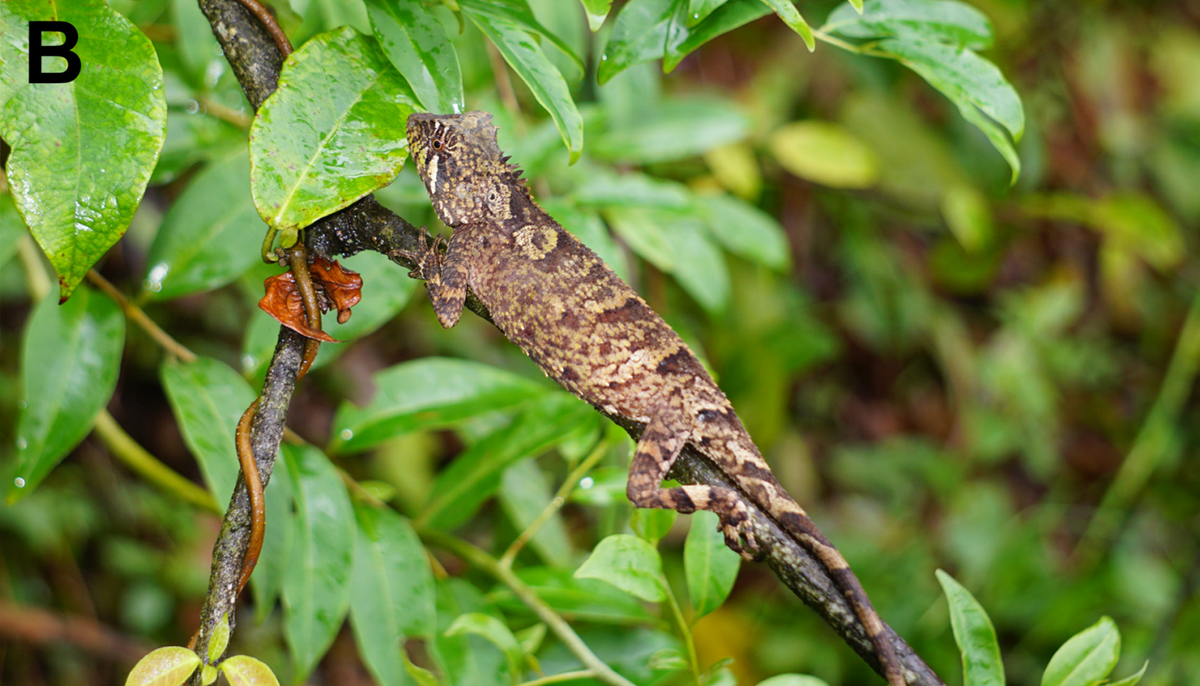
The lizards were found “clinging to, and sleeping in shrubs or on thin trunks of small trees beneath dense forest canopy” at night, according to the study.
Their behavior followed a seasonal rhythm — they were “frequently encountered” during the rainy season but “rarely observed” in the dry season. That pattern required the research team to return across both wet and dry months in 2023 and 2024 to build a thorough picture of the species.
The research team included Linh Tu Hoang Le, Tao Thien Nguyen, Truong Quang Nguyen, Thomas Ziegler, Dang Trong Do and Hai Ngoc Ngo.
What the Lizard Looks Like
The study described the lizards as “moderately sized,” reaching about 10 inches in length. Their heads are “triangular” with “large” eyes and a “light orange” tongue. Their limbs and tail are “relatively long.”
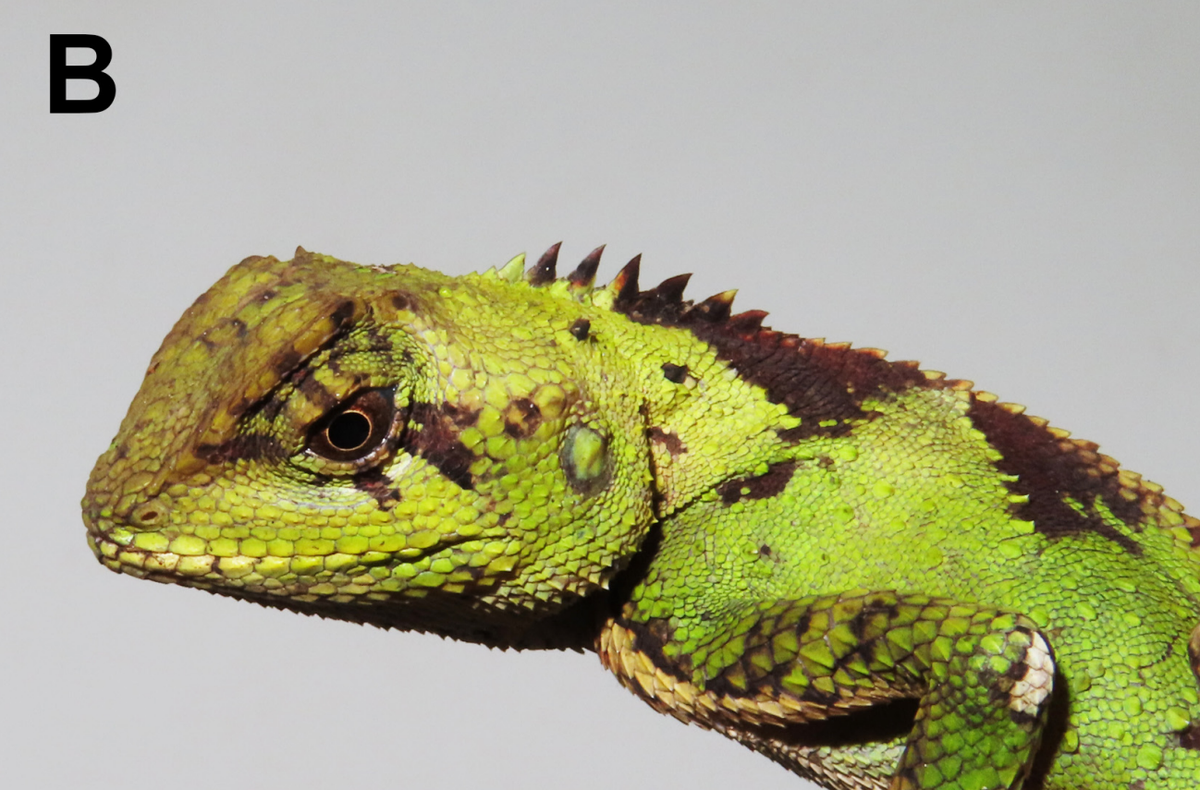
A row of spines runs down their backs, including what the study described as “elongated, dagger-like scales” — the feature behind the pricklenape common name.
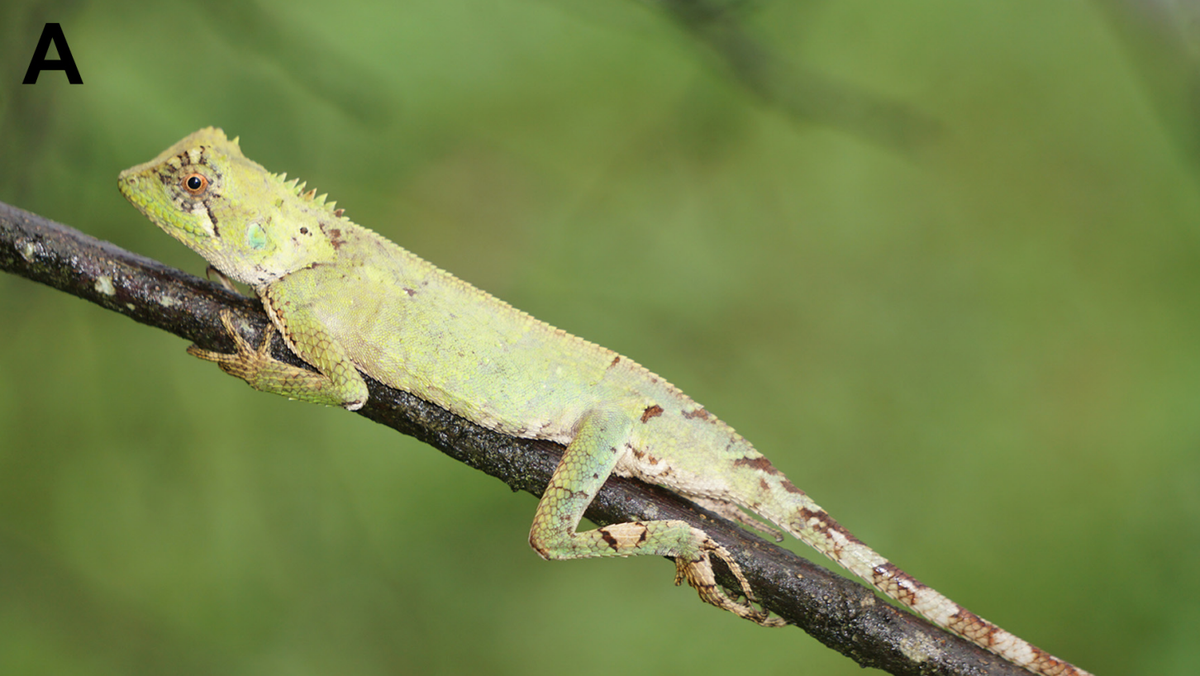
Males and females look strikingly different. Male Grismer’s pricklenape lizards are described as “light-lime green with four brownish black rhomboidal bands” on their backs and white elbow and knee patches, according to the study. Their eyes are “dark brown,” and their throats are “pearl white.”
Females are “significantly larger” and “predominantly dark brown with scattered black or green mottling,” the study said. Their eyes are “light orange,” and their throats range from “light brown” to “dark orange.”
How Scientists Confirmed the Species
The study said the new species was identified based on body proportions, spines, scale pattern, coloring and other physical features. DNA analysis showing at least 7% genetic divergence from other lizard species, combined with the physical evidence, confirmed this was a distinct species.
The researchers initially believed the lizards they encountered were a previously documented species. It was the painstaking work of comparing genetic samples and conducting “detailed” physical examinations that revealed the truth.
A Tiny Known Range
According to the study, the species has only been found in one forest in Dak Lak Province, located in central Vietnam approximately 220 miles northeast of Ho Chi Minh City. That single forest is the entirety of where science currently knows this lizard to exist.
Dak Lak Province sits in Vietnam’s Central Highlands region, a landscape defined by the dense forest canopy where researchers conducted their nighttime searches.
Honoring a Scientist’s Legacy
Researchers named this species after L. Lee Grismer “in recognition of his great contributions to herpetological research in Southeast Asia,” the study said. Herpetology is the branch of zoology focused on reptiles and amphibians.
BOTTOM LINE: The discovery of a species known from only a single forest underscores how much biodiversity may remain undocumented in remote, unsurveyed tropical forests.
Production of this article included the use of AI. It was reviewed and edited by a team of content specialists.