
New Discovery in Spain Could Be First Evidence of Hannibal’s War Elephants from Punic Wars
In March 2020, construction crews in Córdoba, Spain, were preparing the ground for an expansion of the Cordoba Provincial Hospital’s medical consulting room.
What they uncovered was anything but routine: a small, cube-shaped bone, roughly 10 centimeters across, buried in the earth.
Archaeologists quickly realized it might be one of the most extraordinary ancient finds in years — a foot bone from one of Hannibal’s legendary war elephants, possibly linked to one of history’s most famous military campaigns.
A 2,200-Year-Old Bone Beneath a Hospital
The ancient bone, technically a carpal bone from an elephant’s foot, was found at a site known as Colina de los Quemados on the northern bank of the Guadalquivir River. The site ranks among the largest protohistoric settlements in southern Iberia.
Radiocarbon dating places the bone between the late 4th and early 3rd centuries BCE. That timeframe lines up with the Second Punic War (218–201 BCE), the epic conflict in which the Carthaginian general Hannibal marched his army — complete with war elephants — from Spain across the Alps and into Italy.
Until now, the use of war elephants by Hannibal had been supported only by ancient texts, artwork and coins. No one had found direct physical proof, an actual piece of an actual elephant, from that era in Western Europe.
Researchers say this bone may represent one of the first direct archaeological pieces of evidence confirming war elephants in Western Europe.
Why Finding an Elephant Bone in Spain Matters
Elephants were not native to Europe. Any elephant found on the continent would have been transported there intentionally. And moving these massive animals was no small feat.
“As non-native species and the largest living terrestrial animals, these imported beasts would have required transportation by ship,” the researchers, led by Prof. Rafael M. Martínez Sánchez, wrote in the Journal of Archaeological Science: Reports.
The academics noted that the idea of transporting elephant bones or dead animals for trade is considered unlikely because this particular bone has little decorative or practical value.
That leaves a much more dramatic explanation: researchers believe the animal was likely brought alive for military use.
“Beyond ivory, the discovery of elephant remains in European archaeological contexts is exceptionally rare,” the scientists added, per BBC.
The bone was found alongside stone artillery projectiles — catapult ammunition — as well as coins and ceramics, which were believed to be evidence of siege or battle activity.
Hannibal’s March and the Legendary War Elephants
The three Punic Wars between Carthage and Rome took place between 264 B.C. and 146 B.C. It ended in Roman victory with the destruction of Carthage. The Second Punic War was the blockbuster of the three.
Hannibal and his army — including as many as 90,000 infantry, 12,000 cavalry and a number of elephants — marched across the Alps from Spain into Italy, where they scored victories over Roman troops at Ticinus, Trebia and Trasimene.
That war ended with Roman troops, led by Scipio Africanus, defeating Hannibal and his army.
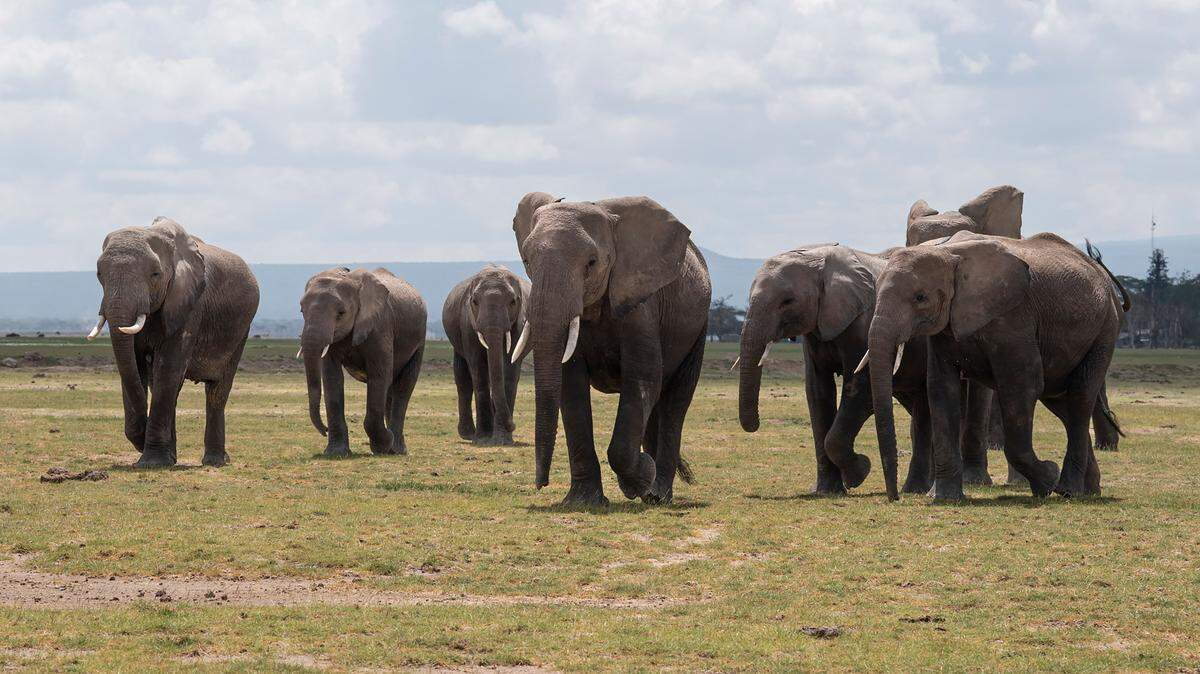
War elephants were used to intimidate enemy troops, disrupt Roman formations and frighten horses with their size, smell, and noise. They were the ancient world’s version of a tank.
“For centuries, the image of Hannibal leading his elephants across the Alps became an icon, a recurring motif embraced by musicians, writers, and playwrights alike, and eventually also by the film industry,” the researchers wrote in their journal.
But the elephant bone found in Spain is presumed to be from an animal that died before reaching the Alps.
This wasn’t one of the famous elephants from the mountain crossing. It was likely one that didn’t make it that far — an animal stationed or lost during the campaign’s earlier stages in Iberia.
What the Researchers Concluded
The archaeologists discovered the bone in March 2020, but didn’t publish their findings until Jan. 14.
Their conclusion is careful:
“While [the bone] would not represent one of the mythical specimens Hannibal took across the Alps, it could potentially embody the first known relic − so sought after by European scholars of the Modern Age − of the animals used in the Punic Roman wars for the control of the Mediterranean,” the scientists wrote.
That phrasing — “the first known relic” — is what separates this discovery from other archaeological finds. Elephant remains from ancient Europe are extremely rare, especially from this period.
For scholars who have spent careers studying the Punic Wars through texts and images alone, a physical piece of one of these animals is something entirely new.
Production of this article included the use of AI. It was reviewed and edited by a team of content specialists.