Rare Wildlife Camera Footage Captures One of the World’s Most Endangered Mammals in Action
Production of this article included the use of AI. It was reviewed and edited by a team of content specialists.
A young northern hairy-nosed wombat — one of just 400 left on Earth — was spotted emerging from a burrow in an Australian nature refuge, offering ecologists a rare glimpse of hope for the species’ survival.
Sometimes, the most extraordinary discoveries happen while doing the most ordinary work.
Ecologist Andy Howe “was scrolling through over 100 hours” of footage from wildlife cameras at the Richard Underwood Nature Refuge when something remarkable caught his attention, the Australian Wildlife Conservancy said in a Sept. 3, 2024 news release.
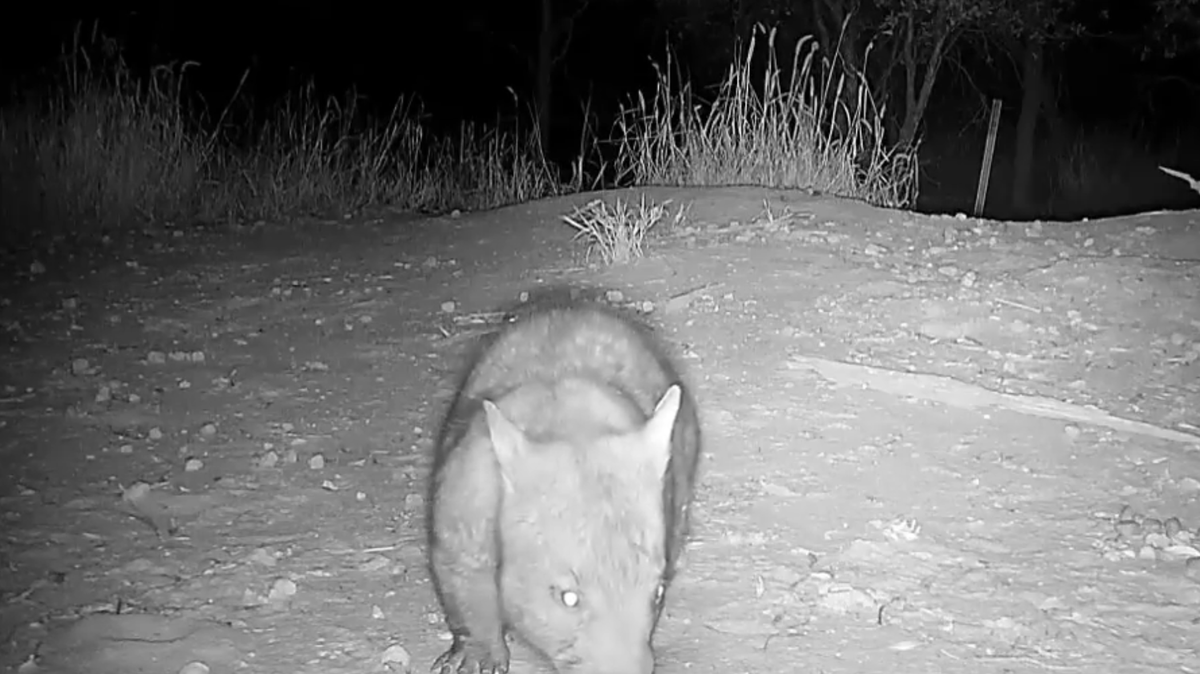
There, captured in two separate clips, was a young animal emerging from a small burrow and walking a few seconds into the distance across a rocky landscape. The creature was one of Australia’s rarest mammals — a northern hairy-nosed wombat, one of only 400 left in the world, the conservancy said.
The young wombat was filmed on two nights in June 2024, according to footage shared with McClatchy News.
What Is a Northern Hairy-Nosed Wombat?
For many people, the word “wombat” might conjure a vague image of a stout Australian animal. But the northern hairy-nosed wombat is a distinct and critically endangered species that stands apart from its more common relatives.
Northern hairy-nosed wombats are the “largest burrowing marsupial in the world,” reaching over 3 feet in length and over 60 pounds, according to an article from the conservancy. They have “a broad nose, pointy ears, soft greyish fur and faint black eye patches,” according to Australian Wildlife.
With only around 400 individuals remaining on the planet, every sighting matters — and every new young wombat represents a crucial step for the survival of the entire species.
A Healthy Young Wombat Signals Good News
Howe’s assessment of the footage was encouraging. He described the wombat as healthy and young, likely about 2 years old.
“The wombat is quite robust, indicating that it is feeding well and getting enough nutrition,” Howe said in the release.
That observation carries significant weight for conservationists. Ecologists at Australian Wildlife Conservancy (AWC) say the video footage provides exciting evidence wombats are breeding in the refuge again.
“Overall, this bit of footage tells us a lot about the state of the (nature reserve’s) population, showing us that the wombats have the right conditions and feel comfortable enough to breed,” Howe said. “It’s very gratifying to know that one of the world’s most critically endangered animals is doing well and breeding within the safety of the fenced area.”
The fact that a young wombat appears well-fed and thriving within the protected boundaries of the refuge suggests that the conservation efforts underway are producing real results.
The northern hairy-nosed wombat’s story is one of dramatic decline over more than a century. The species’ population declined for decades due to predation and habitat destruction.
“The northern hairy-nosed wombat could once be found from southern New South Wales through to central Queensland, but clearing of their preferred open eucalypt woodland habitat for grazing, competition with livestock and rabbits, and predation through the 20th century led to a dramatic decline in populations,” per Discover Wildlife.
The numbers tell a stark story: by 1982, the species had been restricted to a single population of just 35 individuals at Epping Forest National Park in Queensland. From an animal that once roamed across a wide swath of eastern Australia to a population small enough to fit in a single room — the collapse was staggering.
Rebuilding, One Colony at a Time
From that precarious low point of 35 animals in 1982, conservationists have worked to gradually expand the species’ foothold.
In 2009, a second colony of the rare wombat was established at Richard Underwood Nature Refuge — the same location where Howe’s cameras captured the young wombat on film. And in 2024, a third colony was created at Powrunna State Forest, representing another expansion in the effort to ensure the species does not vanish entirely.
The growth from one colony to three over the span of several decades reflects the painstaking, long-term nature of species recovery work. Each new colony spreads the risk, ensuring that a single catastrophic event at one location cannot wipe out the entire species.
Looking ahead, the work to safeguard northern hairy-nosed wombats is far from finished.
AWC will also develop a Genetic Management Plan with the University of Adelaide by collecting and analysing wombat hair from burrow entrances — this research will be critical to inform future translocations for the species.
Understanding the genetic diversity of such a small population is essential for long-term survival. When a species is reduced to just a few hundred individuals, maintaining healthy genetic variation becomes one of the most important challenges conservationists face.
“Government funding enables AWC and its partners to improve the trajectory of the species by reducing key threats, commencing a genetic management plan and increasing data knowledge – all of which will support a growing and sustainable population at RUNR and hopefully, assist with the establishment of future populations,” Howe said.
For a species that once teetered on the very edge of extinction, every healthy young wombat caught on camera represents a quiet but powerful victory.