Rare ‘Fire Tiger’ of Thai Legend Captured on Trail Camera: A Glimpse of One of Asia’s Most Elusive Wild Cats
Production of this article included the use of AI. It was reviewed and edited by a team of content specialists
For wildlife enthusiasts who dream of encountering creatures that exist at the intersection of myth and reality, few sightings rival the magic of the Asian golden cat. This vulnerable species, so secretive that even experienced field researchers rarely observe it, recently made a brief but breathtaking appearance in southern Thailand—and a trail camera was there to capture every second.
A Ten-Second Encounter with a Living Legend
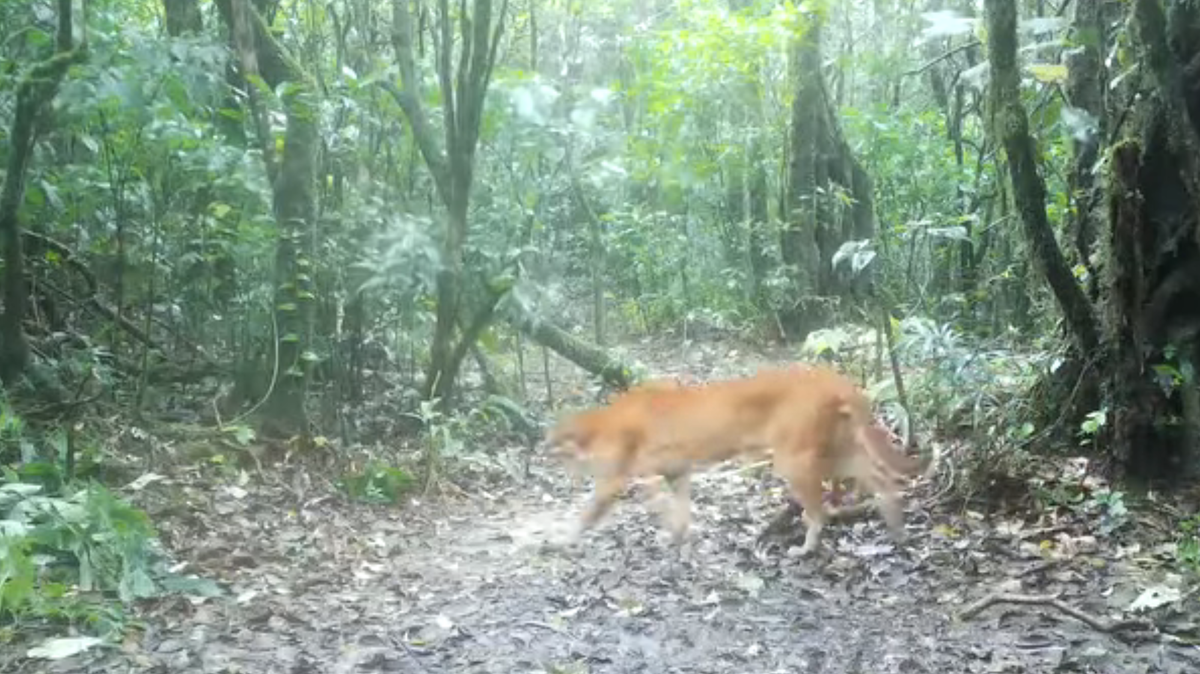
In the dense forests of Khao Luang National Park, a “golden” predator emerged from the trees and walked across a sunlit trail, unaware it was being filmed. The footage, lasting just ten seconds, represents exactly the kind of rare wildlife documentation that conservationists and nature lovers celebrate as evidence of healthy, functioning ecosystems.
The video, filmed on June 20, 2025, showed an Asian golden cat calmly walking near the camera. The cat paused at the edge of the woods before disappearing back into the forest, officials said. Wildlife patrols had entered Khao Luang National Park to check trail cameras and review recent footage as part of routine monitoring, park officials said in a July 7 Facebook post.
One trail camera recorded a 10-second clip that immediately stood out to officials—and it’s easy to understand why. Park officials described the recent Asian golden cat sighting as rare, a testament to both the species’ secretive nature and the critical role that camera trap technology plays in modern wildlife monitoring.
Understanding the Asian Golden Cat
The Asian golden cat, scientifically known as Catopuma temminckii, is a “medium-sized wild cat” found across Southeast Asia with distinctive tan coloring, according to Thai National Parks. For those unfamiliar with this remarkable felid, understanding its behavior helps explain why any sighting—even one captured by technology rather than human eyes—generates such excitement in wildlife circles.
The species is described as “rather elusive” and known to be “territorial and solitary” predators “capable of bringing down prey much larger than themselves.”
This combination of traits makes the Asian golden cat particularly challenging to observe in the wild. Unlike more social cat species that might be spotted in groups or during predictable activity patterns, these solitary hunters move through their forest territories like shadows, leaving few traces of their presence.
For ecotourists and wildlife photographers hoping to add this species to their life lists, the reality is humbling: most visitors to Asian golden cat habitat will never see one, even after multiple extended trips. This is precisely what makes trail camera footage so valuable—it provides windows into the secret lives of animals that have evolved to avoid detection.
The ‘Fire Tiger’: Where Conservation Meets Cultural Heritage
What elevates the Asian golden cat beyond mere biological interest is its deep connection to Thai cultural traditions. Asian golden cats appear in mythology in “some regions of Thailand” and are referred to as “Seua fai,” or “fire tiger,” officials said. This evocative name speaks to the animal’s striking golden-tan coat, which can appear to glow with an almost flame-like quality in certain lighting conditions.
“According to a regional legend, the burning of an Asian golden cat’s fur drives tigers away,” park officials noted, revealing how this species has been woven into local folklore for generations. For wildlife enthusiasts who appreciate the cultural dimensions of conservation, such connections between communities and wild species represent important threads in the broader tapestry of biodiversity protection.
Understanding these cultural relationships matters for conservation. When local communities have traditional connections to wildlife—even when those traditions seem unusual by modern standards—it often indicates a long history of coexistence that conservationists can build upon when developing protection strategies.
The excitement surrounding this footage takes on additional significance when considered against the backdrop of the species’ conservation status. Due to hunting and habitat loss, Asian golden cats are considered vulnerable and at risk of extinction, officials said.
Generally speaking, the “vulnerable” classification on the IUCN Red List indicates a species facing a high risk of extinction in the wild. For the Asian golden cat, the primary threats include deforestation that fragments their forest habitat and illegal hunting, both for the wildlife trade and in retaliation for occasional livestock predation.
Each documented sighting in a protected area like Khao Luang National Park provides conservationists with valuable data points. Trail camera networks allow researchers to estimate population densities, track individual animals over time, and identify critical habitat corridors that require protection. For a species as difficult to study as the Asian golden cat, this technology has revolutionized scientific understanding.