Thinking about installing a water filtration system?
You aren’t alone.
Between bottled water prices and concerns over tap water, more people are investing in filters that give them cleaner, safer water at home. A good house water filtration system can protect your appliances, improve water quality, and even help you avoid plumbing issues.
In this guide, I’ll break down how much a whole-house water filter costs, what affects the price, and how to pick the best system for your entire home, whether you’re on city water or using a well water filtration system.
Key Takeaways
- Average Cost: $200-$4,000, depending on size, type, and installation.
- Whole-House Systems: More expensive upfront, but treat every faucet.
- Under-Sink Filters: Affordable and perfect for drinking water.
- Maintenance Matters: Filters need yearly replacements.
- Worth It: Better taste, less buildup, fewer bottled water costs.
Water Filtration System Costs by Type
| System Type | Average System Cost | Installation Cost | Maintenance (Yearly) |
| Pitcher Filter | $20-$60 | None | $50-$80 (cartridges) |
| Faucet/Countertop Filter | $70-$150 | DIY | $40-$100 |
| Under-Sink System | $200-$600 | $150-$300 | $100-$200 |
| Reverse Osmosis System | $300-$1,000 | $200-$500 | $150-$300 |
| Whole-House Filtration | $1,000-$4,000 | $400-$1,000 | $150-$300 |
| Well Water Filtration | $1,500-$5,000 | $500-$1,200 | $200-$400 |
Note: These are general ranges; your actual cost depends on other factors such as the system size, water quality, and whether you’re doing it yourself or hiring a plumber.
Which Type of Water Filter Is Best for You?
Your choice depends on your water quality, space, and budget. Here’s a quick guide:
- Quick fix: A faucet or pitcher filter handles basic chlorine and odor.
- Best for drinking: An under-sink reverse osmosis system gives cleaner, better-tasting water at one tap.
- Whole-home: A whole-house water filtration system treats all water lines for cleaner showers, laundry, and dishes.
- Hard water: Add a water softener to prevent mineral buildup and protect appliances.
- Well water: Use a well water filtration system with sediment and iron filters for clearer, safer water.
Pro Tip: Test your tap water first. A $30 kit can help you choose the right system and skip unnecessary add-ons.
Installation Costs
Most under-sink and countertop systems can be installed yourself with basic tools. But whole-house filtration systems usually require a plumber, especially if your main water line is hard to access or you’re pairing it with a water softener.
Professional installation runs $200-$1,000, depending on the system and your plumbing layout. Older homes or wells tend to cost more.
Ongoing Maintenance Costs
Even the best house water filters need regular maintenance. Replacement filters cost anywhere from $50-$300 per year, depending on type and water usage.
If you skip maintenance, filters clog and reduce water pressure, and contaminants can slip through. Some newer systems make this easier with built-in reminders or auto-order subscriptions for replacement filters.
Other Factors that Add to the Price
Many things can change how much a water filtration system costs:
- System type: Carbon filters are cheap. Reverse osmosis and UV light cost more but remove more contaminants.
- Water quality: Hard water or iron needs extra filters. A water test helps you choose the right system.
- Size: One-faucet filters cost less. Whole-house systems treat all water lines and cost more.
- Features: Smart displays or UV lights add cost.
- Labor and location: Big cities usually mean higher costs.
- Add-ons: Water softeners or sediment filters improve quality but add to the price.
How Much Can You Save Using a Water Filtration System?
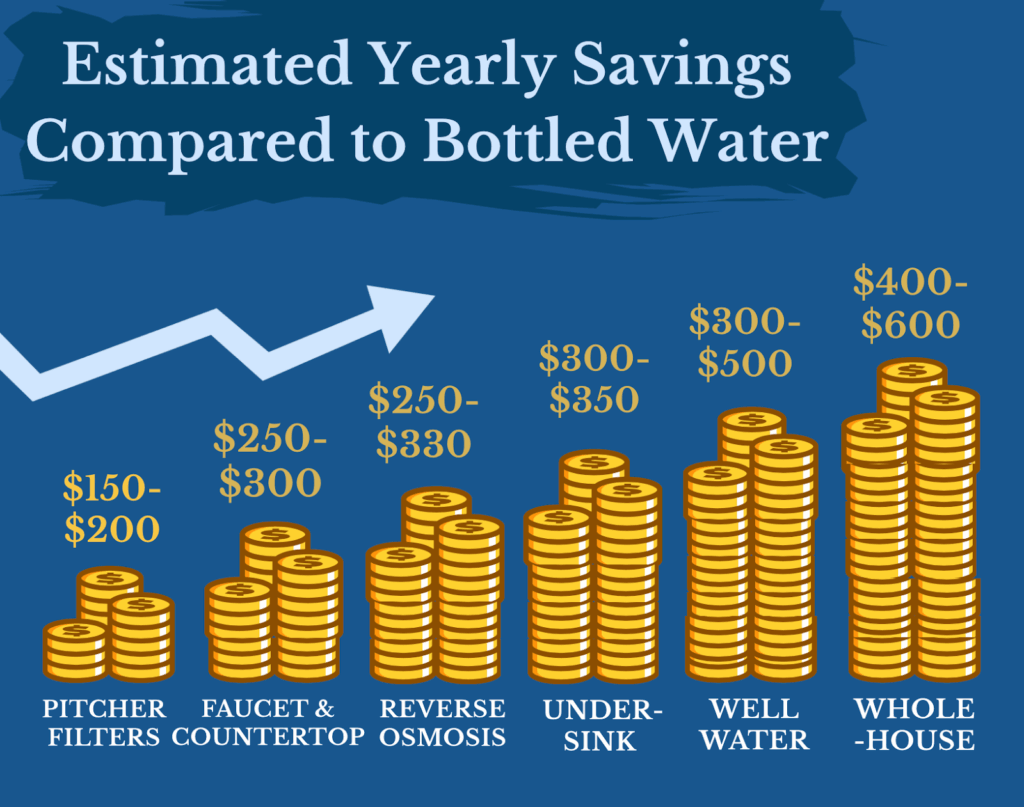
Compared to buying bottled water year-round, here’s how much each system could save you annually:
- Pitcher filters ➡️ $150-$200
- Faucet or countertop filters ➡️ $250–$300
- Under-sink filtration systems ➡️ $300–$350
- Reverse osmosis systems ➡️ $250–$330
- Whole-house water filtration systems ➡️ $400–$600
- Well water filtration systems ➡️ $300–$500
5 Smart Tips Before You Buy a Water Filtration System
- Test your tap water first.
- Match the system to your needs: one faucet or your whole house.
- Check filter replacement costs and lifespan.
- Look for NSF-certified models.
- Know if you’ll need to install it yourself or hire a plumber.
Pro Tip: I started with a simple pitcher to keep my kids from running out of water too quickly, then upgraded to a whole-home system after seeing how much better filtered water really was.
My Final Verdict: Is it Worth the Cost?
A water filtration system is one of the few home upgrades that pays you back over time. Even with upfront and maintenance costs, the long-term savings on bottled water and reduced plumbing wear make it a smart financial move.
If you start small with a pitcher or under-sink system, you can save hundreds each year. Go bigger with a whole-house setup, and you’ll gain cleaner water for every tap while protecting your appliances from buildup and mineral damage.
Just remember, maintenance and proper sizing matter. Test your water first, choose the right system, and your investment will keep paying off every year.
FAQs
A house water filter system treats the water at one point, like a sink or faucet. It’s ideal for improving tap water taste and smell in one area.
If you want cleaner water across your entire home, a whole-house filtration system filters every tap connected to your main water supply.
Yes, a well water filtration system removes iron, sediments, and contaminants like bacteria and sulfur from your water source.
These are the pipes that move filtered water through your home, especially important for whole-house systems.
Yes, by removing sediment, chlorine, and impurities, a water filtration system helps provide healthier water for your family.