Thinking about upgrading your water quality with a water filtration system?
Good call.
The average American family uses more than 300 gallons of water per day just at home, according to the U.S. Environmental Protection Agency (EPA), but do you really know what’s in the water you’re drinking or washing with?
If you want cleaner, better-tasting water, this guide will break down the answer to “what is a water filtration system?”, the different types of filters available, and how to choose the right one for your home.
Key Takeaways
- Filtered Water Tastes Better: Removes chlorine, odors, and odd flavors.
- Different Filters, Different Uses: Match the system to your water and lifestyle.
- Test First, Then Buy: Know what’s in your tap before choosing a filter.
- Maintenance Matters: Clean filters = clean water and strong pressure.
- Eco-Friendly and Cost-Effective: Cut bottled water and protect your home.
Understanding the Basics: Water Filters
A water filtration system’s job is simple: catch the bad, keep the good.
Here’s what it filters out:
- Sediment and dirt
- Chlorine and fluoride
- Heavy metals like lead
- Bacteria and other harmful substances
You get clean, fresh-tasting water that’s safer for drinking, cooking, and everyday use, no bottled water required.
Why Clean Water Matters
If you’ve never compared unfiltered and filtered water side by side, you’d be surprised how different they taste.
Here’s what you’ll notice after switching to filtered water:
- Your coffee actually tastes like coffee again.
- That white film on your kettle or sink? Gone within a week.
- Your skin and hair start feeling softer after showers.
- You finally stop buying bottled water because your tap tastes better.
It’s not just about flavor; clean water protects your body and your home from buildup, irritation, and contaminants that sneak in through old pipes.
What’s in Tap Water Anyway?
Even treated tap water can contain more than you think. Depending on your location, it might include:
- Chlorine: used for disinfection, but leaves a strong taste
- Lead: from older pipes or plumbing
- Arsenic and Nitrates: found in certain groundwater sources
- Volatile Organic Compounds (VOCs): from industrial runoff
- Sulfur: responsible for that “rotten egg” smell
Filtration systems target these contaminants to improve overall water quality.
How Water Filters Work
Most systems use several stages to clean your water:
- Sediment Filter: removes dirt, sand, and large particles
- Activated Carbon Filter: absorbs chemicals and odors
- Reverse Osmosis Membrane: blocks bacteria, viruses, and heavy metals
- Post-Filter (Fine Filter): polishes the water for taste and clarity
The result is purified water that looks, smells, and tastes noticeably better.
Note: No system removes every contaminant. Always match your filter to your water test results for the best results.
Point of Use: Different Types of Systems
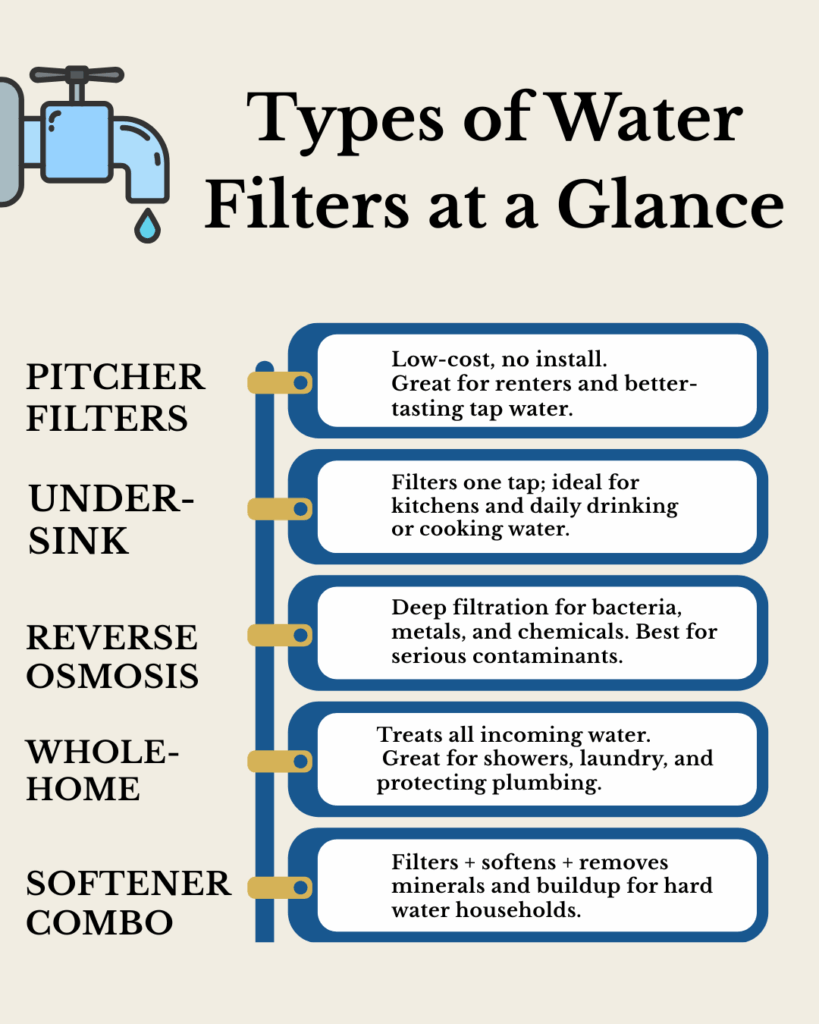
There’s no one-size-fits-all setup; the best water filtration system depends on what’s in your water, how much you use, and what you’re willing to maintain. I’ve tested a few types, and here’s what actually makes sense for different homes:
- Pitcher Filters: Great for renters or anyone who just wants better-tasting water without the install. They’re simple but need frequent cartridge changes.
- Under-Sink Systems: My personal favorite for kitchens. They filter straight from one tap, perfect for drinking and cooking water.
- Whole-Home Filters: A bigger investment, but they treat all the water coming into your house, showers, laundry, dishes, and everything.
- Reverse Osmosis Systems: The heavy-duty option. They remove the smallest particles, even bacteria and heavy metals. Ideal if your water test shows serious contamination.
- Water Filters with Softeners: If you’re seeing cloudy spots on dishes, stiff laundry, or soap that barely lathers, you likely have hard water. These combo systems both filter and soften your water, removing contaminants and minerals like calcium and magnesium that cause buildup and dryness.
Each system serves different functions and requires unique maintenance, but all aim to improve taste and safety.
Choosing the Right Filtration System
Before buying, find out what’s in your tap water. You can order a water test kit or check your city’s annual water quality report. Then consider:
- What problems are you solving (taste, odor, or bacteria)?
- How much maintenance are you comfortable with?
- Whether you need a point-of-use filter or a whole-home system.
Pro Tip: If your main issue is taste, an activated carbon filter usually does the trick. For heavy contamination or healthy water, go with reverse osmosis.
Setup and Maintenance
Most filters are easy to install, though larger systems might need a pro. Keep things running smoothly by:
- Replacing filters on schedule
- Checking for leaks or pressure drops
- Cleaning or rinsing sediment filters regularly
A clean system equals steady water pressure and better-tasting water every time.
My Final Verdict: Why It’s Worth It
Installing a water filtration system isn’t just about better-tasting water. It’s about improving your daily quality of life from the inside out. Cleaner water means smoother skin, brighter laundry, and longer-lasting plumbing and appliances. You’ll spend less on bottled water, reduce plastic waste, and finally enjoy the water coming out of your tap.
Beyond comfort, filtered water protects your family from unseen contaminants like chlorine, lead, and bacteria that often linger in older pipes or municipal systems. It’s an upgrade that quietly pays for itself over time by saving money, improving health, and offering peace of mind.
Whether you choose a simple under-sink filter or a full whole-home system, you’ll notice the difference right away. Every glass of water, every pot of coffee, and every shower feels cleaner and fresher. Once you experience that level of clarity, it’s hard to imagine going back.
FAQs
A water filtration system removes contaminants like chlorine, bacteria, and lead from your tap water. It improves taste, smell, and overall water quality, so what comes out of your faucet is clean and safe to drink.
Yes, especially if your whole house deals with hard water or strange odors. A house water filtration system treats all the water entering your home, protecting appliances, plumbing, and your family’s health.
Under-sink systems are great for most kitchens. They filter water right where you use it most, delivering crisp, clean drinking water for cooking, coffee, and everyday use.
It depends on your water usage and filter type. Pitcher filters might need changing monthly, while larger reverse osmosis systems or whole-home filters usually last 6–12 months. Always check the manufacturer’s schedule.
Some systems, such as reverse osmosis systems and specialized activated carbon filters, are designed to remove bacteria, viruses, and other harmful substances.