If you’ve ever lost electricity during a storm, you know how stressful it feels to be in the dark. And you’re far from alone: over the past two decades, storms such as high winds, heavy rain, winter systems, and tropical cyclones have caused roughly 80% of all major U.S. power outages.
A generator can bring peace of mind by keeping your essential systems running, but before making the investment, it’s worth asking: how much does a generator actually cost?
The answer isn’t simple because the price points can vary widely depending on the type, the size you need, and installation requirements. Let’s break down the key factors that affect cost, from the equipment itself to the extras you’ll need to keep your home powered.
Key Takeaways
- Wide Price Range: Costs can start at a few hundred for portable units and climb to tens of thousands for whole-home generators.
- Fuel Matters: Your fuel source—diesel, propane, gas, or solar—impacts both upfront pricing and long-term fuel costs.
- Installation Adds Up: Expect extra expenses for a transfer switch installation, site prep like a concrete pad, and labor rates.
- Maintenance Counts: Oil changes, filter swaps, and inspections are part of the ongoing maintenance that adds to the lifetime bill.
- Know Your Needs: Sizing by essential systems vs. an entire home helps set realistic budget-friendly expectations.
The Role of Power Capacity
At the core of generator pricing is power capacity—how much energy a unit can deliver at once. Smaller units in the 2–3kW range may only handle lights, a fridge, and phone chargers. Whole home generators, on the other hand, can power an entire home seamlessly.
Naturally, bigger capacity means a higher total cost, not just for the machine but for installation and upkeep.
Portable Units vs. Standby Systems
Portable units are the most budget-friendly choice, ranging between $500 and $3,000 on average. A basic model might cost a few hundred dollars and can be rolled out during power outages. They’re great for camping trips, outdoor projects, or short-term emergencies.
Standby systems—also called whole home generators—are a different league, costing $5,000 to $10,000 before factoring in labor and additional costs. Permanently installed outside, they’re wired directly into your home’s panel for uninterrupted power. That convenience and reliability come at a premium.
Fuel Source and Ongoing Costs
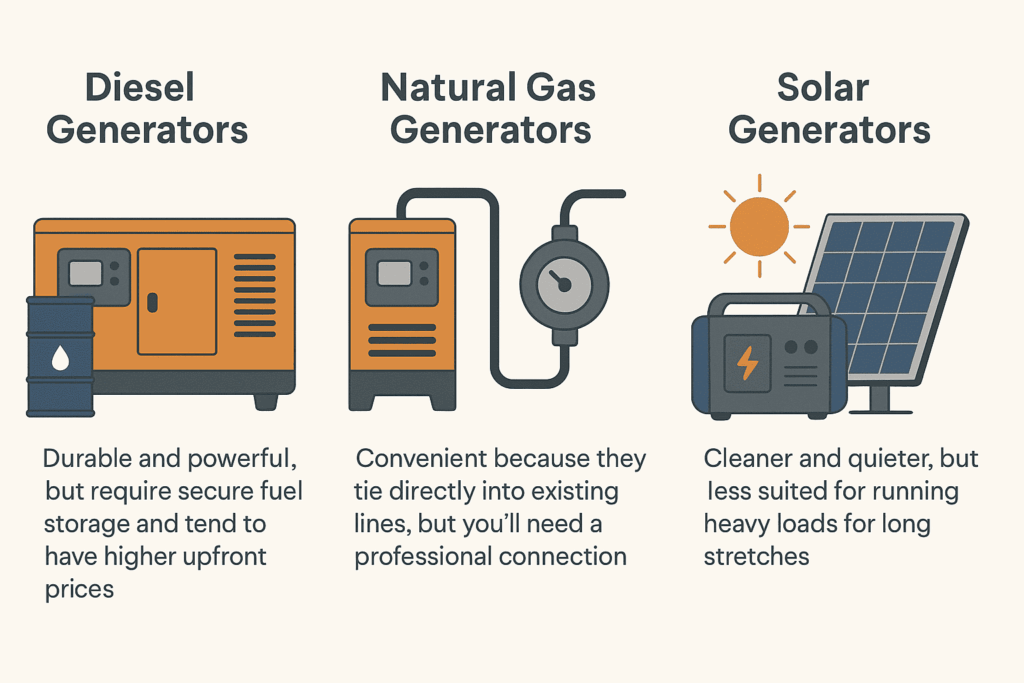
The type of generator you choose determines not only the purchase price but also the fuel costs and efficiency over time.
- Diesel Generators: Durable and powerful, but require secure fuel storage and tend to have higher upfront prices.
- Natural Gas Generators: Convenient because they tie directly into existing lines, but you’ll need a professional connection.
- Solar Generators: Cleaner and quieter, but less suited for running heavy loads for long stretches.
Each fuel type affects both the upfront and ongoing maintenance costs. If you need long runtimes, fuel efficiency becomes as important as the sticker price.
Installation Costs and Labor
Buying the unit is only half the equation. Generator installation adds a significant expense, especially for permanent standby systems.
- Transfer switch installation ensures your generator safely connects to your home’s electrical panel.
- Laying a concrete pad provides a stable base for larger models.
- Adding a propane tank or running a gas line can be a major cost to consider.
Labor rates also impact installation costs. Electricians and contractors often charge by the hour, meaning regional differences can drive overall expense. According to Angi, the average cost to install a whole-house generator ranges between $1,500 and $5,000.
Whole House Generator Cost
So what does a system for an entire home look like financially? The whole house generator cost can range from $5,000 to $15,000, factoring in equipment, labor costs, and installation. While that may sound steep, these setups can automatically power everything—heat, cooling, appliances—without a hitch.
If your priority is comfort during extended blackouts, this is often the most reliable route.
Ongoing Maintenance
Just like a car, generators need regular servicing. Oil changes, filter replacements, and inspections add to the total cost of ownership. Neglecting maintenance can shorten the lifespan and lead to expensive repairs later.
Even solar generators require occasional checkups to ensure panels, batteries, and inverters are working properly.
Several Factors That Influence Price
Beyond size and fuel, several factors combine to shape the final bill:
- Local permitting and compliance with local regulations.
- Distance from your breaker panel to the generator’s location.
- Whether you’re powering just essential systems or aiming to keep your entire home online.
- The need for a transfer switch installation or added wiring.
Think of it as a bundle: equipment plus site work, labor, and extras.
Other Costs to Consider
When budgeting, don’t overlook other costs that add up quickly. Delivery fees, protective enclosures, and upgrades to wiring or gas lines can shift the math. Some homeowners also choose to add weatherproof housing or noise-reduction kits.
These extras don’t change the generator’s core performance but can make living with it more convenient.
Making an Informed Decision
Choosing between smaller units and large-scale systems comes down to your needs, budget, and tolerance for downtime. If you just want to keep a fridge and router running, a portable unit may suffice. If you expect long outages and want your entire home to stay comfortable, investing in whole-home generators may be worth it.
The best way to make an informed decision is to compare models, check fuel source requirements, and get estimates for generator installation in your area. That way, you’ll know the full total cost before committing.
Final Thoughts
There’s no single answer to “how much does a generator cost?” because prices can vary widely. Portable units may only set you back a few hundred dollars, while a whole-house generator can reach tens of thousands once installation costs, fuel costs, and ongoing maintenance are included.
The good news is that today’s market has options for nearly every budget. Whether you want backup power for camping trips, uninterrupted power during storms, or permanent whole-home generators, understanding the several key factors that affect price will help you choose wisely.
FAQs
Yes, if you live in an area with frequent or long power outages. Though expensive, these systems provide uninterrupted power for every appliance in your home.
The whole house generator cost for this size often ranges from $5,000–$10,000, depending on brand, installation costs, and labor rates. Factoring in the extras leads to a cost between $5,000 and $15,000.
Portable units are far cheaper, usually $500–$3,000. They can run lights, a fridge, or tools, but not an entire home at once.
Fuel and runtime make a big difference. Between fuel costs, fuel efficiency, and ongoing maintenance, powering a full home for days may run hundreds of dollars.
With regular care, most home generators last 10–20 years or around 10,000–20,000 hours of use. Proper servicing is key to extending lifespan.