When most people think of a generator, they picture a noisy machine chugging away on gasoline to keep the lights on. But a solar generator flips that picture upside down. Quiet, clean, and portable, it’s designed to provide backup power without relying on fossil fuels.
And, according to the U.S. Energy Information Administration, solar power currently accounts for 3.9% of American power.
And that’s great, but… What is a solar generator, and how does it work? In this quick guide, I’ll break down what separates a solar generator from the typical gas generator, how a solar generator really works, and whether getting your own is worth the investment.
Key Takeaways
- Clean Power Source: A solar generator uses sunlight to create electricity, unlike traditional gas models that rely on fossil fuels.
- Core Components: Solar panels, batteries, a charge controller, and an inverter work together to deliver usable energy.
- Best Use Cases: Ideal for camping, small appliances, and short-term power outage backup needs.
- Strengths and Limits: Quiet, portable, and renewable—but can’t yet replace full gas generators for whole-house power.
- Worth Considering: A solid option if you want a reliable emergency backup power source without fumes, noise, or fuel storage.
The Basics: How a Solar Generator Works
A solar-powered generator isn’t a single machine—it’s a small system built around three main parts:
- Solar panels: These panels convert sunlight into DC electricity.
- Battery storage: The electricity is stored in solar generator batteries, usually lithium-ion for maximum battery capacity and efficiency.
- Inverter: This transforms the stored DC into AC power so you can run everyday devices.
Put simply: solar panels harness energy, store it, and convert it into usable power. Unlike traditional generators, a solar generator doesn’t burn fuel or produce emissions. Instead, it acts as a compact portable power station you can use almost anywhere.
Solar Generator Components
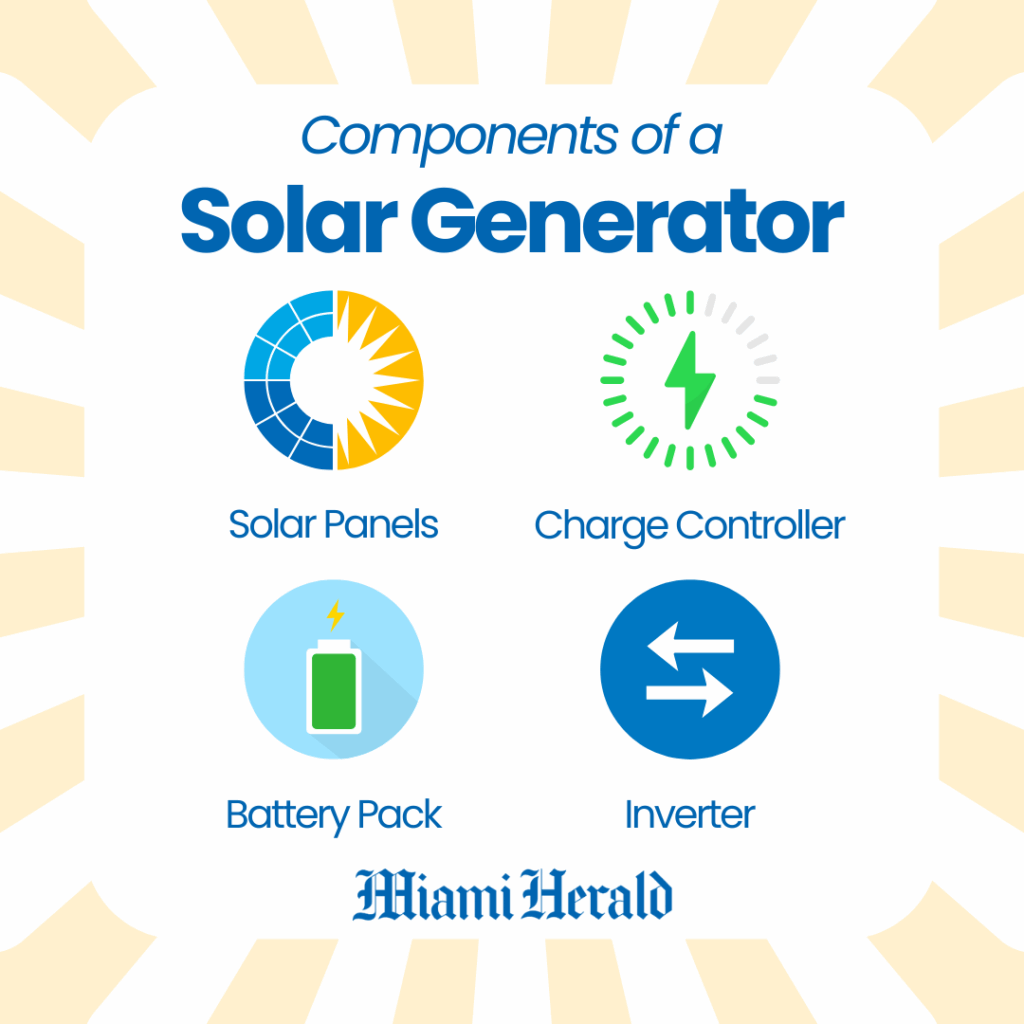
A typical portable solar generator has four key components working together:
- Solar panels – The energy collectors
- Charge controller – Prevents overcharging and helps regulate current
- Battery pack – Stores electricity for later use
- Inverter – Converts power into the same format your devices and appliances need
These solar generator components are often sold as kits, but many brands let you buy the generator itself and connect third-party panels if you want more flexibility.
Why People Buy Solar Generators
Think of a solar generator as a portable power hub that works wherever sunlight is available. People buy them for different reasons:
- Emergency power supply during a power outage
- Camping or RV trips, where hauling gas isn’t practical
- Home backup systems as an emergency backup power source
- Outdoor work sites where small tools or lights need electricity
Because they’re portable and quiet, solar generators are especially popular among homeowners who want a clean backup system without the hassle of gas-powered generators.
Pros
- Renewable energy: Powered by sunlight, not fuel
- No emissions: Safer for indoor use in emergencies
- Low maintenance: Fewer moving parts than gas generators
- Silent operation: No roaring engine to disturb neighbors or campsites
- Portable: Most modern models are lightweight and designed for easy transport
Cons
- Limited capacity: A portable solar power generator may not run large appliances for long
- Weather dependent: Efficiency drops on cloudy days or at night
- Higher upfront cost: More expensive than many small gas-powered generators
- Slower charging: Refueling with gas takes minutes—solar charging can take hours
In short, solar is ideal for light-to-medium use but can’t yet match the brute force of traditional gas generators for heavy-duty backup.
When a Solar Generator Makes Sense
Solar generators are most practical when you need portable power that’s clean, quiet, and safe. They shine in these situations:
- Short-term outages: Keeping phones, laptops, and small appliances running until the grid comes back on
- Outdoor living: Running lights, fans, or coolers at campsites without worrying about noise or fumes
- Supplemental home backup: Powering routers, medical equipment, or a fridge during emergencies
However, if you want to run a whole house for days or keep an air conditioner humming, you’ll likely need a hybrid setup or still rely on gas generators.
Is a Solar Generator Worth It?
Whether a solar generator is “worth it” depends on your expectations. If you need a power station for survival gear, communications, and personal devices, it’s an excellent investment. They’re safer indoors, easier to maintain, and more sustainable than gas-powered generators.
But if you’re preparing for long blackouts or want to run an entire household, a solar generator alone may fall short. In those cases, people often combine them with traditional gas generators or larger fixed solar systems.
Choosing the Right Solar Generator
When shopping for a generator, ask yourself these questions to compare key factors:
- Battery capacity: How long can it run devices between charges?
- Charging options: Does it accept wall or car charging in addition to solar?
- Output ports: Does it have both USB and AC outlets?
- Portability: How heavy is it? What size do you need? Are the handles easy to grip?
- Brand reliability: Does it include warranties? How reliable is the company?
Many people start small with a portable power station for emergencies and scale up if they find it fits their lifestyle.
Final Thoughts
A solar generator is essentially a compact portable solar generator that turns sunlight into electrical energy you can use at home, on the road, or during a crisis. While it won’t fully replace traditional gas generators, it’s a valuable emergency backup power source that’s clean, quiet, and increasingly affordable.
For households seeking resilience and flexibility, solar generators represent one of the most practical ways to blend modern convenience with renewable energy.
FAQs
A solar generator combines panels, batteries, a charge controller, and an inverter. Solar panels harness energy, store it in batteries, and convert it into usable AC power.
Not usually. Most portable solar power generators are designed for small devices or essential appliances. Whole-house coverage requires larger systems or hybrid setups.
Yes, if you need clean, portable backup. They’re excellent for emergencies, camping, or light household use. But for long outages, gas-powered generators may still be necessary.
A solar inverter is just one part—it converts DC into AC. A solar generator includes the inverter plus solar generator components like panels and batteries.
Solar generators can be costly upfront, slower to recharge, and limited in battery capacity. They’re less effective for powering heavy appliances compared to gas models.