Will a solar generator actually power a house?
In 2020, the average U.S. household used about 10,566 kWh of electricity a year, and the latest data from EIA shows that number is still climbing.
That rising demand has more homeowners looking at solar generators as a backup solution. It makes sense: they’re quiet, low-maintenance, and ready to step in when the grid fails. I’ve tested top models and relied on one through multiple outages, so I’ve seen firsthand what these systems can and can’t handle.
In this guide, I’ll walk you through how solar generators work, what they can realistically power, and the key factors to consider if you’re thinking about one for your home.
Key Takeaways
- Whole-House Solar Systems: True whole-home backup typically means a solar + battery installation (10–30+ kWh storage paired with a 5–15 kW solar array). These setups can cover most household needs, but they require permits, professional installation, and a higher upfront investment than portable solar generators.
- Best for Essentials: Portable solar generators work well for fridges, Wi-Fi, and lights during outages, but they won’t power energy-hungry appliances.
- Battery Storage Decides Runtime: More watt-hours equals longer runtime. This is the biggest limiter in most setups I’ve tested.
- Portable vs. Whole-House Systems: Small portables handle short-term loads; whole-house setups provide long-term, scalable backup.
- Solar Panels Boost Efficiency: Adding PV panels keeps batteries charged and extends runtime, especially in longer outages.
How Does a Solar Generator Work?
For a solar generator system to work, it typically includes:
- Solar panels or a solar panel array to capture the sun’s energy
- A solar battery that stores energy for later use
- A solar inverter that converts DC to usable AC power
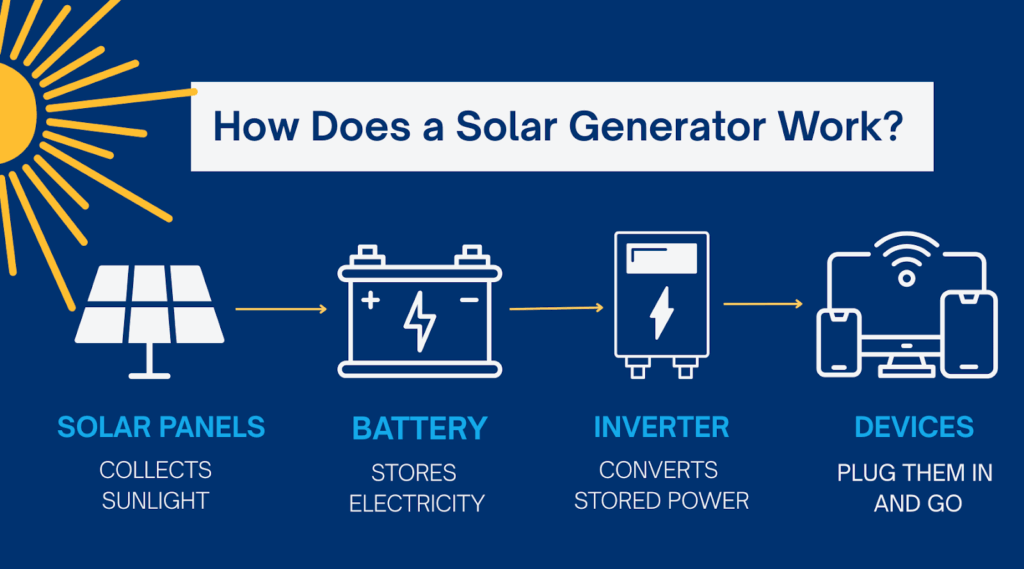
When the grid goes down, the system taps into stored energy. The more battery storage and solar input you have, the longer you’ll be able to run your appliances.
What Can a Solar Generator Run in a House?
- ✅ Appliances you can power: LED lights, Wi-Fi router, Phones, laptops, tablets, Energy-efficient TVs, and a refrigerator (if wattage is modest).
- ⚠️ Appliances you may struggle with: Central air conditioners, electric ovens or stoves, clothes dryers, water heaters, and other high-startup appliances (tools, pumps, etc.). Some large setups may run a window AC unit, but powering central AC typically requires a full solar + storage installation.)
Portable vs. Whole House Solar Generators
Whole-house solar generators require more space, careful planning, and a higher upfront investment. See the comparison chart below for a breakdown of key differences:
| Feature | Portable Solar Generators | Whole House Solar Generators |
| Storage Capacity | 1–4 kWh | 10–20+ kWh |
| Typical Cost | $300–$2,500+ | $3,500–$15,000+ |
| Best Use | Travel, essentials, short outages | Whole-home backup power |
| Recharge Options | Portable solar panels, car, or grid power | PV panel array and grid |
| Integration | Plug-in use or small circuits | Full home circuits via transfer switch |
| Pros | Compact, affordable, quiet | High capacity, scalable, reliable |
| Cons | Limited runtime, low output | Higher cost, needs planning & space |
💡Pro Tip: If your goal is reliable backup power for your home, whole-house solar generators are the better long-term solution.
Key Factors to Consider
To power a house, you’ll need to match your solar generator to your energy needs.
You will need:
- Enough battery capacity to cover your essential appliances for at least a day
- A solar panel array large enough to recharge those batteries during peak sunlight
- A transfer switch for safe whole-house integration
Most homes will need multiple batteries or expandable systems to stay powered during longer outages. Modular setups make it easier to scale over time.
Core Benefits of Solar Generators
Advances in solar technology have made solar-powered generators more practical than ever:
- Clean solar energy with no fuel use
- Quiet operation compared to gas generators
- Lower monthly electricity bills when paired with photovoltaic solar panels
- Flexibility with modular solar generator systems that expand with your needs
- Energy security during frequent power outages

💡 A solar generator can save money, too, especially if paired with a solar system that reduces reliance on your utility company.
The Disadvantages of Solar Generators
- Higher upfront cost than gas units
- Dependent on sunlight and environmental factors
- Limited storage capacity unless modular
- Needs careful planning to meet your energy demands
House solar generators are excellent for essentials, but high-energy usage appliances like an air conditioner or stove will drain them quickly.
Extra Features That Matter
- Lifespan: Lithium-ion batteries can last 10+ years; lead-acid batteries wear out faster.
- Charging Options: Many systems recharge from grid power, car outlets, or portable solar panels.
- Safety: No carbon monoxide, safe indoors.
- Expansion: Modular solar generator systems let you add batteries or PV panels as your needs grow.
My Final Verdict
From what I’ve seen, a solar generator is one of the most practical ways to prepare your home for power outages. Portable solar generators are ideal for travel and providing essential power. Whole-house solar generators offer more coverage, but they require bigger batteries, a solar panel array, and careful planning.
So, can a solar generator power a house? Yes, but not the way most people think. A small portable unit can keep your fridge and Wi-Fi alive, but running an entire home takes a very different kind of setup. If you’re serious about energy security and want a cleaner, quieter backup option, the right setup won’t just keep your lights on; it’ll keep your home running when it matters most.
FAQs
Most portable solar generators cannot. A large whole-house solar generator may run a small air conditioner.
From a few hours to a full day, depending on watt-hours and load.
Not the portable ones. To see real savings, you need a whole-house system paired with solar panels, and even then, it depends on your rates and how much power you actually use.
Calculate the wattage of your essential appliances. Choose the right solar generator size to match your energy needs.
Yes. They provide energy security, backup power, and flexibility for short-term outages or travel.