
Meet some of the collectors that put Miami on the art world’s map
DON AND MERA RUBELL
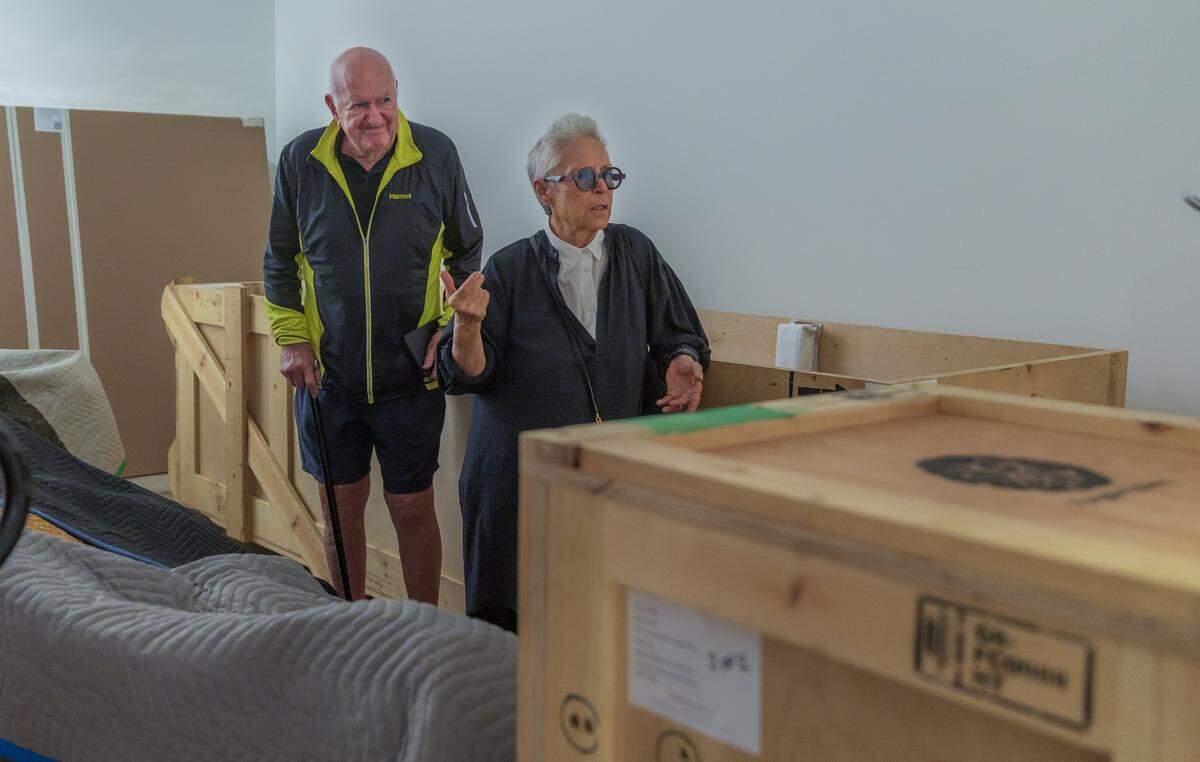
Don Rubell was a medical student and his wife Mera a schoolteacher in New York when they began setting aside $25 a week from her paycheck to buy art.
Given their meager budget, the Rubells sought out young, unknown artists whose work sparked their interest and that they could afford.
In the 60-plus years since, the couple has stuck to that same foundational strategy as they morphed from small-time collectors to major art-world players, helping launch and nurture more than a few major contemporary artists’ careers along the way, including that of 1980s pop artist Keith Haring and Miami’s internationally known Hernan Bas, a painter who once worked as an intern for the Rubell collection.
“Every time we’ve collected art, 90 percent of it is collected when it’s made,” Mera Rubell said in an interview at the couple’s six-year-old Rubell Museum in Miami’s Allapattah neighborhood, which they’ve helped turn into the city’s latest mecca for art, just as they did in Wynwood before.
In the early 1990s, the Rubells, having made money in real estate and hotels, including the historic Art Deco Albion Hotel in Miami Beach, brought their already extensive collection to Miami, where they moved for family and business reasons.
They famously bought a former U.S. Drug Enforcement Agency evidence warehouse in Wynwood, converted it to exhibition space and opened it to the public to show rotating exhibits from what they now formally called the Rubell Family Collection, not only putting a fresh spotlight on the blighted neighborhood but drawing visitors from all over. They even built their home behind it.
“When we first came into Wynwood, locals told us it was a dangerous place and no one ever would go there,” Mera Rubell recalled. “But when you plant the seed of culture, you open up neighborhoods. It attracts humanity.”
In 2019, they tripled the size of their showcase to 100,000 square feet when they moved to an Allapattah industrial complex which they converted into the gleaming Rubell Museum, run by longtime collaborator Juan Valadez as director. The transformation underscores their commitment to a permanent home for their constantly expanding collection in Miami, the Rubells stressed. The family has since opened a second Rubell Museum in Washington, D.C.
“It took a lot of soul-searching,” Mera said. “We changed it to Rubell Museum to express our public mission. There is a great joy for us in sharing art with the public. It’s a big motivation to constantly be reaching for the best pieces. We’re not just collecting to put in our bedroom.”
Shows drawn from their collection, prominently including the “30 Americans” exhibit of work by important African American artists, travel the global museum circuit.
At the Allapattah museum for this Miami Art Week, works being installed include a new focus in which seven galleries will be dedicated to a single artist. This year, it’s 20 major figurative sculptures by Thomas Houseago, a famed British-born artist working in California who in a recent public Instagram post said he’s “eternally grateful” to the Rubells for recognizing and buying his work 20 years ago at a time when he was struggling.
Next year, the seven galleries will be dedicated to work by Bas.
The Rubells say they intend for their two children and five grandchildren, all of them engaged in art, to carry on. Son Jason, educated as an art historian, has long been an equal partner in the endeavor, they said.
“I feel blessed that we have our children and the next generation being interested in the art,” Mera said. “We can’t predict beyond that.”
*****
MARTIN Z. MARGULIES
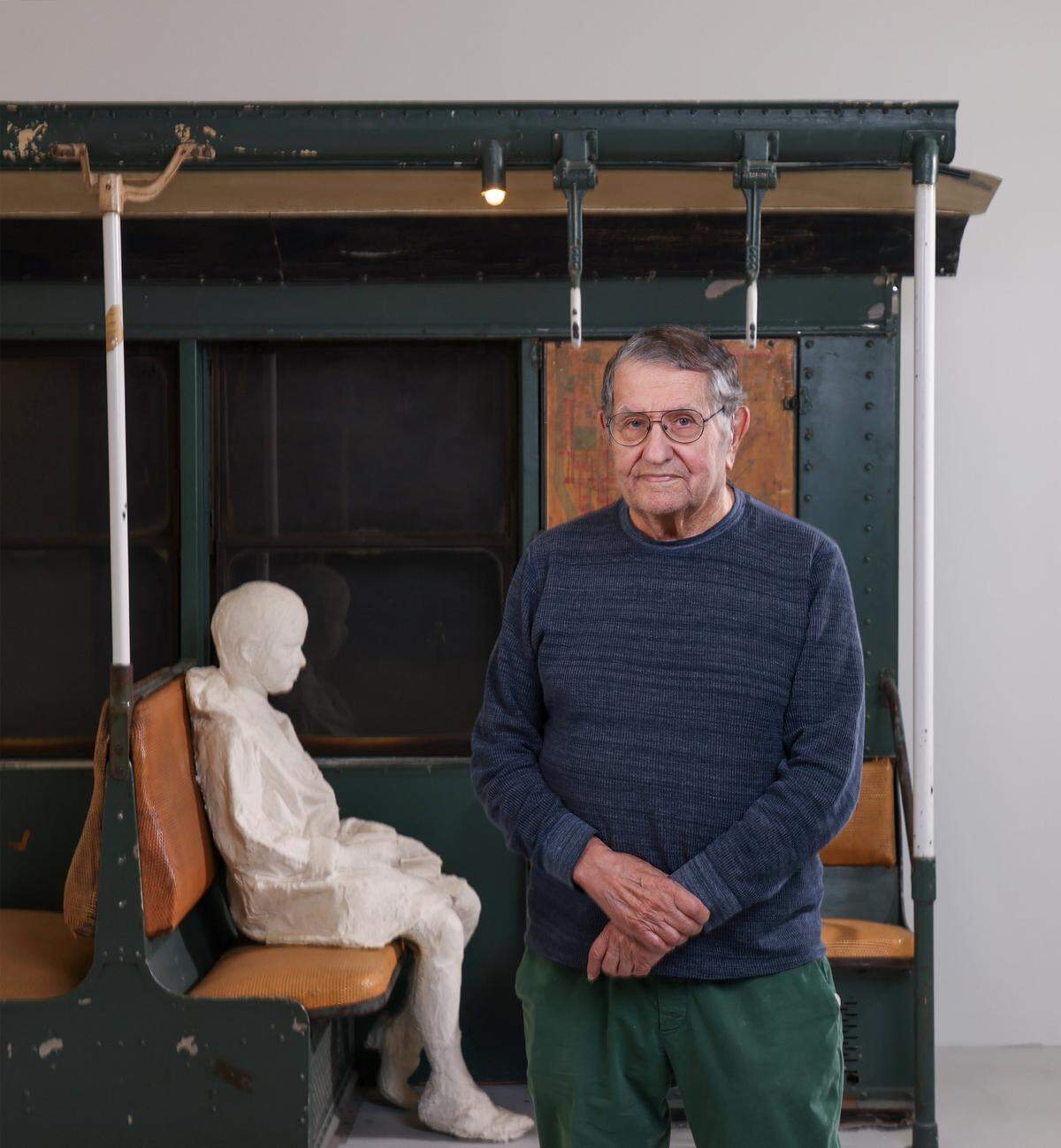
As a young developer in Miami in the 1960s — so young contractors nicknamed him the “boy builder” — business-school grad Martin Margulies developed an interest in art when someone took him to an auction in New York. There he saw something that piqued his curiosity — smart, serious people bidding good money for works of art. Soon he was buying pieces by big-name modern artists and nurturing his own decades-long case of the collector’s bug.
On visits to New York, he recalled, he would once hit 15 to 20 galleries in a day.
“I realized it was a life I could enjoy. It’s learning, looking. It has a business element. And it becomes a spiritual quest,” Margulies said in an interview at the vast warehouse that since 1999 has housed his public collection in Wynwood. “I studied. I gained a lot of knowledge talking to people. It’s always learning, always looking to add to your collection.”
By 1982, when his three-tower Grove Isle development opened, Margulies had amassed a large sculpture collection. He installed some 50 of his works along a publicly accessible walkway around the Coconut Grove island. It was likely the first of Miami’s private art collections to be made available for public viewing, though Margulies said it did not occur to at the time that he might have been establishing a new template.
Margulies eventually moved much of the collection to Florida International University’s main campus on loan for several years. He donated a large sculpture by Alexander Liberman that is at the main entrance of the campus.
As his personal collection continued to grow, overflowing his home, Margulies and his art curator, Katherine Hinds, began looking for storage space in Wynwood, then a deteriorating industrial district, and found a large warehouse overlooking Interstate 95.
“So what are you going to do with a warehouse full of art? You open it up to the community, and it becomes a community asset,” Margulies said.
Today the collection includes massive permanent installations of paintings and sculptures by Anselm Kiefer, and, for this Miami Art Week, an exhibit of seminal Pop Art pieces by Roy Lichtenstein, Andy Warhol and George Segal, a show of Italian art from 1970 to 2024, and a collection of photographs by Lewis Hine of child laborers from the early 20th Century.
Margulies has donated much of the collection, more than 1,000 pieces, to his charitable foundation, which supports groups that combat homelessness and hunger and assist children and veterans. The foundation has donated art to numerous museums in South Florida and across the country, and will auction off its remaining holdings upon Margulies’ passing for charity.
Margulies is so focused on the art these days that he gave up his business and says he has no investments other than his personal collection, much of which is at his condo in Key Biscayne in a complex he developed.
“I simplified everything. All I have is art,” Margulies said.
“I’m in a good place.”
******
CRAIG ROBINS
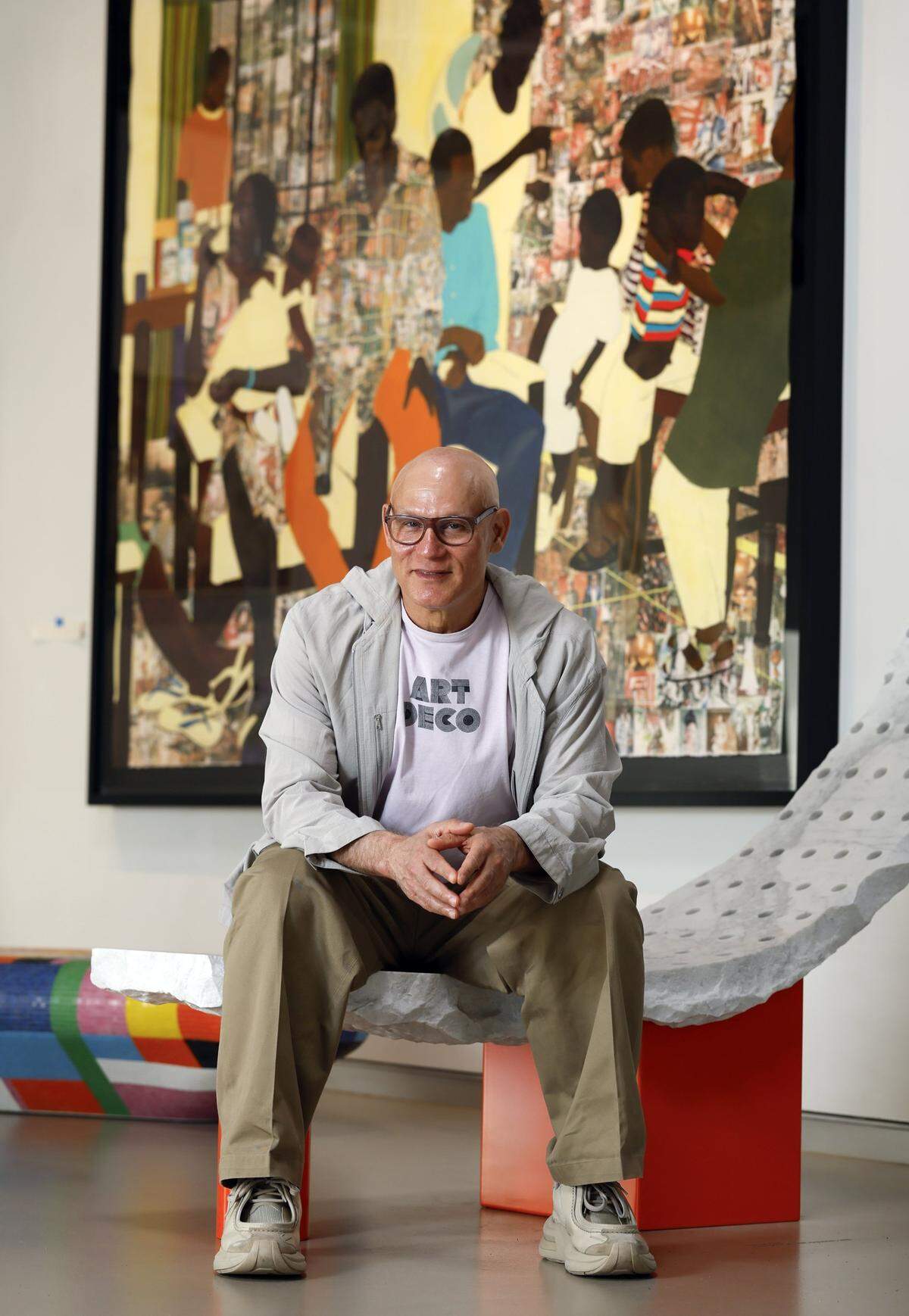
Craig Robins was 19 and studying abroad in Barcelona when he first encountered the work of the great Catalan artists Miro and Picasso up close. Something clicked. When his father offered him a watch as a law-school graduation present, Robins asked for a painting instead.
As he launched what would become a trailblazing career as a developer in South Beach, Robins began cultivating close relationships with up-and-coming artists, buying their work or providing them low-cost studios in buildings he was acquiring and renovating. Among them was the late Cuban exile painter Carlos Alfonzo, among the first Miami artists to gain international recognition in the 1980s.
A few years later, Robins would do the same, prolifically, for artists and art groups when he began buying up much of the Miami Design District. Inspired by his work as a trustee for Miami-Dade’s Art in Public Places program, then run by artist Cesar Trasobares, Robins also infused his ambitious redevelopment plan for the district with substantial public and site-specific art.
Today, the public district collection comprises some 35 large-scale murals, sculptures and installations, including the phantasmagoric exterior of its Museum Garage. Some of the pieces belong to Robins, like the signature Fly’s Eye Dome by Buckminster Fuller that’s the centerpiece of the district’s Palm Court plaza, while others are owned by the district.
But that’s not all.
When he renovated an old design district building in 2006 to serve as headquarters for his firm, DACRA, Robins asked architect Terence Riley, curator of architecture at the Museum of Modern Art and later director of the Miami Art Museum before its transformation into PAMM, to design its two floors of offices to display works from his personal extensive art collection. (Riley died in 2021).
And while the office is a private space, it’s open to the general public by appointment. Every year, collection curator Karen Grimson changes up the art at DACRA, drawing from Robin’s private collection. Robin’s annual Miami Art Week open house at DACRA is a sought-after invite.
“It’s not just offices with art, but a real exhibition space,” Robins said.
Robins is not exaggerating. Work by first-rate artists is displayed or hung in every individual office, every meeting space, even the staff kitchen. The soaring hallways, designed for large-scale art, are hung for this year’s event with substantial works by artists ranging from 20th Century giant Marcel Duchamp to the late but more contemporary John Baldessari, both pioneering conceptual artists. There’s also work by other artists whose pieces the developer has long collected or commissioned, like Richard Tuttle and Nicole Eisenman, whose provocative installation collage of drawings and appropriated photos will draw more than a few second glances.
“It was a process,” Robins said. “The more you look, the more your brain develops. To me, the art is not so much about a business. It’s something that enriches my life.“
As for the future of the collection, Robins, who is 62, said he’s only just started focusing on it.
“I’m beginning to think about that,” he said. “It hasn’t entered my mind that much, but it’s starting to.”
He noted there are complicated estate and inheritance tax issues to work through, but he wants “a good portion of it” to remain in the hands of his family and children, and “let them figure it out.”
********
JORGE AND DARLENE PEREZ
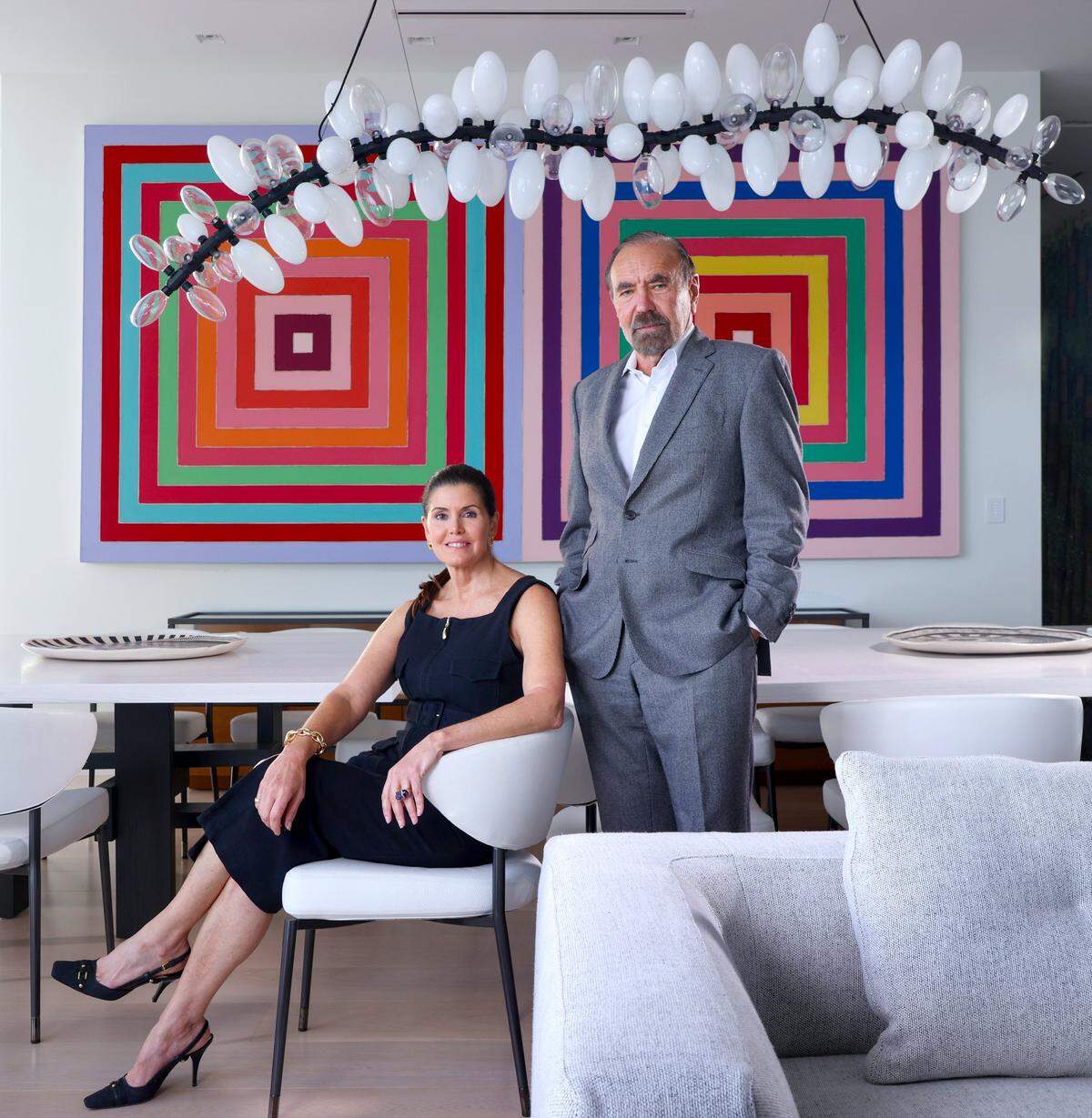
Jorge Pérez, the Miami-based real estate developer and CEO of Related Group, is just as well known for his prolific art collection as he is for his condos.
Born in Argentina to Cuban parents, Pérez spent his teenage years in Colombia and came to Miami in 1968. When he was a child, his mother would take him to museums and buy him books, planting a seed that would come to fruition decades later.
Pérez was a broke college student but a decent dorm-room poker player, and bought some of his first pieces — including a Man Ray lithograph — with his winnings. For years, Pérez almost exclusively collected work from Latin American artists to connect with his heritage.
In 2011, Pérez donated $35 million in cash and art to support the Miami Art Museum, which was then renamed the Pérez Art Museum Miami. He has continued to donate artworks and millions of dollars to PAMM, along with other arts institutions. Pérez has given more than $200 million to art initiatives, many of which were done through the Jorge M. Pérez Family Foundation, which celebrated its 10th anniversary this year.
In 2019, Pérez launched El Espacio 23, an art space that hosts artist residencies and showcases exhibitions consisting entirely of pieces from his own collection free of charge to the public. El Espacio’s latest show opened Nov. 20.
For some, collecting art is a shrewd financial investment, but that’s not how Pérez sees it. “I’m collecting a depository for future generations so they can all be exposed to art,” he said.
He hopes local prominent collectors will leave at least some of their collections to Miami art institutions for the public to enjoy.
“From what I’ve heard, many of these private collectors are going to sell. I was just in New York, and you’re seeing some of the greatest art collections being sold at Sotheby’s and Christie’s, and I was very surprised,” he said. “Mine is going to the public.”
Pérez wants his collection to be seen, even long after he’s gone. As someone who raised his children to appreciate the arts, Pérez said El Espacio will continue “generationally.” His wife Darlene and his children have all taken on leadership roles in philanthropy and art collecting. Darlene chairs the International Women’s Committee at his namesake museum. He plans to leave an endowment for the art space as well.
As for the rest of Miami’s arts scene, Pérez is not worried about its future. He’s very optimistic. He has faith in the direction that local museums – PAMM, ICA, MOCA and others — are heading in and said young collectors and arts enthusiasts will take up the mantle.
Miami should continue to embrace its relative youth compared to other major arts cities, like New York and Paris, he said.
“It’s wonderful to have Van Goghs and Monets and so forth, but we are going to be a museum that is very modern, that is reflecting our community, which is a young community in a young city,” he said, referring to several local museums. “And within that parameter, I think we’re going to be the best.”