Remember movie palaces? South Florida had plenty — and Hollywood-style premieres, too
To see director Martin Scorsese’s latest epic “The Irishman,” in the theater or on Netflix?
South Florida fans of the filmmaker’s 3 1/2-hour crime drama had the choice to choose either, or both, options.
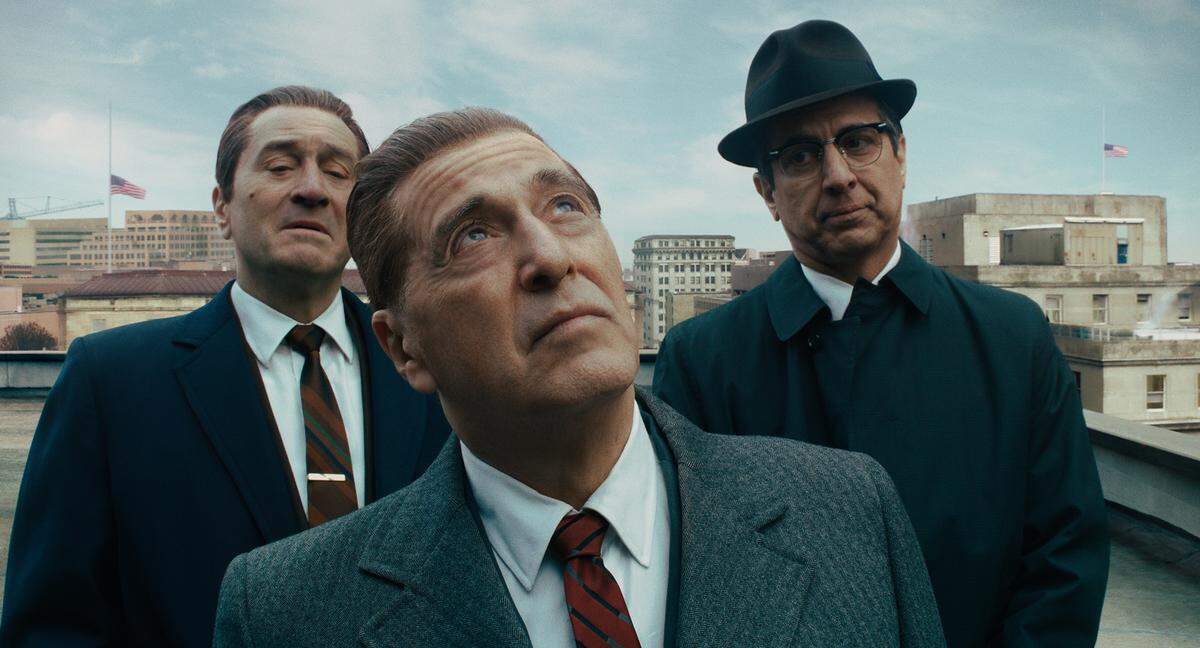
“The Irishman,” starring Al Pacino as Teamster union leader Jimmy Hoffa and Robert DeNiro as mob hitman Frank Sheeran, is streaming on Netflix. But it also had a limited engagement simultaneous run at North Miami Beach’s IPIC Theaters at the Intracoastal Mall, Coral Gables’ Landmark at Merrick Park and The Classic Gateway Theatre in Fort Lauderdale on Thanksgiving week and into early December.
Film fans will argue a large scale production like the Scorsese film, or visually striking movies from earlier this year like Quentin Tarantino’s “Once Upon a Time ... in Hollywood” or the Elton John musical biopic “Rocketman” demand to be seen in as grand a film palace as possible.
Theater owners are getting more ambitious to lure movie buffs to go out by outfitting theaters with food and drink service and reclining, reserved seating.
These amenities are enticing moves, especially as we get deep into the holiday movie rush of 2019-2020 that has already unleashed a “Frozen” sequel and includes the release of several potential Oscar contenders like “The Irishman,” “A Beautiful Day in the Neighborhood” with Tom Hanks as Mr. Rogers, and director Clint Eastwood’s upcoming “Richard Jewell,” a drama about the Centennial Olympic Park bombing during the 1996 Summer Olympics in Atlanta.
At the same time, the theater landscape keeps changing.
Take the independent, and much-admired, O Cinema, a nonprofit movie theater founded in 2011 to showcase independent and alternative cinema in Miami-Dade.
Co-founders Kareem Tabsch and Vivian Marthell, had an outlet in Wynwood, which helped propel Wynwood’s emergence as an arts and culture district. But that location closed in March to make way for a 189-unit apartment building.
O Cinema also operated in North Beach but that site on 71st Street, in the old home of Wometco’s Byron-Carlyle theater, was no more as of Oct. 31 when the lease expired and they got word the old building with decades of character baked into its walls and plush seats, is going to be redeveloped into either a hotel or residences.
O Cinema, instead, took over operations of the Miami Beach Cinematheque at 1130 Washington Ave. and will feature a larger, location specific name: O Cinema South Beach.
Keeping track of all of that?
A long time ago, in a galaxy not so far, far away, South Florida movie fans didn’t have to choose between streaming services like Netflix, Amazon or Vudu, and had movie palaces galore to choose from.
Here is a look back at old movie theaters from the archives of the Miami Herald. From these stories published over past years, do you remember them?

MARQUEE MEMORIES
Published Sept. 24, 2013
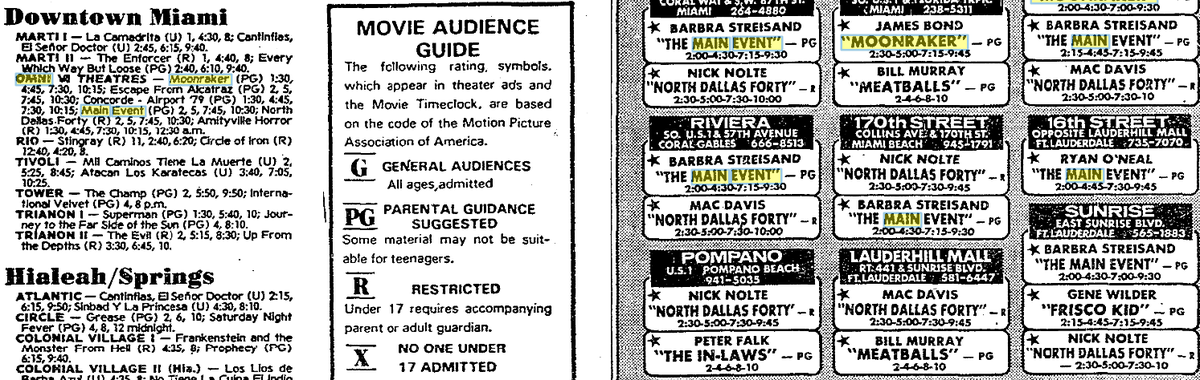
John Travolta set his boogie shoes strolling in “Saturday Night Fever” at Miami’s The Omni 6. Angie Dickinson shared her shower with us as she “Dressed to Kill” at the Concord on Bird Road and 114th Avenue. The revelation, “Luke, I am your father,” had you gripping your plush, gold seat at the Dadeland Twin movie theater as “The Empire Strikes Back” revealed its shocker.
Plus, who, among people of a certain age, didn’t stand in line to see “Jaws” at Coral Gables’ Miracle Theatre in the summer of 1975?
“Apparently the whole world saw ‘Jaws’ there,” recalls Rebecca Smith, head of Special Collections at History Miami. Yes, she saw “Jaws” at the Miracle, too.
As Hollywood celebrates the best of 2012 with Sunday’s Oscars telecast, movies take center stage once again.
In Miami-Dade, the best of Hollywood stood out in grand movie palaces, where red velvet curtains parted across wide screens, where marquees lit the night sky, and where crystal chandeliers hung like constellations above the balconies.
Hollywood premieres? We had them, too.
Press agent Charlie Cinnamon remembers the publicity stunts he’d conjure for the Lincoln Road movie theaters he represented on the mall, like the Lincoln, Carib and the Beach. He orchestrated the opening of Elizabeth Taylor’s epic “Cleopatra” in 1963 at the Lincoln and the British comedy “Those Magnificent Men in Their Flying Machines” two years later at the Carib, a theater whose facade above the marquee displayed a full-scale map of the Caribbean.
“I did the opening of ‘Cleopatra’ and we had a parade down Washington Avenue with the Miami Beach High School. In those days we had big parades and the Lincoln was the theater,” Cinnamon said from his office on Lincoln Road.
“For ‘Magnificent Men’ we had vintage cars and airmen and a parade. Fantastic openings. Hollywood openings right here in Miami. We haven’t had that in years and it’s so sad that we don’t have that kind of premiere anymore where the whole community joined in to have big events and red carpet openings.’‘
The theaters got into the spirit during the Golden Age of Cinema. The Byron-Carlyle, on 71st Street in Miami Beach, for instance, had its ushers dress up like Dracula when the 1979 remake starring Frank Langella opened. Cobwebs and black velvet curtains lent an air of Transylvania to the theater, which has since become the home to the Miami Beach Stage Door theater company.
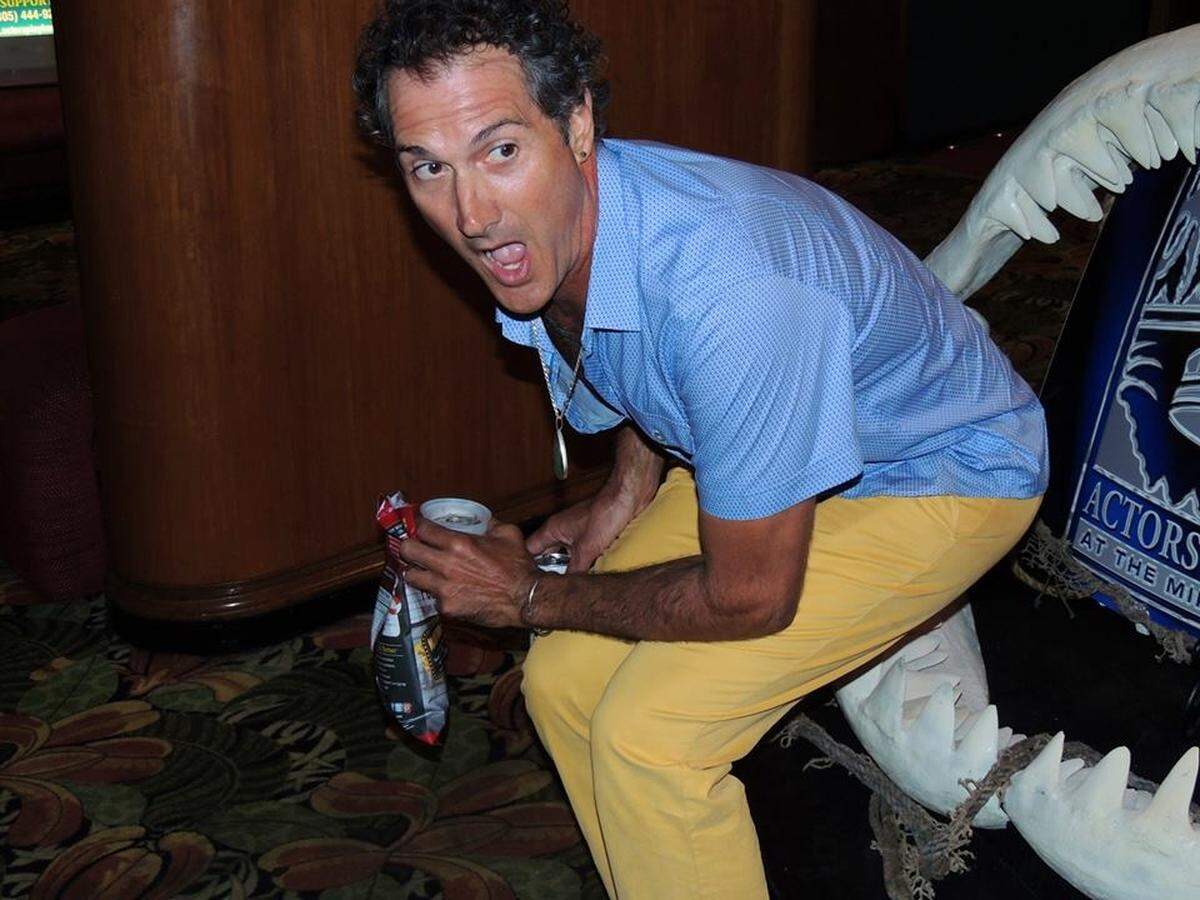
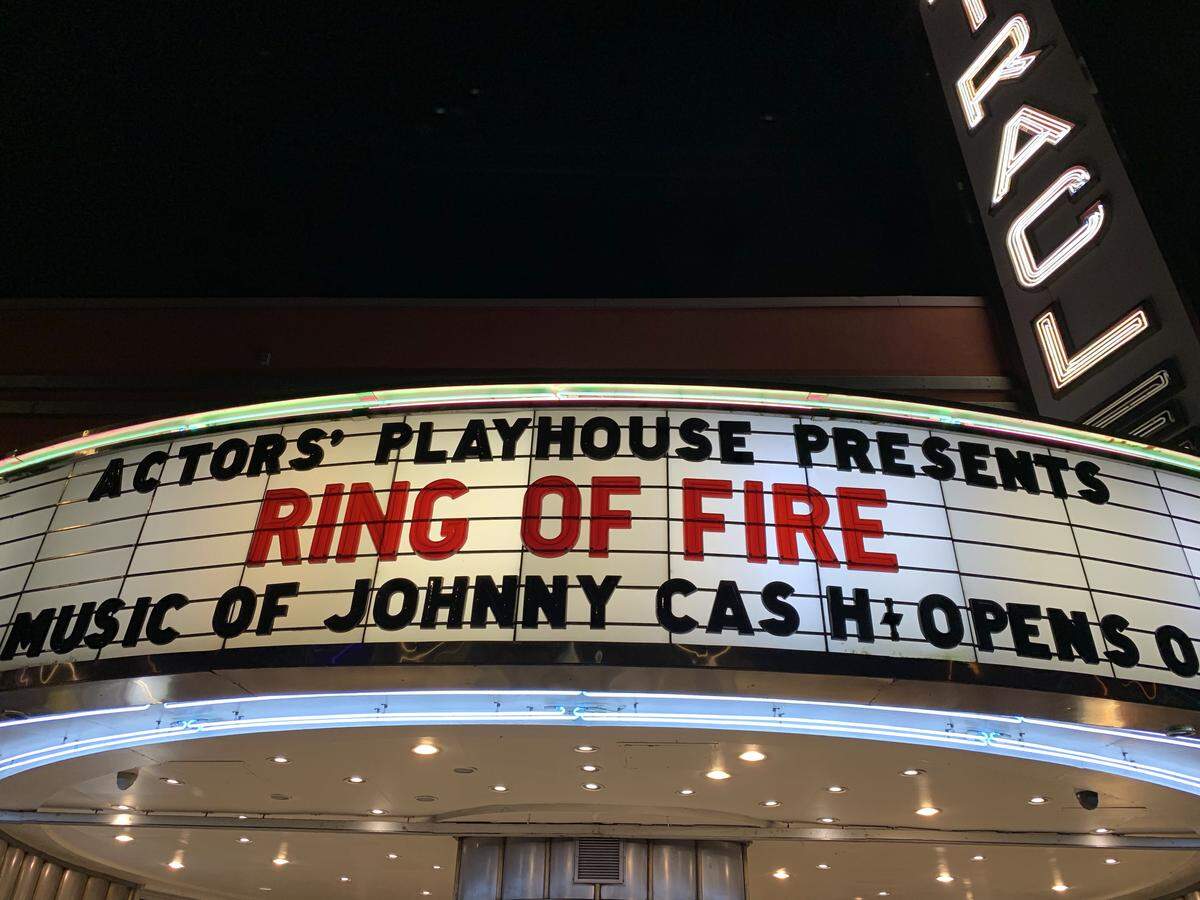
Perhaps the reason The Miracle, now home to the Actors’ Playhouse, stands out for its screening of “Jaws” is because the theater decorated the lobby in the style of the seafaring movie — netting on the ceiling, nautical props along the walls. The only thing missing was “Bruce” the mechanical shark, but he revealed plenty of himself on the large screen inside.
“That was the whole point, that movie theater was always great to go to because they always fit the theme when you went there,” said Eugene Flinn, the former mayor of Palmetto Bay. “It was a great theater to see things, too. So formal with everything. A throwback theater, even for our age group, and that’s why I’m so thrilled it’s been properly repurposed and it’s a great place to go see plays. What a treasure,” said Flinn, 50.
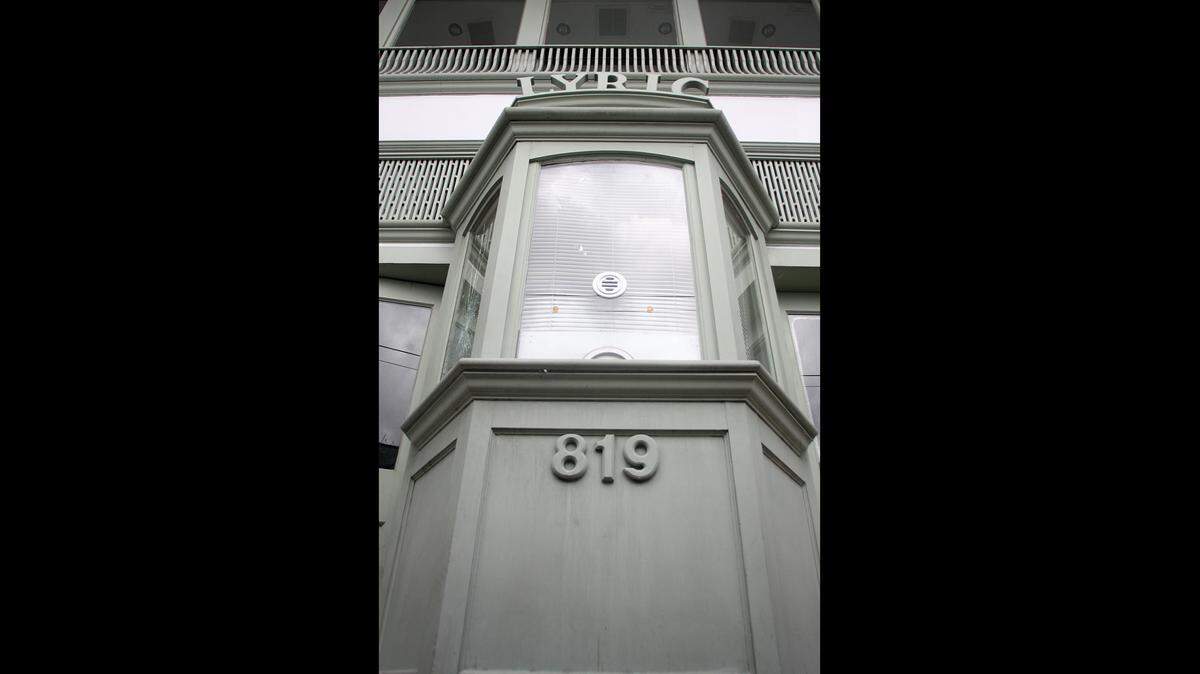
Most of these places are gone, but many of the buildings remain: The Olympia, which became the Gusman Center on Flagler; The Miracle, which is getting its marquee and box office restored; The Shores in Miami Shores, which hosts The Miami Theater Center and its productions; The Tower in Little Havana is run by Miami Dade College and Overtown’s historic Lyric Theater, which showcases live performances in the restored venue.
According to Isador Cohen’s “Historical Sketches and Sidelights of Miami, Florida (1925)“, the first proper movie theater in Miami was Kelly’s Theater in 1906, which sat on the south side of Flagler near the old Burdines. Kelly’s gave way to the more palatial theaters with sloping floors, roomy seats and chandeliers. The 1950s and 1960s saw the birth of the Riviera in Coral Gables, Suniland in what is now Pinecrest and the popular Dadeland Mall theater.
“Those seats at Dadeland were so comfortable, and you could rock in them,” recalls landscaper, musician and Miami-native Claude Roatta who, yes, saw “Jaws” at the Miracle.
By the late 1970s, however, the theaters began to split into double, triple and quadruple screens to compete with newly opened multiplexes, such as the Omni 6 in downtime Miami, which opened in 1977, or Movies at the Falls in 1980. The grander palaces could not compete.
By the 1990s places like Suniland, Dadeland, the Omni, Riviera, the Plitt Gables on Coral Way, Loew’s 167th Street Twin in North Miami Beach and others disappeared or found new uses.
But the love of film endured locally, even amid the changes.
“For serious movie folks, Miami was a paradise,” said Donald Edward Chauncey, who served in the ‘80s and ‘90s as the film librarian for the Miami-Dade County Public Library System and started the Alliance for Media Arts, which ran the Alliance Cinema art house on Lincoln Road. “We were able to see most of the films that were playing and being discussed in America. It was an era so far removed from today that it seems almost primitive. Before the Internet, before DVDs, before VHS even, unless you were wealthy enough to have your own in-house theater, the only way anyone could see movies was at a theater. Miami had some serious and dedicated presenters, so we were the envy of the South.”
Today, directors aren’t as likely to film in massive widescreen because multiplex screens are smaller, aside from specialty IMAX theaters. For fans, movie theaters often aren’t the first option, not when Netflix, tablets and Smartphone’s have made movies portable.
And that’s a loss, some say.
“Theaters and restaurants, where you develop a lot of strong memories, whether from dates or periods where you go, ‘Hey! I saw that movie there!’ evoke some strong memories,” Flinn said. “And The Miracle is a theater where a lot of our parents even went to.”
GOODBYE, OMNI 6
Published May 8, 1999
Add another name to the long list of major tenants that have closed at the struggling Omni International Mall in Miami.
AMC Theaters closed its doors Thursday at the Omni 4 and Omni 6, a decision likely to further reduce traffic at the already moribund mall. The movie theater still had about six years remaining on its lease.
“It’s their decision. Obviously, we’re not happy with it,” said Warren Weiser, chairman of Continental Real Estate Cos., the mall’s manager and part of the ownership group CP Miami Hospitality. “They didn’t have a continuous operations clause, so there’s not much we can do about it.”
Weiser did not know why the theater decided to close. AMC executives could not be reached Friday afternoon for comment.
The mall has been hurting for traffic since JCPenney closed at the end of last year, leaving no major department store anchors. The mall is only about 35 percent occupied, and the remaining tenants are small retailers like The Gap, Radio Shack and Foot Locker.
“Unfortunately what’s there today hurts,” said Weiser, who would not discuss the mall’s financial performance. “You have to look at what’s coming down the pike, not what’s there today.”
Weiser hopes to capitalize eventually on the renaissance of the Omni area, which is expected to feed off the opening of the Performing Arts Center and the Miami Heat’s new arena.
The Omni had been negotiating with the Mills Corp. to redevelop the nearly deserted mall as a retail and entertainment complex. But a deal was never completed, because Mills had too many other projects under way and couldn’t commit to having the redevelopment completed by fall 2000. Both sides say there’s still a chance that deal could be resurrected.
Meanwhile, Weiser is looking at other opportunities, which he declined to discuss.
“We’re prepared to do whatever is necessary to turn this thing around, however long it takes,” he said. “We’re not going anywhere.”
THE LINCOLN THEATER AS A CLUB?
Published March 9, 1986
Lincoln Road — outdoor pedestrian mall, center for artists, home of two theaters — is a great symbol of hope for all of South Florida. In it can be found proof of the resilience of our cities, their ability to withstand years of economic hardship and not-so-benign neglect.
Lincoln Road is undergoing a small-scale renaissance these days. And though its transformation is not attended by all the hoopla that a commercial enterprise (say Bakery Centre or Kendall Town and Country) would enjoy, this too-long-ignored Miami Beach mall is being put back together piece by piece. By artists, basically.
A group of painters, sculptors, ceramists and weavers have brought their studios into storefronts to work and sell their art and, perhaps more important, be a part of the life of Lincoln Road.
It is called the South Florida Arts Center — though “center” is something of a misnomer here since the art center sprawls along the mall and behind it, onto side streets and back alleys. Monday evening, it will celebrate its first anniversary.
It was the brainchild of an artist named Ellie Schneiderman, who saw that other neighborhoods — most particularly Coconut Grove —once amenable to artists had been vanquished by boutiques.
The artists have brought youth and life and color into the drabness of the mall. Merely a year ago, it was dilapidated and troubled, plagued by vandalism. Too many of its storefronts were empty; too many of the shops were shoddy. At night and on weekends (Sunday afternoons were the sparsest) the mall cleared out.
Now signs of revival are everywhere. Most of the artists are clustered between Michigan and Meridian, the 800 and 900 blocks of Lincoln Road, and their presence has lured some adventuresome new merchants.
The Colony Theater, a longtime vaudeville and movie house, is being renovated into a 500-seat performing arts center for theater, film, dance, concerts. The work should be completed by summer’s end, and the Colony should reopen in the fall.
And the Sterling Building -- one of the greatest art deco jewels of Miami Beach — is being renovated to house offices, shops and a private club. There are plans to convert the Lincoln Theater — a movie house with $2 double features — into a nightclub.
The first manager of the mall, Alfred Holzman, has been in office less than two months, but already he is working on much- needed cosmetic changes — clean store windows, better signs, among them.
The agenda for Lincoln Road certainly is still incomplete: Commercially, the mall is not a success. There are too few restaurants, too few stores, too few activities. The mall is perfect for street theater, spontaneous music or programmed concerts, outdoor dance productions — and much too little of it takes place.
The mall needs more color and less clutter: The kitschy, sculptural elements of Morris Lapidus’ 1950s design have been obscured over time, and although there is lots of pleasant greenery, much of it is in the wrong place, making the mall look jumbled. The essential spoofy-ness of the mall needs to be taken more seriously, and that is not a contradiction in terms.
The western terminus of the mall — now basically an auto turnaround and tram stop — could easily be turned into a park, with tables and chairs, kiosks and even children’s climbing structures. (And, since this is fancy as much as reality — it would be great fun if the artists designed it.) A park would link Lincoln Road to Alton Road and make it attractive to office workers, shopkeepers and the apartment dwellers of West Avenue.
There’s a tricky balance to be achieved here. Lincoln Road Mall ought not become too chic — thus pricing out the laundromat, the Cuban cafeteria, the old-time shoe and souvenir stores, or the artists who are bringing so much vibrancy with them. Artists don’t flourish in pricey, contrived environments; it is just that simple.
No urban planning textbook carries the blueprint for this kind of instinctive, spontaneous renewal. And yet, slowly and surely, Lincoln Road Mall is beginning to thrive again.
On its future ride the hopes and dreams of artists and entrepreneurs alike. It has the potential to become an extraordinary urban focal point, a place where the quirks and the joys of city life are celebrated.
This story was originally published December 1, 2019 at 9:18 AM.