
Tales of the Highwaymen and Garth Reeves’ racial battles will be part of Miami Book Fair
Every year the Miami Book Fair celebrates books and authors, a 37-year tradition that began with Miami Dade College hosting the first fair at its downtown Wolfson campus.
This year, in the midst of the global COVID-19 pandemic, the Book Fair is going virtual, with more than 200 authors discussing their work in interactive sessions. The full fair schedule is at miamibookfair.com.
To those interested in 20th century civil rights and wrongs in Florida, two long-awaited books stand out: Gary Monroe’s “Alfred Hair: Heart of the Highwaymen,” published by University Press of Florida, and Yanela McLeod’s “The Miami Times and the Fight for Equality: Race, Sport and the Black Press, 1948-1958,” published by Lexington Books.
Monroe, a retired professor of fine arts and photography at Daytona State College, is the author of numerous books about the Highwaymen, Florida’s noted African-American freelance landscape artists from around Fort Pierce. His previous books have highlighted the painting process of the young group of 25 men and 1 woman, who often sold their works of art from their car trunks due to Jim Crow laws in the state.
Monroe’s most recent book features the career of Alfred Hair, considered the fastest painter in the group. Hair, a marathon fine arts landscape artist, sometimes painted on as many as 20 canvases at one time, and was ready to sell his paintings before the oil paint was dry.
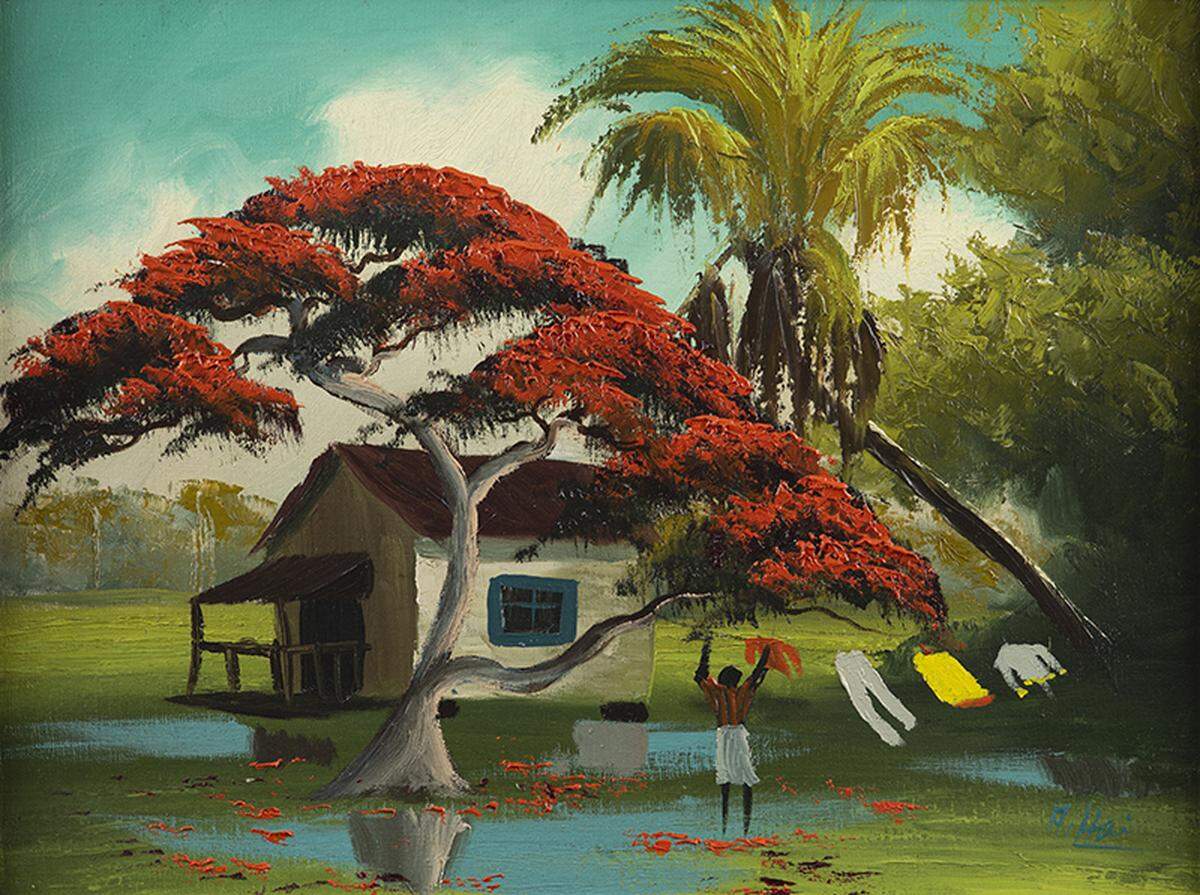
Hair’s energy and enthusiasm encouraged others in the group to believe that they could become more productive.
Over several decades, it is estimated that these Black self-employed artists, who became known as the Highwaymen, produced 200,000 oil paintings of Florida’s landscape, often painted on wood or masonite and mainly sold while driving up and down Florida’s coasts.
In the first 51 pages of the book, Monroe tells the story of the last decade of Hair’s short life. While Hair was in high school, Willie Pelt, a Black picture framer then living in Fort Pierce, introduced Hair to one of his customers, A. E. Backus, a white fine arts painter. After learning art techniques and guidance in mixing oils from Backus, Hair took off like a man on a mission.
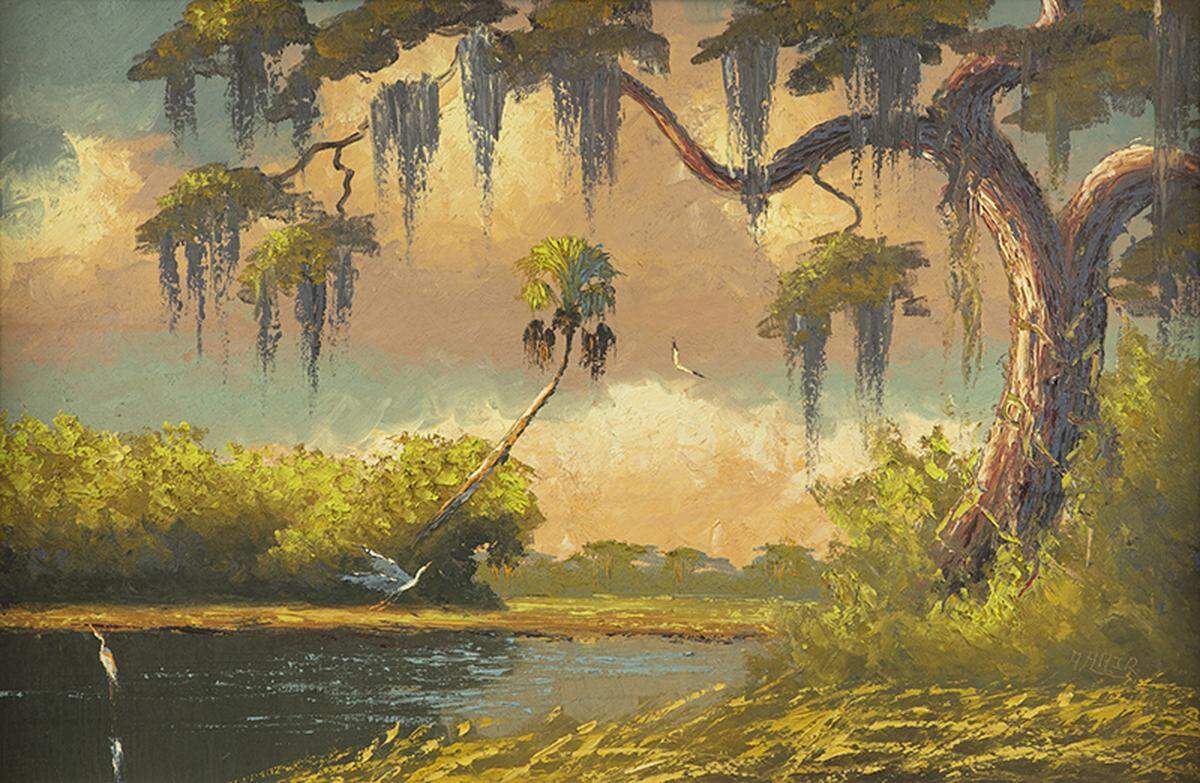
He lived from 1941 to 1970, a period when the Jim Crow era overlapped with the Civil Rights Movement.
The last almost 150 pages of the book are filled with vivid color plates of Hair’s paintings. Without captions and some without his signature, each plate tells a story of place and time of the fine art in Hair’s Florida, a Florida mostly at peace.
Garth Reeves Sr.’s epic battle for racial equality
Yanela McLeod is the director of communications and alumnae relations for the Florida A&M University College of Social Sciences, Arts and Humanities, where she is also an adjunct professor of history.
In 1993, McLeod was awarded the Garth C. Reeves Scholarship. She never imagined meeting Reeves or writing a book about him. He autographed her book in 2019 in celebration of his 100th birthday. Reeves died in November 2019; he had turned 100 on Feb. 12, 2019.
Years earlier, as a graduate student researching the Black press in Florida, she took the advice of one of her mentors, E. Merle Dawson, Florida A&M University archivist, who suggested she follow the sources. Over time, the sources led her to various documents that guided her research in recording the leadership of the Black press in Miami.
The chosen decade for the book, 1948-1958, focuses on the efforts of the Bahamian-born father and son, Henry E.S. Reeves and Garth Reeves, founding publisher and editor, respectively, of the Miami Times, the newspaper they owned.
,%20Henry%20%20%20Reeves%20(father)%20(1)%20(1).jpg "2020.Garth Reeves (son), Henry Reeves (father) (1) (1).jpg")
Their commitment to the Black community is told in bold headlines with scalding text as Blacks struggled for political and social liberation. Mostly sports-related chapter headings lead the reader into the conversational text.
McLeod cites numerous examples of editorials during the Jim Crow era where the editorials rallied against racial inequality, voter suppression, police brutality and the KKK, as well as discrimination in education, housing and public accommodations.
In 1949, Garth Reeves and several other Blacks sued over limiting access to Blacks at Miami’s public golf course, which was maintained with taxpayer dollars. At the time, Blacks were only allowed to play golf on Monday, the day the golf course’s sprinklers were turned on.
Reeves showed up on a Wednesday to play.
It took seven years in the courts but eventually Reeves and his fellow plaintiffs prevailed.
In August 2017, Reeves was inducted into the National Association of Black Journalists’ 2017 Hall of Fame class.
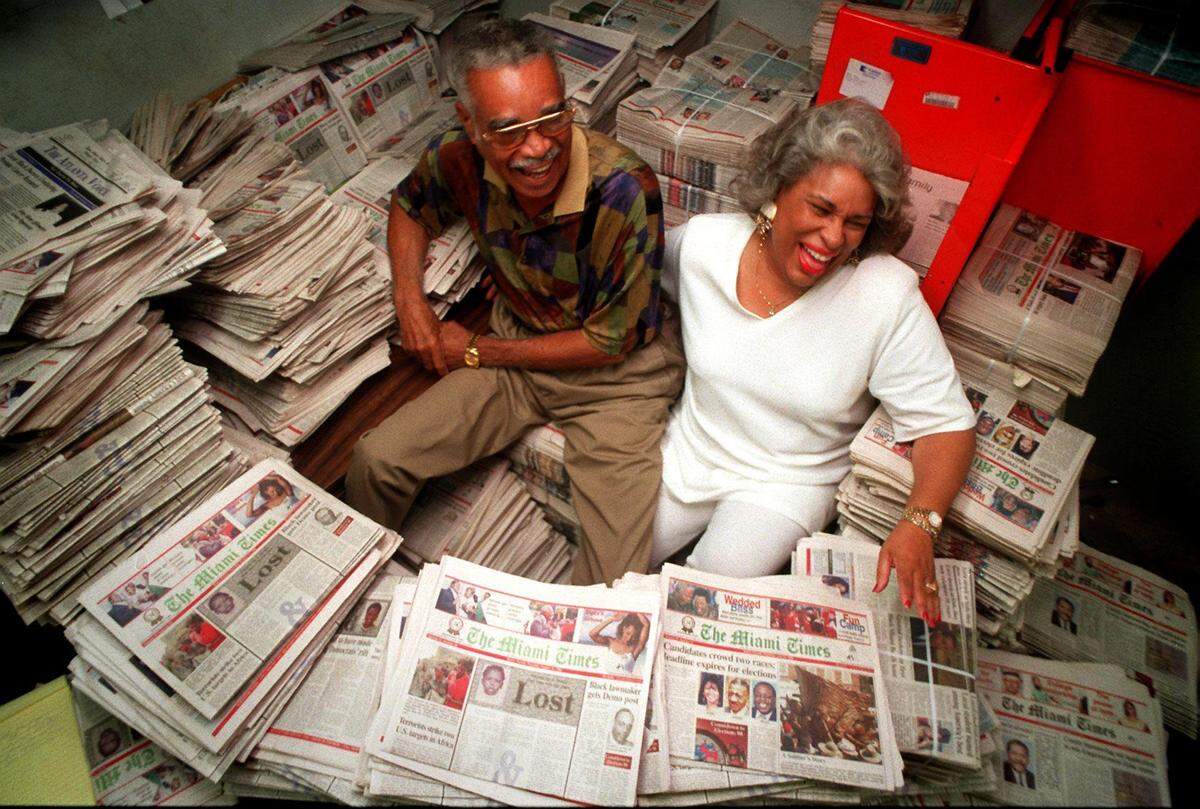
After working decades with his father, Garth Reeves Sr. shared his work ethic with his son, the late Garth Reeves Jr., his daughter, the late Rachel Reeves, and now to his grandson, Garth Reeves III. The youngest Reeves, publisher of the award-winning pioneer paper, recently expanded the family-owned business by purchasing the Biscayne Times.
Both books are worth reading. They are well researched with quotes and statements from eyewitnesses.
And, I must note, Alfred Hair, Henry E.S. Reeves and Garth Reeves Sr., Black men born generations apart, were all entrepreneurs who gave back to their community.
Dorothy Jenkins Fields, Ph.D., is a historian and founder of the Black Archives, History & Research Foundation of South Florida Inc. Send feedback to djf@bellsouth.net
This story was originally published November 13, 2020 at 6:00 AM.