
How salsa is getting Miami’s Gen Z off their phones and onto the dance floor
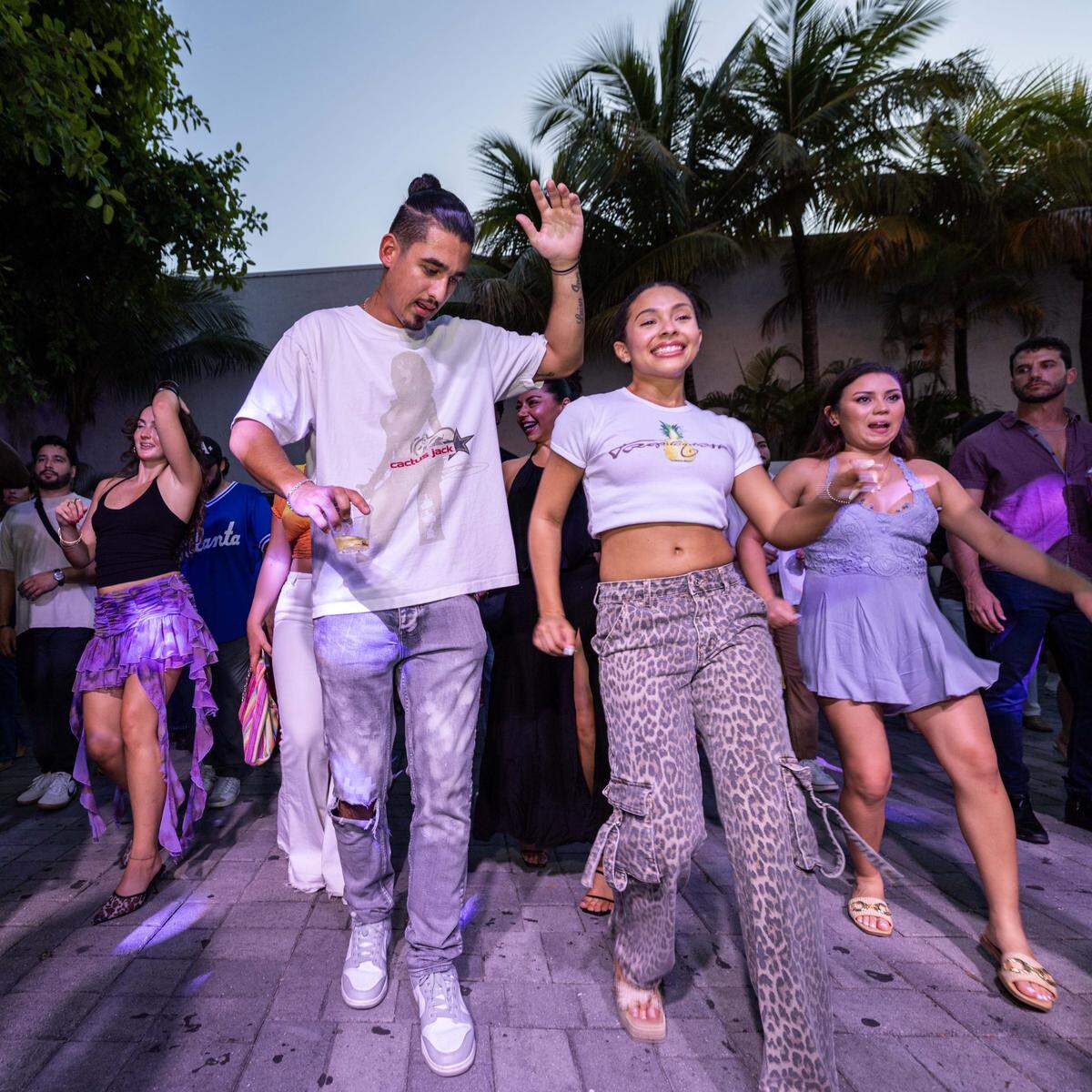
Besides the humidity, the evening in Little Haiti was picturesque. Palm trees swayed, the sun set turned the sky into cotton-candy colors and hundreds of twentysomethings were gathered wearing tropical flowy skirts and breezy button downs.
Their salsa instructor, a young woman their age, took the stage and grabbed the microphone.
“I want your body to be relaxed. I want your shoulders open,” said Elisa Baena, the 26-year-old founder of Salsa Z, a monthly event for young people to learn and dance salsa. “When you’re dancing with someone, I don’t want you to be closed and awkward. It’s like talking to a cute guy.”
Baena listed the eight-count dance moves, “ONE, two, three... five, six, seeeeven... ONE, two three... five, six, seeeeven,” prompting the crowd of about 300 people to follow along at ZeyZey, a popular Little Haiti music venue and bar. As the night went on, novice dancers quickly improved, laughing at their missteps and smiling when they finally understood how to do a turn.
“You guys better be shaking your booties!” Baena yelled at the crowd.
Baena’s Salsa Z events, which started in February, are at the epicenter of the local salsa scene for members of Generation Z, the generation born from 1997 to the early 2010s after Millennials. Other salsa socials, events and music venues across South Florida have seen the genre’s popularity grow among young South Floridians who are eager to meet new people, learn the dance moves and connect with their parents’ (and grandparents’) favorite music.

Salsa, which emerged in the ‘60s and was popularized in nightclubs in New York City and Miami, never died. Even as merengue, bachata and reggaeton took over the airwaves of Spanish-language radio, salsa remained as the soundtrack of most Latinos’ lives. Mothers still blast Rubén Blades as they clean the house on Sundays. DJs at family parties pull out classics from El Gran Combo de Puerto Rico. And Marc Anthony never goes out of style.
But for a generation raised in the United States on English-language pop, rap, electronic dance music and reggaeton, learning salsa is a new adventure. While many young Latinos have always been aware of salsa, it wasn’t a genre they were likely to search for on Spotify. That has changed.
“It definitely has new life,” said Safe Stadick, a Miami salsa DJ. “The Gen Z salsa scene is just growing. Every time somebody comes to a party and they have an amazing time, they’re coming back with three or four or five friends next time.”
Salsa is in the midst of a global renaissance, too. Record labels have been reissuing salsa classics just as mainstream reggaeton artists have embraced the genre in their new music. Late last year, Puerto Rican reggaetonero Rauw Alejandro dropped Cosa Nuestra, a salsa-inspired album that features a cover of “Tú Con Él” by salsa legend Frankie Ruiz. In January, Bad Bunny released “Debí Tirar Más Fotos,” an album showcasing several Puerto Rican genres including salsa.
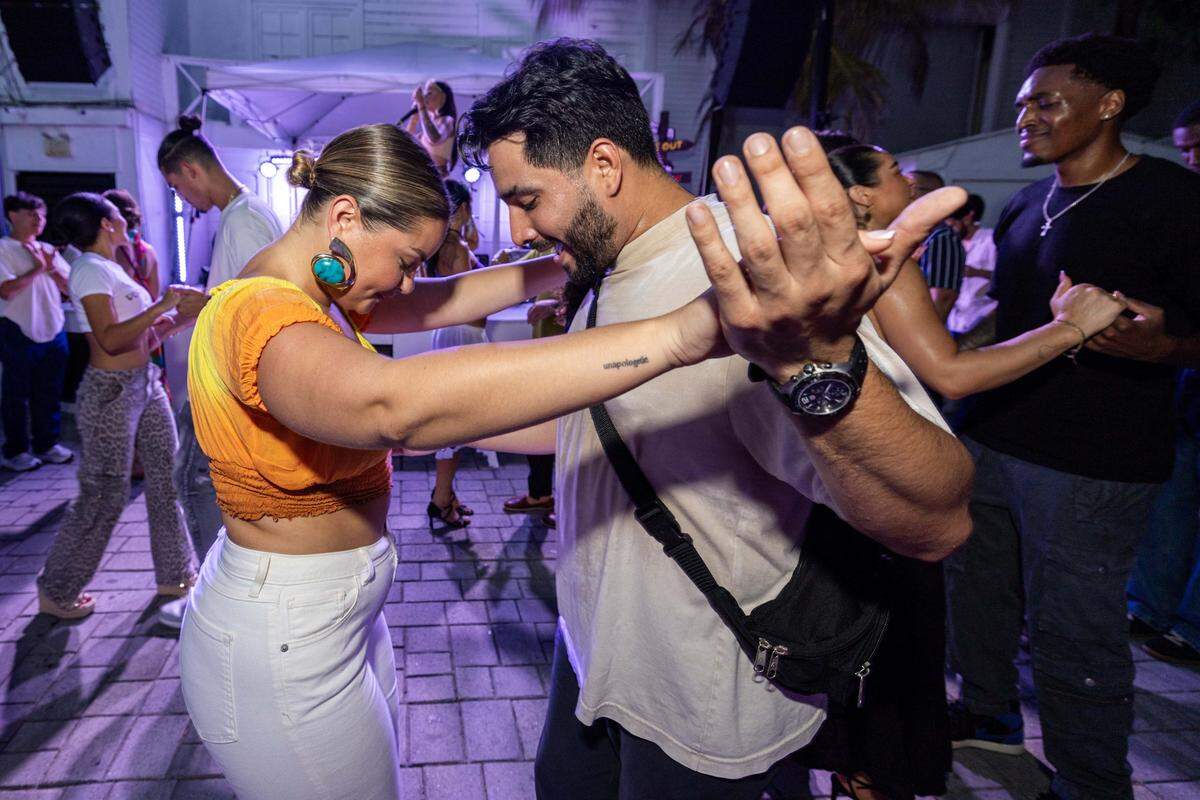
Bad Bunny’s “Baile Inolvidable” was the first salsa song ever to reach the top spot on Apple Music’s global charts, Rolling Stone reported. In the song’s music video, Bad Bunny goes to a salsa class to learn how to dance. At first, he looks goofy as he earnestly tries to keep up with his classmates, but by the end of the video, he’s twirling his dance partner like a pro.
The trend comes as many of the young adults of Gen Z — digital natives who came of age during the pandemic — have become frustrated with modern socializing. They are tired of clubs where people are too cool to dance, they’re bored with dating apps, and many are paralyzed by the fear of “cringe” culture. But salsa offers a solution: a social style of dancing that encourages dressing up, dancing with a stranger, learning by making mistakes and putting down your phone.
The verdict is in. It’s cool to dance salsa.
“I’m just so thankful,” said Sofía Hoyos, 21, who came to Salsa Z with a friend. “Now I can share my love for salsa that I’ve always grew up with with my friends. It’s not cringe anymore.”
The Bad Bunny effect
Born and raised in Miami in a Cuban family that loves Celia Cruz, Baena started going to the dance studio near her home during the pandemic to formally learn salsa.
She was immediately hooked, but spreading the salsa gospel to her friends was a challenge. It also didn’t help that Baena was the youngest person in her salsa class — by a couple of decades.
“It was so hard to get [friends] to come to a salsa class, and it was completely impossible to get them to come to a salsa social or to a salsa bar,” Baena said. “After a while of me literally begging people to come dancing with me and everyone being like, ‘No, that’s weird,’ or, ‘No, I’m not a good dancer. I’m so embarrassing. Blah, blah, blah,’ I just gave up.”
But everything changed on Jan. 5, the day Bad Bunny dropped “Debí Tirar Más Fotos.” Baena was shocked to hear “Baile Inolvidable” and “La Mudanza,” two new salsa songs made by Latin music’s biggest star. Even more shocking? People her age wanted to dance to it.
“For him to make those salsa songs and for it to be such an overwhelming hit, I was like, ‘OK, I have to seize the moment. This is my moment,’” Baena said. “If my friends are all of a sudden wanting to learn salsa, I have to do something right now because I don’t know when this opportunity is going to come again.”
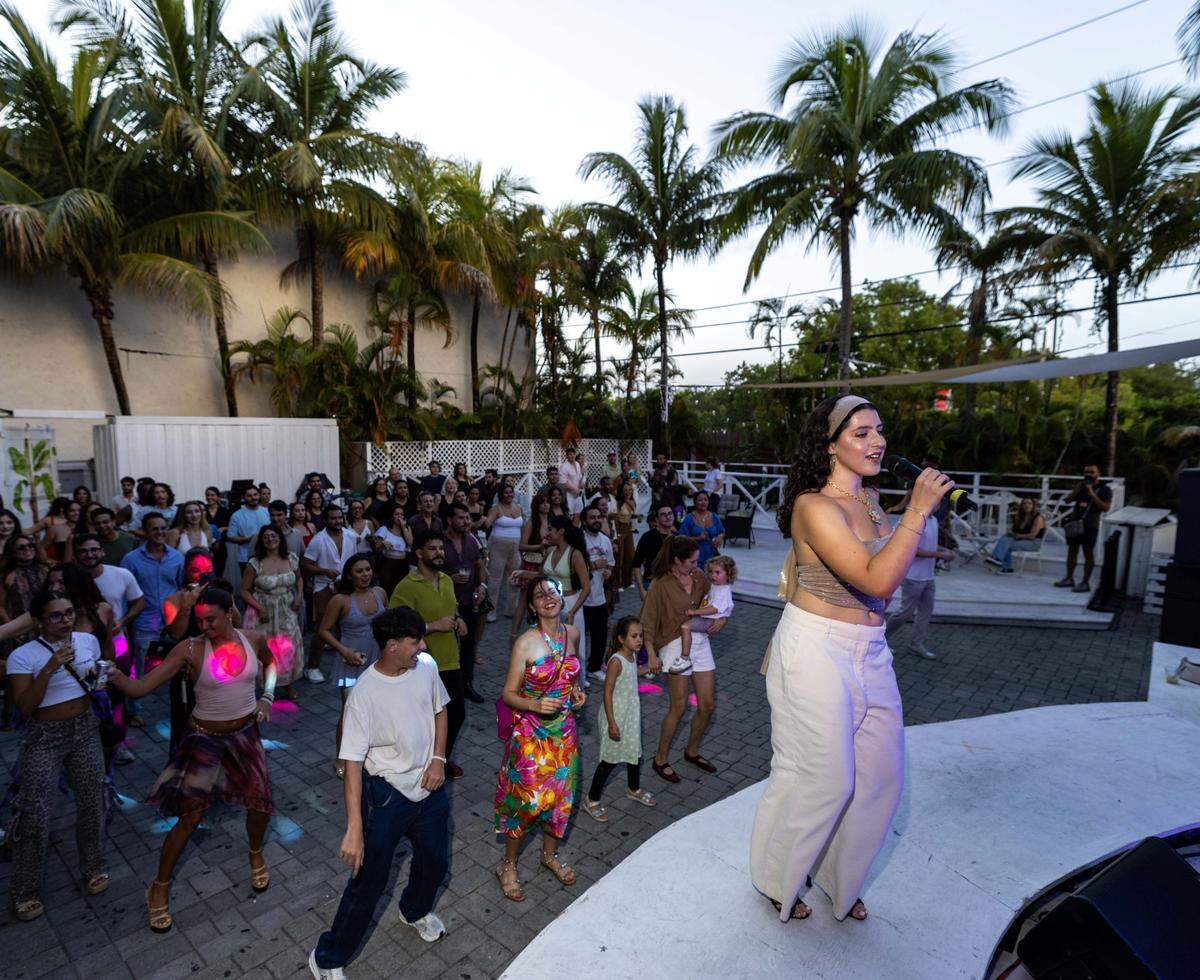
By the following month, Baena organized the first Salsa Z at ZeyZey: a basic salsa lesson followed by an open dance floor. (ZeyZey typically has a live band scheduled to perform later in the night as well.) About 120 people showed up to the first Salsa Z, which was “a bigger success than I think any of us were anticipating,” Baena said.
The turnout has since doubled in size with about 300 people attending the most recent event in July. This month, besides the monthly Salsa Z on Aug. 21, Baena also organized “Salsa Without Borders,” a salsa panel event at Sweat Records on Aug. 15.
While Salsa Z’s runaway success was surprising at first, Baena said it’s a sign of what young people in Miami are looking for. Salsa is a fun, social alternative to the typical vibe at some Miami clubs where people drink and stand awkwardly in the corner more than they actually dance.
“Young people in Miami really are craving, right now, genuine, authentic opportunities to connect with people,” Baena said.
Salsa Z was exactly what Sofía Hoyos and Valentina Burgos, 19, were looking for. The two friends grew up listening to salsa and teaching other friends how to dance, but said it’s nice to see young people learn together at an event.
“I hope that it’s not just a trend,” Burgos said. “Trends come and go, but I hope that salsa is here to stay for our generation and for the generations to come.”
Salsa’s re-resurgence
Salsa’s renewed popularity among Gen Z came at the perfect time for Hoy Como Ayer, a Latin live music venue on Calle Ocho. The bar originally opened in 1999, closed in 2019 and then reopened last summer under new management.
All ages, from 21 to 80, come to Hoy Como Ayer, said marketing and event director Estefany Olivo, but lately the crowd has been noticeably younger. The club’s Friday night Latin Fever party, featuring salsa, merengue and other Latin music, is its most popular among Gen Z, she said.
Young patrons often bring their parents and grandparents to the bar to enjoy the music together, Olivo said.
“I feel like coming to a place like this is like going back home,” she said. “When people come here and you talk to them, they’re like, ‘My grandma used to come to this place.’ It’s that connection that brings them here.”
DJ Safe Stadick, who has been spinning salsa and Latin funk vinyls for 25 years, said he’s also seen young adults bring their parents to his sets. He recently got a glowing review from one partygoer’s Colombian mother: “She said you’re the best DJ she’s ever heard. She wouldn’t stop dancing all night!”
He’s noticed a younger crowd getting into salsa, “which is amazing because it keeps this music alive,” he said.
“I pick tunes that make me feel good and that make me want to dance,” he said. “It’s not like, ‘Oh, this is gonna be good for the Gen Z salsa, or this will be good for the viejo salsa.’ I don’t think there’s an age limit. Salsa is for everybody.”
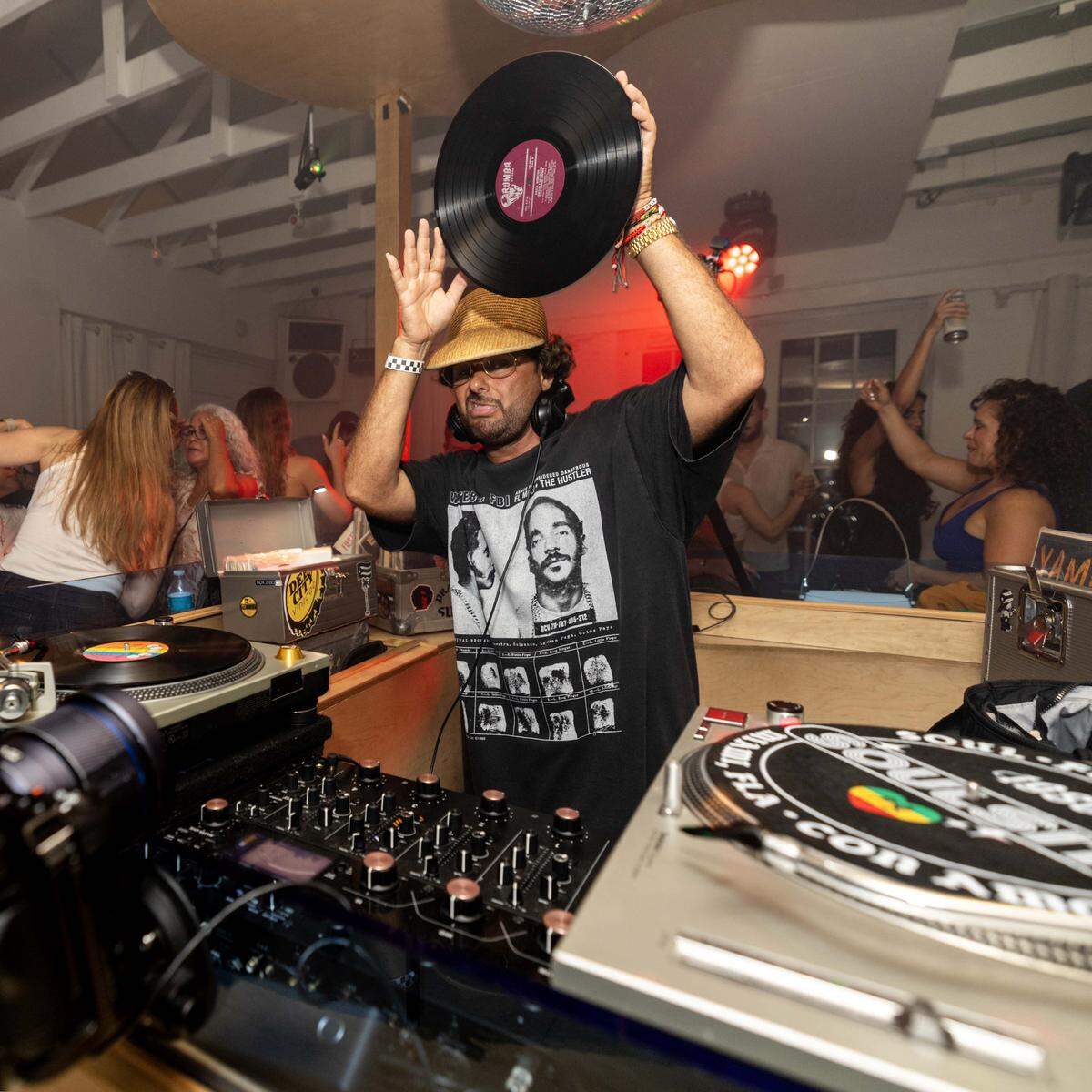
Young salsa fans have also been flocking to local music stores to add salsa records to their vinyl collections.
At Sweat Records, a music store near Little Haiti, founder Lolo Reskin said younger customers have been enjoying the store’s expanding global music section. At the same time, she said, labels like Fania, Vampisoul, Tico and Mr. Bongo have been reissuing classic salsa vinyls, along with a treasure trove of Celia Cruz records in celebration of her centennial this year.
The store’s salsa selection ranges from Héctor Lavoe and Willie Colón reissues from a few years ago to a recently stocked re-release of a 1970 album from Orquesta del Sol, the first salsa band in Japan.
“In this digital age, people want something real,” Reskin said.
Looking for love... and a good dance partner
The rooftop at Sunset Club in Hollywood was simmering with salsa.
On a recent summer evening, at the monthly Sunset & Salsa rooftop party, twirling couples filled the dance floor hours before the harsh sun finally set. Some young would-be dancers, standing in high heels and sipping on lemon water, waited on the sidelines for the right moment. Or really, the right partner.
“That’s the best thing about salsa,” said Kimberly Kantor, who organizes the event with fellow salsa dancer Janet Neuschatz. “We have new people coming in in their 20s and 30s, 50s, 80s. It keeps you young.”
The two started the event about three years ago to give the local salsa community an inviting outdoor experience post-pandemic. Hundreds of salsa lovers come to the rooftop each month to the free event to dance poolside.
Among them were Kyandreia Jones, 28, who invited her group of girlfriends to go to the rooftop party together. Jones went to her first salsa class ever at Salsa Z earlier this summer, “stepped on so many toes” and wanted to test out her skills in the wild. “It’s a really fun way to all be together and hype each other up,” she said.
But while the friend group was building their confidence by dancing together, Jones was on the lookout.
“I’m just waiting for a hot guy to grab me,” Jones said. “There’s a lot of sweet older men. I love that for them, but I want my man. I want my meet-cute!”
In the meantime, skilled salsa dancers helped the girls learn new moves. Jeilin Espinal, 27, said the party was a safe space for novices to learn without feeling judged.
“Here, some random professional can grab you and spin you around,” Espinal said. “That’s how you really learn.”
Ibanicy Moreno, 24, who is Venezuelan and loves salsa, pushed her friends – literally – to dance with different people. Lara Barreira, 22, said she’s still getting used to strangers pulling her onto the dance floor, but “everybody’s really sweet.” Dancing salsa is a welcome change to the typical night out, the friends said.
“I feel like our generation doesn’t have the couple dance or dance as a group,” Barreira said. “I feel like, now more than anything, people are craving that.”
Ultimately, this was Baena’s goal with starting Salsa Z.
“I’m seeing in real time how young people are embracing salsa and they’re loving it as much as I love it,” she said. “It literally makes me want to cry.”
If you go: Salsa Z
When: August 21, 7 - 9 p.m.
Where: ZeyZey Miami, 353 NE 61st St, Miami
Info: $12 tickets available online at shotgun.live. Salsa class followed by DJ sets.
This story was originally published August 13, 2025 at 4:30 AM.