How many job titles get confused for each other but are actually miles apart? I’ll give you a hint—too many to count.
Content and copywriter, nutritionist and dietitian, accountant, and financial analyst…I could go on. In product development, two of those ever-confused “which is which?” roles are product manager and project manager.
To put it into perspective, 42% of companies don’t understand project management (or think they need it). Considering there are fewer product managers globally, I assume their percentage would be even higher if studied.
If product managers handle the what and why, project managers focus on the when and how. Both are important, but their responsibilities don’t overlap as much as you’d think.
I’m here to tell you about it.
Product or Project Manager? Let’s Decide
- If market trends excite you, then product management is right up your alley. Analyzing where the current market stands is a large slice of the job.
- If you like defining long-term goals, then product management is an outstanding path to explore. Without goals, the product will stay at an inevitable standstill.
- If you aren’t a problem solver, then product management might not be the right fit. Anything can happen, and product managers have to be prepared to pivot and rebuild.
- If you are a highly organized planner, then project management is where you’ll thrive. Project managers have to stay 1,000% organized or it could create serious disruptions.
- If working with strict timelines stresses you out, then project management may not be the right move. Tight deadline proposals and last-minute requests are part of the job.
What Does a Product Manager Do?
Product managers are *dare I say* obsessed with building something that customers need—even when they don’t realize they need it yet. This role is deeply rooted in long-term strategy, market research, and working with stakeholders to define their visions.
Product Manager Responsibilities
📈 Research Customer Pain Points and Market Trends
📍 Create a Plan for the Product’s Development
🧑💼 Work with Engineers, Designers, and Business teams
🧠 Prioritize Features Based on Impact and Feasibility
🥅 Adjust Plans Based on User Feedback and Business Goals
The ideal product manager is part visionary, part problem solver, and part negotiator. They don’t just think about launching a product—they focus on launching the product.
Example: A product manager leads the development of a product, focusing on ensuring it meets customer needs and business objectives. They guide the product’s direction, working with teams like design, engineering, and marketing to deliver it on time and within the set budget.
What Does a Project Manager Do?
Project managers aren’t the pioneers. Not at work, anyway. They focus on making sure existing projects run smoothly, keeping everything on track, on budget, and within scope. While product managers are busy concocting a strategy, project managers execute the mission.
Project Manager Responsibilities
⌛ Create and Manage Project Timelines
📑 Allocate Resources and Assign Tasks
🚨 Identify Risks and Prevent Bottlenecks
🛤️ Track Progress and Adjust Plans as Needed
🤝 Keep Teams Aligned and Accountable
Example: A project manager launching a new practice management software tool sets deadlines, assigns tasks, and ensures teams are working in tandem. Along the way, they manage inevitable complications, update executives, and adjust existing plans to ensure the launch is successful.
Three Differences Between Product and Project Managers
The main differences between program managers and project managers can be broken down into a few simple points:
Focus
Program managers manage groups of projects, while project managers lead individual projects.
Here are a couple of well-known examples of each:
Real-Life Product Management: Piyush Pratik is the current product manager for iPhone at Apple, overseeing the global product management and marketing for Apple’s flagship product.
Real-Life Project Management: Cornelius Fichtner, founder and president of PM PrepCast, is highly experienced in leading projects across various industries, like management consulting, high-tech, retail, and financial services.
Timeline
Project timeframes are short, while programs can run without fixed ends. This means a program manager can work with a program indefinitely, but a project manager is in charge of a project from start to finish. A project manager will hop from project to project, while a program manager will typically stay with the same program.
There’s no exact number range for how long a project lasts, but, in my experience, they run from a few weeks to a few months. Product managers can stay on the same project for many years; Piyush Pratik has been with Apple since 2019.
Duties
As you can imagine, program managers tend to have more managerial duties than project managers (because they can oversee multiple projects). This leads to more responsibilities and, eventually, to higher salaries for program managers.
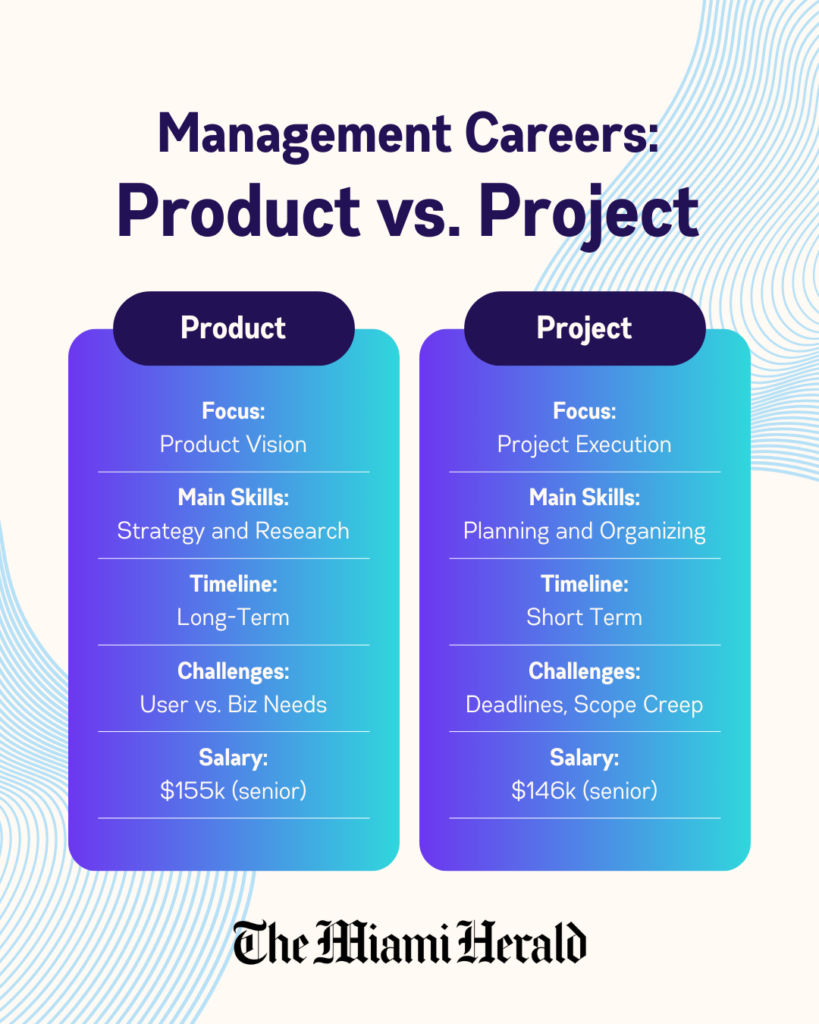
Average Salary (Senior Product Manager/USA): $155K
Average Salary (Project Manager/USA): $146K
However, salary is usually competitive for both of these positions, and there’s no set guarantee of how much you’ll make.
Do Product Managers Need Project Management Skills?
I say this with zero hesitation—yes. Product managers don’t typically waltz into the role without gaining extensive project management experience first. Sure, a product manager isn’t responsible for day-to-day project execution, but understanding a project lays the foundation for a product.
While product managers don’t manage project details, being able to think like a project manager makes their job so much easier.
Why?
Remember, product managers still manage projects—several of them at once. If they have no prior project management experience, they won’t understand how to efficiently oversee just one, forget multiple.
If being a product manager is your ultimate career goal, start by getting project management experience. There are many ways to do this: courses, classes, webinars, collaborating with colleagues, landing a PM position at work, etc.
Can One Person Handle Both Positions?
At smaller companies, it’s common (for better or worse) for one person to handle both product and project management.
The downside?
One person can’t do it all. The stress eventually catches up. They say to stick with a niche because the person that does it all, gives it all. At the end of the day, you want to work smarter, not harder.
When one person does both jobs, one of two things happens:
- 📉 The product strategy is seriously neglected because there’s too much focus on logistics.
- ⚡ Execution suffers because too much energy is spent on planning.
Larger teams separate these roles for a reason. A product manager needs space to think about future market opportunities, while a project manager keeps today’s work moving forward.
Pick or Pass: What’s Right for You?
Want to strategize the big picture? Product management might be the right fit.
Prefer organizing and bringing plans to life? Project management is a better pick.
But choosing between product management vs. project management comes down to your personal strengths and work preferences.
Product Management
- Pick product management if you enjoy creative problem-solving.
- Pick product management if you find analyzing market trends fun.
- Pick product management if you like defining long-term goals.
- Pass on product management if you need structured, predictable tasks.
- Pass on product management if you can’t balance multiple stakeholders.
Project Management
- Pick project management if you are a highly organized planner.
- Pick project management if you thrive on structure.
- Pick project management if you enjoy keeping teams on schedule.
- Pass on project management if you dislike working with strict timelines.
- Pass on project management if you find task management overwhelming.
Both careers are fantastic career opportunities for the right people. Product management is ideal for someone who loves innovation, while project management suits people who enjoy turning their ideas into reality.
Are You Team Product or Project?
Product and project managers are closely connected but take two different skill sets for one to be successful (though they both need to be leaders and communicators).
If you’re interested in taking either of these paths, with the right education and resources, you’re looking at the potential for an accomplished career. Whichever you choose, I hope this guide helps you reach your goals!
FAQ
Of course, but it’s very risky. Without a product manager, teams can waste major resources building something that doesn’t even align with what customers want.
Yes. Project managers juggle several projects and timelines every week, so prioritization is one of many important skills for a project manager to learn.
Product managers usually earn more because of their strategic responsibilities, but salaries are competitive based on the industry and overall experience.
Sure, but the skill sets needed for each are different. Product managers would need to focus more on bringing projects to life and the operational side of the job.
Product managers struggle with aligning business goals and user needs. Project managers battle shifting deadlines and scope creep.